
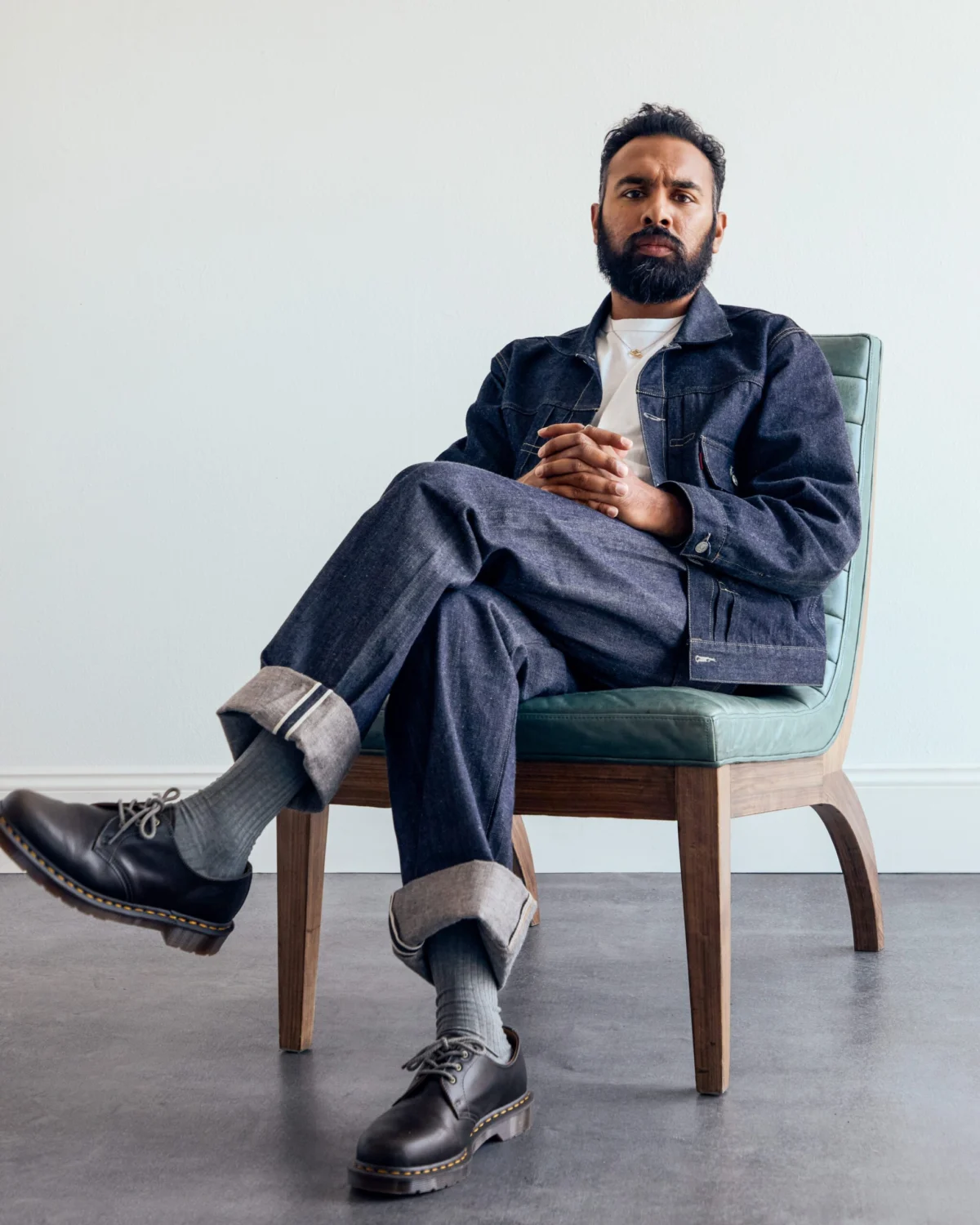
"Working at this scale is a privilege that demands an absolute commitment to the visceral reality of the craft, where the line between the actor’s struggle and the character’s journey essentially disappears."

In an industry increasingly dominated by digital artifice, Himesh Patel’s recent trajectory highlights a growing demand for a more grounded, physically demanding form of storytelling. By collaborating with visionary directors like Christopher Nolan and Ryan Coogler, Patel has transitioned from the breakout charm of Yesterday to the grueling, high-stakes environment of large-scale epics and prestige television, offering a unique perspective on the discipline required to sustain a career at the highest levels of Hollywood.
The cinematic landscape is currently witnessing a fascinating tug-of-war between the convenience of computer-generated imagery and the raw, tactile impact of practical filmmaking. No director personifies the latter more than Christopher Nolan. For Himesh Patel, his second collaboration with Nolan in the epic adaptation of The Odyssey served as a masterclass in this "run-and-gun" philosophy. Playing Eurylochus, the second-in-command to Matt Damon’s Odysseus, Patel found himself at the center of a production that prioritized natural light, IMAX scale, and the physical endurance of its cast over the safety of a green-screen studio.

The production of The Odyssey was less a traditional film shoot and more an expedition. Spanning the rugged landscapes of Scotland, the coastal waters of Italy, and the eerie, perpetual twilight of Iceland, the filming conditions were designed to mirror the arduous journey of the source material. Patel recalls the grueling schedule—4:00 a.m. pickups and 8:00 p.m. finishes—driven by Nolan’s insistence on capturing the specific quality of natural light. This commitment to realism extended to the film’s most fantastical sequences. In a departure from modern genre conventions, the Circe sequence, which depicts the transformation of men into swine, was achieved without the use of CGI. The result is a visceral, almost horrific atmosphere that Patel describes as some of the most "disgusting" and "alive" work of Nolan’s career.
Central to the success of such a massive undertaking is the leadership on set. Patel’s observations of Matt Damon provide a window into the professional standard required of a global superstar. As the "number one" on the call sheet, Damon’s work ethic became the barometer for the rest of the cast. Patel recounts a specific instance on the island of Favignana, where the crew scrambled to film in a sudden storm. Amidst wind machines and salt water, Damon reminded the weary actors of their privilege: "There are thousands of actors in SAG, and every single one of them would kill to be where you are." This sense of perspective is vital on a Nolan set, which is famously "democratic." There are no personal chairs and no cell phones; the director himself stands alongside his actors, often submerged in the same cold water or huddled in the same cramped spaces, such as the practical Trojan Horse built for the film’s opening.

The transition from The Odyssey to Patel’s next major project, a reimagining of The X-Files, signals a new chapter in his career—one defined by lead roles and creative autonomy. Developed by Ryan Coogler, the director behind Black Panther and Creed, this new iteration of the sci-fi staple seeks to honor the legacy of Mulder and Scully while establishing a fresh narrative identity. Patel, who stars alongside Danielle Deadwyler, emphasizes the importance of the "not knowing" in modern television. In an era of leaks and spoilers, he advocates for the thrill of the unfolding mystery, a sentiment that aligns with Coogler’s reputation for soulful, character-driven storytelling.
Patel’s partnership with Deadwyler is built on a pre-existing foundation; the two previously appeared in the critically acclaimed limited series Station Eleven, though their characters never shared the screen. This existing rapport is crucial for a series like The X-Files, where the central chemistry often dictates the show’s longevity. By moving into the co-lead position, Patel is applying the lessons learned from his time with Damon and Nolan—specifically the concept of "taking ownership" of a project. He acknowledges that while luck plays a significant role in any actor’s rise, there comes a point where one must steer the ship, guiding a team and exercising leadership to ensure the work remains fulfilling rather than merely stressful.

The actor’s recent path has not been without its setbacks. The cancellation of The Franchise, an HBO comedy that satirized the very superhero industrial complex Patel has skirted, was a moment of professional disappointment. Yet, the industry’s volatility is often offset by unexpected opportunities. It was during the period of uncertainty regarding The Franchise that the offer for The Odyssey arrived—a "straight offer" that signaled Patel’s elevation into an elite bracket of actors whom Nolan trusts implicitly. This momentum has carried him into other high-profile roles, including Dr. Watson in Netflix’s Enola Holmes 3 and a role in Prime Video’s Bait alongside Riz Ahmed.
The evolution of Himesh Patel reflects a broader shift in the expectations placed upon modern actors. It is no longer enough to simply deliver lines; one must be a physical participant in the director’s vision, capable of weathering the elements and maintaining a high level of performance under duress. Nolan’s rejection of "cushy" sets in favor of "visceral danger" is a deliberate attempt to capture something authentic on film—a quality that audiences, perhaps fatigued by the weightless feel of digital effects, are beginning to crave once more.

Furthermore, Patel’s career illustrates the importance of mentorship and community within the industry. He speaks of seeking advice from peers like Ruth Negga and Steven Yeun, actors who have successfully navigated the transition from independent darlings to "Hollywood" mainstays. This network provides a necessary support system for managing the complexities of a global career. As Patel moves from the ancient battlefields of Troy to the paranormal investigations of The X-Files, he carries with him a philosophy of hard work and presence.
In the final analysis, the success of a film like The Odyssey or a reboot like The X-Files rests on the ability to make old stories feel new. For Nolan, this is achieved through the stripping away of theatrical opulence in favor of raw, IMAX-captured intimacy. For Patel, it is achieved through a refusal to complain and a commitment to the "run-and-gun" reality of the set. Whether he is eating curry in the Icelandic rain with Matt Damon or discussing the depths of a script with Ryan Coogler, Patel’s approach remains rooted in the fundamental reality of the work.

As he awaits the future of the X-Files pilot and prepares for the release of his upcoming features, Patel stands as a representative of a new generation of versatile performers. He is an actor who values the "democratic" set, who respects the physical toll of the craft, and who understands that the greatest cinematic moments often happen when the director is right there in the water with you. In an industry of giants, Patel has found his footing by embracing the grind, proving that the most enduring stories are those told with the most sweat, the least CGI, and a profound respect for the audience’s sense of wonder.
