
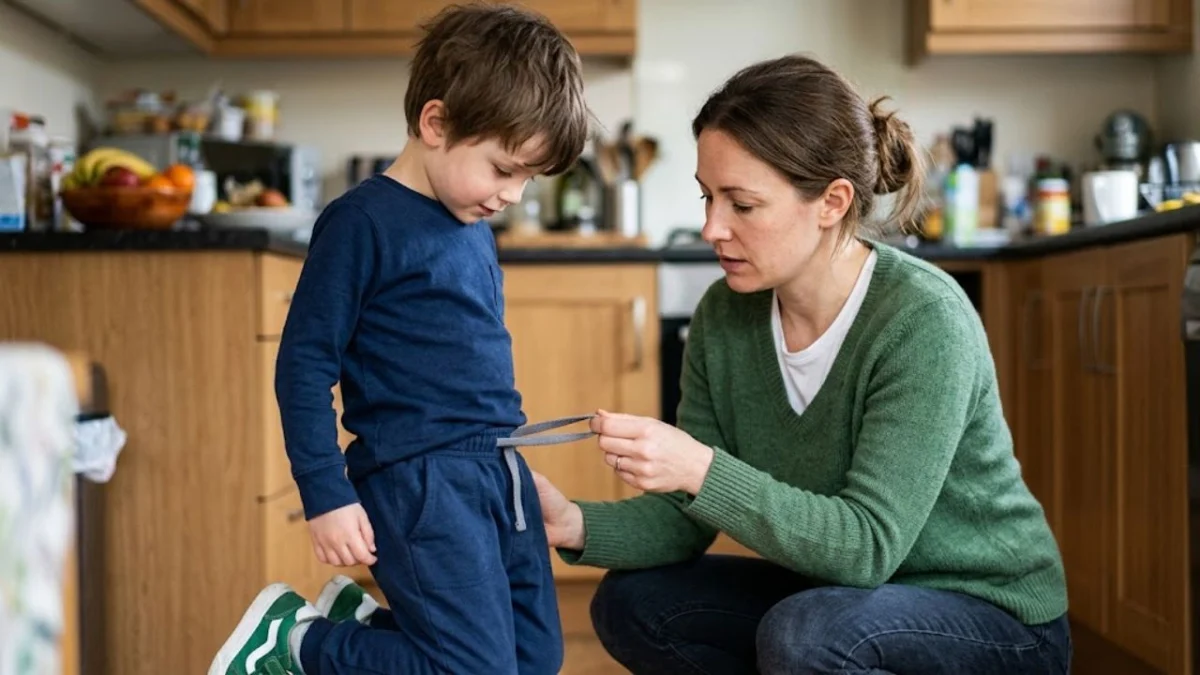
"While no injuries have been reported, the potential for serious harm or death from a snagged drawstring is a well-documented hazard that warrants immediate attention from parents."
Federal regulators have announced a significant recall affecting approximately 590 youth clothing sets sold by Little Loves and Co. The specific concern centers on the waist drawstrings present in these garments, which pose a serious risk of entrapment. This entrapment can lead to severe injury or even fatality, a danger that has been recognized and regulated for decades. The recall, issued by the Consumer Product Safety Commission (CPSC), encompasses daywear sets and boy shorts sets in a range of sizes, from 12-18 months up to youth sizes 9 and 10. While the absence of reported injuries is a positive indicator, it underscores a common characteristic of such recalls, where proactive intervention based on known hazards is paramount.
The current recall involves two distinct product styles: daywear sets, which typically include a crew neck shirt paired with joggers, and boy shorts sets, comprising a short-sleeve shirt and shorts. These sets were available in a variety of colors and collage-style designs, making visual identification of affected items challenging without specific model and date codes. The hazard lies not in the aesthetic appeal of the clothing, but in the functional design of the drawstrings. Regulatory bodies like the CPSC do not wait for a tragic incident to occur before taking action; instead, they rely on established safety mechanisms and documented risks. The danger of drawstrings has been understood for many years, stemming from the potential for them to snag on playground equipment, vehicle doors, or other everyday objects. When this occurs, a child wearing the garment may be unable to free themselves, leading to a dangerous entrapment situation.
The affected garments are precisely identified by a combination of model number and date code, which can be found on the neck tag. For the daywear sets, the model number is LLC110 with a date code of 12/30/25. The boy shorts sets are identified by four different combinations: model LLC012 with a date code of 3/15/25, model LLC013 with a date code of 4/15/25, model LLC111 with a date code of 3/20/26, and model LLC112 with a date code of 4/20/26. These items were exclusively sold through the company’s online store, Littlelovesandco.com, and on the livestream marketplace Whatnot.com. The period of sale spanned from May 2025 through July 2026, with prices ranging from $15 to $30 per set. Little Loves and Co. LLC is headquartered in Olympia, Washington, and the recalled garments were manufactured in China. The official recall number assigned by the CPSC is 26-724.
Navigating product recalls can sometimes be complex, but the remedy offered in this instance is notably straightforward and offers consumers flexibility. The CPSC outlines two distinct options for consumers who have purchased the recalled clothing. The first path involves taking immediate possession of the recalled clothing, ensuring it is out of reach of children, and then contacting Little Loves and Co. to arrange for a full refund. The company will facilitate this process by providing a prepaid shipping label for the return of the garments. Once the items are received, the refund will be processed. Detailed instructions and the necessary contact information are readily available on the company’s dedicated recall page on their website.
Alternatively, for households that wish to retain the clothing, a second, equally effective solution is provided. Consumers can opt to keep the garment by simply cutting and removing the drawstring. This action directly eliminates the entrapment hazard without the need for a return. For many parents, especially with items that are already in regular use and have been purchased at a modest price point, this option of modification might be the most practical and immediate way to ensure safety. Regardless of the chosen method, the critical step is to ensure that the drawstring is removed before the garment is stored, donated, or passed on to another child. Federal law strictly prohibits the sale of products that have been subject to a recall, and any residual hazard, such as an intact drawstring, would persist and could pose a risk to subsequent wearers.
The regulatory framework surrounding drawstrings on children’s clothing is not a recent development; its roots extend back three decades, providing a clear historical context for why these seemingly innocuous cords are treated as potential safety defects. The CPSC first issued voluntary guidelines concerning drawstrings in children’s upper outerwear in February 1996, following a series of reports detailing incidents where children had become strangled or entangled by neck and waist cords. The apparel industry subsequently incorporated these recommendations into a voluntary standard by 1997. The evolution of these guidelines into a mandatory federal rule occurred in July 2011, when the Commission approved a final rule designating children’s upper outerwear in sizes 2T through 12 with neck or hood drawstrings, and sizes 2T through 16 with certain waist or bottom drawstrings, as substantial product hazards. At the time of this rule’s adoption, the CPSC had documented 26 fatalities linked to garment drawstrings becoming entangled on various objects, including playground slides and school bus doors.
It is important to note a specific detail that distinguishes this particular recall from some others in the same category. The CPSC’s notice for the Little Loves and Co. recall does not allege that these garments violate the existing federal regulation. Instead, it frames the risk as one of "entrapment" rather than "strangulation." This distinction is significant because the federal rule specifically targets upper outerwear, such as jackets and sweatshirts. While the hazard mechanism of a snagged cord remains the same, shirt-and-bottom sets, like those in this recall, fall outside the explicit scope of that particular federal rule. This nuance highlights how safety regulations are often developed and refined, with specific categories being addressed based on the primary risk identified at the time of rulemaking. Nevertheless, the underlying principle of preventing cord-related hazards remains a consistent focus for consumer safety advocates.
The distribution channels for the recalled Little Loves and Co. products – a small online shop and a livestream marketplace – are not unique and serve as a broader indicator of how potentially hazardous items can reach consumers through less traditional retail avenues. While these platforms may sometimes have less stringent compliance reviews compared to major national retailers, the issue of drawstrings on children’s clothing is not confined to small-scale operations. This year has seen drawstring-related recalls affecting a range of brands, including established outdoor and apparel companies. For instance, a recall of Grundens youth jackets was also issued due to a hood drawstring posing a strangulation hazard. This pattern underscores that the size or prominence of the seller is not a reliable predictor of whether a product might present a safety risk.
Therefore, a universal rule that bypasses the need to consult model numbers or date codes can be highly effective for parents and caregivers. If any garment intended for a young child features a cord at the neck, hood, or waist, the safest course of action is to remove it. This simple act of cutting the cord is cost-free and eliminates the hazard without requiring any knowledge of specific recall criteria or federal regulations. It empowers consumers to proactively enhance the safety of their children’s clothing.
For consumers who identify a potential drawstring hazard on children’s clothing sold currently, the CPSC offers a platform for reporting through SaferProducts.gov. This database serves as a crucial tool for the agency to identify emerging hazards before they escalate to the point of requiring a formal recall. While the CPSC has not indicated an expansion of the current Little Loves and Co. recall, and no incidents have been reported to date, vigilance and proactive reporting remain essential components of maintaining product safety for young children.
Key Questions Answered
What is being recalled?
Approximately 590 Little Loves and Co. youth daywear sets and boy shorts sets featuring waist drawstrings. These sets are available in sizes ranging from 12 to 18 months through youth sizes 9 and 10.
What is the hazard?
The primary hazard is the potential for the waist drawstrings to snag on objects, leading to entrapment. This entrapment can result in serious injury or death to children. Fortunately, no injuries have been reported in connection with this specific recall.
How do I know if I have one?
Consumers should check the neck tag of the garment for the specific model number and date code. The recall applies to the following combinations: LLC110 with a date code of 12/30/25; LLC012 with a date code of 3/15/25; LLC013 with a date code of 4/15/25; LLC111 with a date code of 3/20/26; and LLC112 with a date code of 4/20/26.
Where were they sold?
The recalled clothing sets were sold online through Littlelovesandco.com and on Whatnot.com. Sales occurred between May 2025 and July 2026, with prices ranging from $15 to $30.
Do I have to return the clothes?
No, consumers have two options. They can request a prepaid shipping label from Little Loves and Co. to return the product for a full refund. Alternatively, they can choose to keep the garment by cutting and removing the drawstring, which effectively eliminates the hazard.
Why are drawstrings regulated at all?
Drawstrings on children’s clothing have been a focus of safety regulation since 1996, following reports of strangulation and entanglement incidents. The CPSC issued guidelines, which were incorporated into industry standards, and a federal rule was established in 2011 to address these hazards.
Does this recall say the clothes broke a federal rule?
No, this particular recall does not allege a violation of federal regulations. The CPSC describes the hazard as entrapment. The federal rule specifically pertains to children’s upper outerwear, such as jackets and sweatshirts, and does not explicitly cover shirt-and-bottom sets like those in this recall, even though the underlying risk mechanism is the same.
