
“While the risk of infection from Naegleria fowleri is exceptionally low, the Louisiana Department of Health urges extreme caution with warm freshwater activities, emphasizing that preventative measures are highly effective and simple.”
Louisiana health officials have confirmed a case of infection with Naegleria fowleri, a rare and devastating brain-eating amoeba, in a state resident. The individual most likely contracted the organism while swimming in Lake Claiborne, located in Claiborne Parish. The Louisiana Department of Health (LDH) announced the confirmation on Wednesday, following the issuance of a Health Alert Network notice to healthcare providers across the state the previous day. This alert advised medical professionals on symptom recognition and reporting protocols for potential cases. The amoeba is responsible for primary amebic meningoencephalitis (PAM), a brain infection that, though exceedingly uncommon, carries an almost universally fatal outcome, as reported by KNOE in Monroe. The timing of this announcement is particularly pertinent as water temperatures across the southern United States typically peak in August and remain elevated well into September. The Naegleria fowleri amoeba thrives in warm freshwater environments, with optimal growth occurring at temperatures up to 115 degrees Fahrenheit. The latter weeks of the swimming season therefore present conditions conducive to the amoeba’s proliferation, mirroring those of the peak summer months.
Understanding the True Exposure Pathway: Beyond the Alarming Nickname
Much of the public’s understanding of Naegleria fowleri is shaped by its dramatic nickname, which often leads to misconceptions that can actually obscure the most effective ways to mitigate risk. The organism’s infection pathway is far more specific than its moniker might suggest. Naegleria fowleri infects humans exclusively when contaminated warm freshwater enters the nasal passages and travels to the brain. Health officials emphasize that the amoeba cannot cause infection if ingested; therefore, swallowing lake water or getting a mouthful while swimming does not constitute a route of exposure.
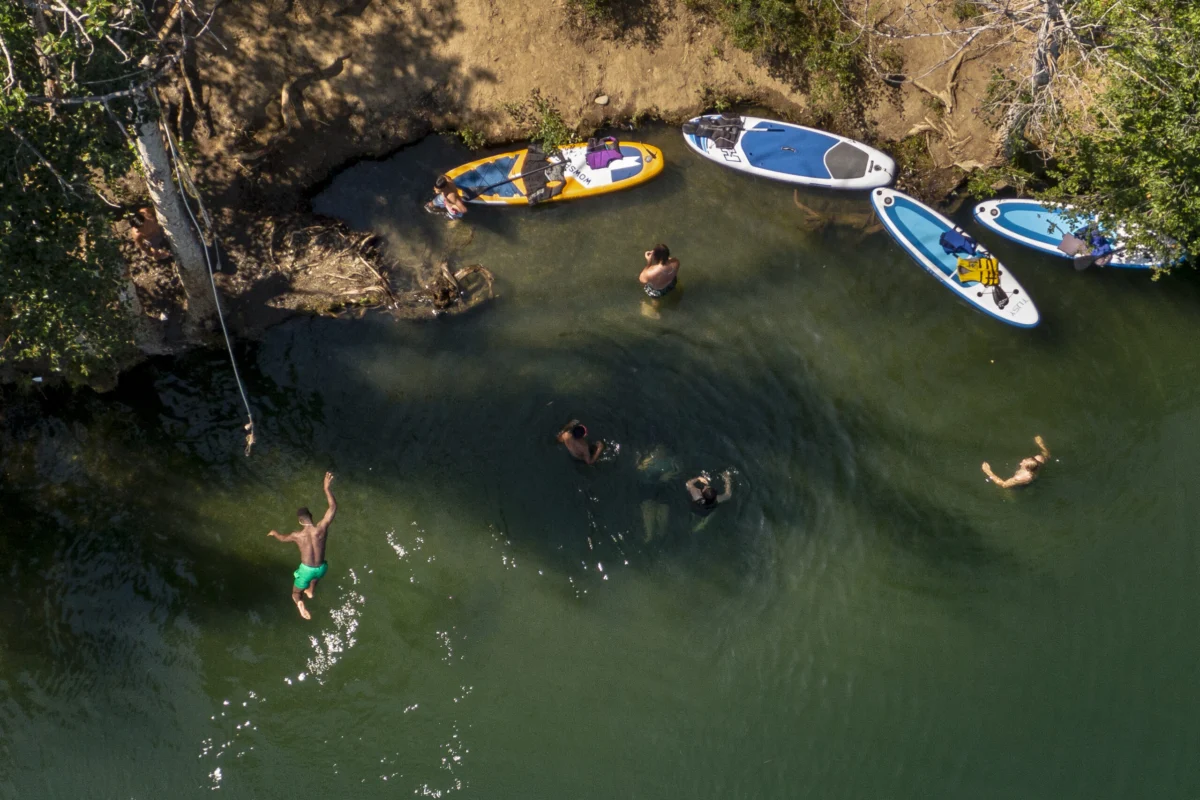
Crucially, the amoeba does not spread from person to person. It is also not found in saltwater environments and is absent from properly maintained and chlorinated swimming pools. The specific activities that pose a risk involve actions that forcefully propel water up the nose. These include diving, jumping into water headfirst, water skiing, and any other maneuvers that cause water to be driven into the nasal passages under pressure. Conversely, activities such as wading, floating with the head above water, or swimming with the face kept clear of the water’s surface do not typically lead to exposure.
There is no routine environmental testing for Naegleria fowleri in natural bodies of water. The department confirms that the amoeba occurs naturally, meaning that no lake can be officially certified as "clear" of its presence. Consequently, swimmers should not rely on lake closures or negative test results as definitive indicators of safety. The department’s official stance is that while the overall risk is low, recreational water users should always acknowledge the inherent risk associated with entering warm freshwater environments.
Practical and Precise Precautions Tailored to the Infection Mechanism
Given that the sole entry point for Naegleria fowleri is the nose, all effective preventative measures are centered on protecting the nasal passages. Health officials strongly advise minimizing the amount of water that enters the nose. In practical terms, this translates to holding one’s nose shut or utilizing a nose clip when engaging in activities like jumping or diving into warm freshwater. Keeping the head above water, particularly in warm, stagnant, or shallow areas, is also recommended. Furthermore, avoiding digging in shallow sediment is advisable, as the amoeba can concentrate in these areas.
The highest-risk scenario combines warm, still, shallow water with a soft bottom during the late summer months. In contrast, cooler, moving water environments generally present a lower risk.
One significant exposure route that is often overlooked and occurs year-round, irrespective of location, involves nasal irrigation. The use of tap water in neti pots or sinus rinse bottles has been implicated in Naegleria fowleri infections. For anyone irrigating their sinuses, it is imperative to use distilled or sterile water, or tap water that has been boiled for at least one minute and then cooled. This recommendation applies universally across all states, not just Louisiana.
Historically, children and teenagers have represented a disproportionate number of reported cases. This is attributed not to any inherent biological susceptibility but rather to their typical patterns of play in water, which may involve more vigorous splashing and submersion. A nose clip, while perhaps not glamorous, is a highly effective and simple piece of equipment that directly addresses the organism’s primary mechanism of infection.
Recognizing Symptoms: Distinguishing Rare Severity from Common Ailments
Symptoms of Naegleria fowleri infection typically manifest approximately five days after exposure, although the incubation period can range from one to twelve days. The initial signs often include a severe headache, fever, nausea, and vomiting. These symptoms can rapidly progress to a stiff neck, seizures, and coma, with the illness advancing swiftly over a matter of days.
A significant challenge in diagnosing PAM is that its early symptoms are indistinguishable from those of far more common illnesses, a point underscored by additional coverage of the Louisiana announcement. In August, most individuals experiencing headaches and fever are suffering from routine ailments. However, the critical factor that alters the diagnostic calculation is the patient’s exposure history: recent immersion in warm freshwater with water entering the nose within the preceding two weeks.
Any individual who develops a severe headache accompanied by fever after swimming in a warm freshwater lake, river, pond, or canal should seek prompt medical attention. It is crucial for the patient to inform the clinician specifically about their water exposure history. This detail is vital for prompting the correct diagnostic testing and is the single most valuable piece of information a patient can provide. Delaying medical evaluation is strongly discouraged. Sudden, severe headaches with fever, neck stiffness, confusion, or seizures warrant immediate emergency assessment, regardless of the suspected cause.
It is important to note that this article provides general information and does not constitute medical advice or diagnosis. The information presented should not deter individuals from freshwater swimming. Infections with Naegleria fowleri remain vanishingly rare when considered against the vast number of people who engage in recreational activities in these bodies of water each summer.
Contextualizing the Fear: Understanding the Rarity and Significance
A single confirmed case of Naegleria fowleri infection does not indicate an outbreak, a universally contaminated lake, or a significant shift in environmental conditions. The amoeba is naturally occurring in warm freshwater ecosystems across much of the United States and has been present for as long as scientific records have been kept. Nationwide, only approximately 180 infections have been documented over nearly nine decades, according to figures cited in local reporting of this case. The public’s fear is primarily driven by the organism’s extremely high fatality rate, rather than its frequency, a distinction that is often conflated in media coverage.
Louisiana has a history of Naegleria fowleri cases, including infections linked to drinking water systems in the past decade that necessitated the implementation of chlorine treatment requirements that remain in effect today.
As of the latest information, officials have not announced the closure of Lake Claiborne, nor have any environmental testing results been publicly released. Whether the state will enact further protective measures, and the eventual outcome for the affected resident, remain open questions. The department has withheld details regarding the patient’s condition, age, or any identifying information. For public inquiries about the organism, the department provides a dedicated public inquiry form.
For families across the South contemplating a final summer excursion to a lake before the season concludes, the guidance from health officials is not to cancel plans. Instead, the emphasis is placed on implementing simple yet effective precautions: keeping water out of the nose.
