
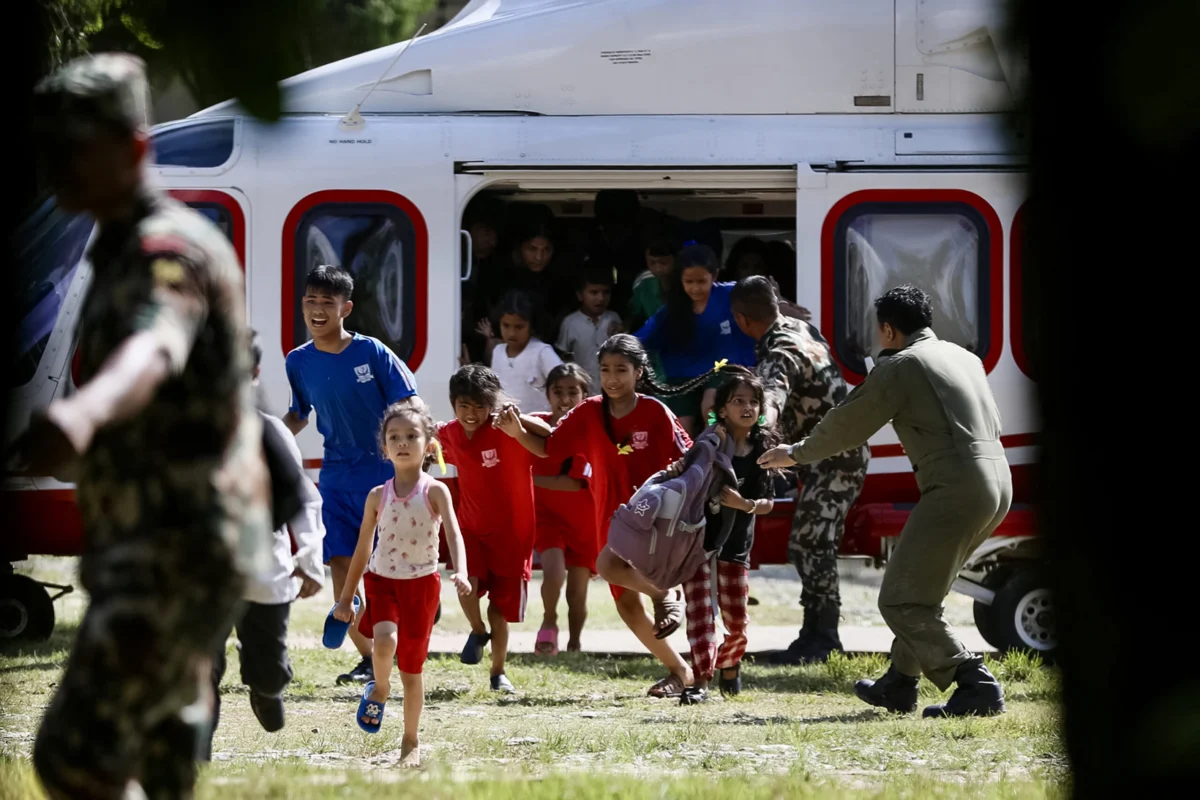
"Beyond the rubble and the missing, Nepal’s floods have inflicted a profound psychological toll on thousands of children, highlighting the critical need for immediate and sustained mental health support as a cornerstone of disaster recovery."
The physical devastation wrought by the recent catastrophic floods in Nepal, particularly in the Rasuwa, Nuwakot, and Dhading districts, is starkly visible. Homes lie in ruins, schools have been reduced to rubble, and entire communities are isolated. However, for the more than 17,000 children impacted by these events, a more insidious consequence is emerging: the erosion of their fundamental sense of safety. This psychological impact, while harder to quantify than physical damage, poses a significant long-term challenge to recovery, demanding a response that extends far beyond immediate material aid.
The flash floods that swept through Nepal on August 26th, as reported by UNICEF, have not only displaced communities but have also shattered the sense of security for countless young lives. The destruction of at least 18 schools and damage to another 20 underscores the disruption to children’s daily lives and their educational continuity. Amidst ongoing search operations for hundreds of missing individuals, the emergency response is rightly prioritizing physical survival. Yet, the proactive mobilization of mental health and psychosocial support teams by UNICEF signifies a crucial understanding: this crisis is as much about psychological resilience as it is about physical restoration. For children who have witnessed terrifying destruction, endured the loss of loved ones, or been separated from their families, the emotional and psychological repercussions will undoubtedly linger long after the immediate threat has receded.
The sudden and violent nature of floods can transform familiar surroundings into scenes of terror within moments. A cherished home can vanish, a place of learning can become inaccessible, and the presence of a parent or sibling can be cruelly extinguished. The infrastructure that binds communities together – roads and bridges – can be swept away, amplifying feelings of isolation and vulnerability. For children, whose developing sense of security is intrinsically linked to predictable routines and the steadfast presence of trusted adults, such profound disruptions are particularly destabilizing. In the wake of traumatic events, temporary emotional and behavioral shifts are common. Children may exhibit increased anxiety, experience sleep disturbances, become withdrawn and clingy, or develop acute fear responses to any reminders of the disaster. It is important to distinguish these immediate reactions from more enduring mental health conditions.
While these initial responses are a natural part of processing trauma, they do not automatically signify the development of Post-Traumatic Stress Disorder (PTSD). PTSD is a recognized mental health condition that can arise after direct exposure to or witnessing of a traumatic event. Its persistent symptoms include intrusive memories, recurrent nightmares, avoidance of trauma-related stimuli, and a state of hypervigilance. While many individuals recover from the initial shock and distress without developing PTSD, others may require specialized professional support to navigate the complex aftermath. This underscores the vital inclusion of mental health assistance within Nepal’s emergency response framework. Even at this early stage, it is evident that a significant number of survivors will likely contend with longer-term psychological challenges, necessitating ongoing care and intervention.
The loss of educational infrastructure adds another critical layer to the multifaceted impact of these floods on children. UNICEF estimates that approximately 10,000 school-aged children now require urgent support to resume their learning journeys. This includes the provision of temporary learning centers and replacement educational materials. Crucially, psychosocial support is being extended to both children and teachers, recognizing the shared trauma and the need for a supportive environment within the educational setting. A functioning school serves as more than just a place of academic instruction; in the aftermath of a disaster, it offers a vital anchor of structure and normalcy. It provides children with a familiar space to return to, facilitates reconnection with peers and educators, and helps to re-establish the routines that were shattered by the flooding.
The destruction of schools, therefore, represents a significant impediment to the recovery process. Children are not merely waiting for classrooms to be rebuilt; they are in a process of attempting to reconstruct their sense of normalcy in a world where many of the familiar places and people central to their daily lives have been irrevocably altered. This disruption to their social and educational networks further exacerbates their vulnerability and need for supportive interventions.
The floods have also placed children at a heightened risk of separation from their caregivers, a situation that profoundly intensifies distress. UNICEF is actively engaged in the critical task of identifying, registering, and reuniting children who have been separated from their families. For a child, the gnawing uncertainty about the whereabouts of a parent or relative transforms an already terrifying experience into an even greater source of anguish. This underscores the intrinsic link between psychological support and other vital components of the emergency response. The successful reunification of missing family members, the restoration of safe and predictable routines, and the provision of stable environments for learning and play all contribute significantly to fostering a more secure and conducive recovery landscape.
Consequently, mental health care in such contexts extends beyond the formal diagnosis of a disorder. In the immediate aftermath of a disaster, the priority is to help children feel protected, to facilitate their reconnection with caregivers, and to help them regain a semblance of predictability in their lives. These fundamental elements of emotional security are the bedrock upon which further psychological healing can be built.
It is imperative to acknowledge that the psychological burden of such a disaster is not confined to children. Adults who have witnessed the horrors of death and destruction, or who are grappling with the disappearance of loved ones, are also susceptible to experiencing intense stress and emotional distress. Parents, teachers, first responders, and other community members are all at risk of experiencing profound psychological effects. For families already contending with the devastation of damaged homes, disrupted livelihoods, and severely limited access to essential services, the pressures do not abate with the receding waters. This is a particularly grave concern in regions where the infrastructure has been decimated.
UNICEF’s report highlights the extensive damage to critical infrastructure, including roads, bridges, hydropower facilities, water systems, and telecommunications networks, alongside the severe damage to at least four health facilities. These widespread disruptions create formidable barriers to accessing both physical and psychological care for survivors. The inability to reach medical assistance or communicate with loved ones amplifies feelings of helplessness and isolation, further compounding the psychological toll.
Ultimately, the recovery process in Nepal will necessitate a holistic approach that transcends the mere rebuilding of physical structures. While the emergency response is understandably focused on the most immediate and urgent needs – medical attention, food, shelter, and the critical task of family reunification – UNICEF’s commitment to deploying mental health and psychosocial support teams underscores a broader understanding of recovery. This includes acknowledging and addressing the emotional experiences of survivors.
It remains premature to definitively ascertain the long-term psychological consequences for all individuals affected by these floods, including the precise number who may develop PTSD. However, the available evidence unequivocally demonstrates that thousands of children have endured an event of immense devastation. The proactive engagement of humanitarian agencies in providing psychological support signifies its recognized importance in the recovery trajectory. For some survivors, the gradual easing of distress may occur as families are reunited and daily life patterns begin to re-establish. For others, the struggle may be more prolonged, necessitating specialized and sustained care.
The overarching challenge now lies in ensuring that these vulnerable children and adults are not overlooked, simply because their injuries are not visible to the naked eye. The floods, in their swift and destructive passage, obliterated homes, roads, and schools within a matter of hours. The profound task of helping survivors, particularly children, to reclaim a sense of safety and psychological well-being may, by contrast, be a considerably longer and more intricate journey.
