
"New York City faces an unprecedented public health convergence as it prepares to host the FIFA World Cup, managing five simultaneous disease outbreaks that demand significant resources and attention, even as experts emphasize the city’s robust preparedness, particularly for highly transmissible respiratory viruses like measles."
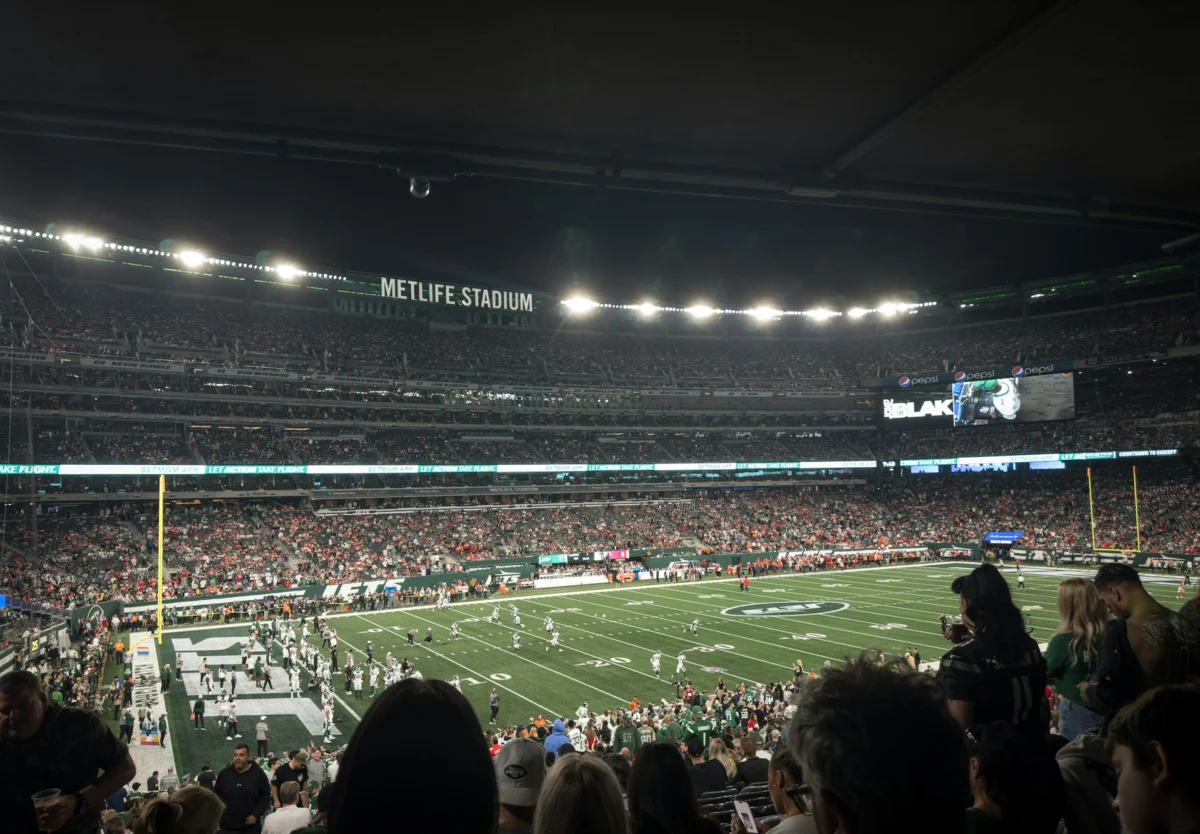
The upcoming 2026 FIFA World Cup, set to commence in mere days, presents New York City with a public health challenge of historic proportions. As the global soccer spectacle draws nearer, with the inaugural match at MetLife Stadium scheduled for July 14th, the metropolitan area is bracing for an influx of over one million international visitors. This surge, spread across 39 days of tournament play, will inundate transportation hubs, hotels, fan zones, and public venues. Against this backdrop, New York City is managing an unparalleled situation in the context of a major international event in the modern era: five distinct disease outbreaks, each requiring its own dedicated surveillance, response protocols, and resource allocation, all while drawing from the same finite public health workforce.
Despite the complexity of this convergence, health officials and experts remain confident in the nation’s readiness. Comprehensive analyses, such as those featured in CNBC and STAT News, highlight a "very robust system" and months of scaled-up surveillance and hospital coordination. Dr. Margaret Aldrich of NYU Langone asserts that the U.S. is "better prepared, honestly, than we ever have been for high-consequence infectious diseases." Infectious disease physician Dr. Krutika Kuppalli further clarifies that the most probable threats are not the headline-grabbing diseases like Ebola, but rather familiar, highly transmissible respiratory viruses that flourish in the very conditions a global event like the World Cup fosters.
The intricate public health landscape New York is currently navigating is defined by five concurrent disease activations. The first is the hantavirus situation, involving two New York State residents under strict quarantine and surveillance until June 22nd. These individuals represent the sole U.S. exposure to Andes virus, a hantavirus strain with the unique capability of human-to-human transmission, stemming from the MV Hondius cruise ship outbreak that tragically claimed three lives globally.
Secondly, the city is actively managing a measles outbreak. As of 2026, there have been 11 confirmed cases in New York State, with six in New York City and five across the rest of the state. All affected individuals are unvaccinated adults with links to international travel, contributing to a broader national outbreak of 1,974 confirmed cases.
The third activation is an Ebola preparedness posture. This is in response to the World Health Organization’s declaration of a Public Health Emergency of International Concern (PHEIC) on May 17th for the Bundibugyo outbreak in the Democratic Republic of Congo (DRC), which has resulted in 344 confirmed cases and 60 deaths. The DRC national team’s participation in the World Cup, entering through Houston, necessitates this heightened vigilance.
Fourth, rising wastewater signals in the Northeast indicate the circulation of the NB.1.8.1 COVID-19 subvariant, prompting ongoing monitoring.
Finally, the city is activating its West Nile virus surveillance programs in anticipation of the summer mosquito season, a routine but crucial public health measure.
Individually, each of these five public health challenges is a manageable concern for a city with New York’s extensive infrastructure. However, their simultaneous occurrence during the peak period of international visitor traffic in the metropolitan area’s modern history renders the summer of 2026 unprecedented. This specific scenario was indeed contemplated in a large-scale simulation exercise conducted in June 2025 by 50 agencies from New York and New Jersey. This simulation specifically modeled the arrival of a high-consequence infectious disease via LaGuardia Airport during a mass gathering event. While simulations are invaluable for preparing for single scenarios, the current reality involves managing five distinct public health crises concurrently.
Among the various disease risks associated with the World Cup, infectious disease experts have consistently highlighted measles as the pathogen most likely to precipitate a significant outbreak, rather than Ebola. Dr. Kuppalli’s insights in STAT News underscore the critical factor of transmissibility. Ebola necessitates direct contact with the bodily fluids of an infected, symptomatic individual. Measles, conversely, possesses a significantly higher transmissibility rate. Its R0 (basic reproduction number) ranges from 12 to 18, meaning a single infected person can transmit the virus to an average of 12 to 18 susceptible individuals. This transmission occurs airborne, in enclosed spaces, and the virus can remain viable for up to two hours after an infected person has left the area. Considering the massive crowds expected at a World Cup match, such as the 82,000 attendees at MetLife Stadium, and the international nature of the visitor base, including those from countries like Mexico (which reported 10,920 measles cases in 2026) and Guatemala (with 6,209 cases), the potential for rapid spread from a single, undetected infectious case in a concourse is not a theoretical projection but a biological certainty.
Despite the formidable challenges posed by these concurrent health issues, New York’s public health infrastructure is genuinely prepared. Preparations are tangible and scientifically grounded. Bellevue Hospital’s biocontainment unit has undergone specialized training tailored for the World Cup period. The Greater New York Hospital Association has facilitated multiple video training sessions focused on the identification of measles cases. New York State’s infectious disease surveillance system is operating at a heightened state of activation. The hantavirus quarantine measures, involving state troopers for monitoring and state health officials for daily symptom assessments, exemplify the system’s capacity for rapid and effective response to novel threats. Commissioner McDonald’s office has confirmed robust coordination across all five ongoing public health activations.
In terms of immediate, actionable guidance for the public, the New York City Health Department is offering Measles, Mumps, and Rubella (MMR) vaccination without appointment at clinics throughout all five boroughs. For individuals who cannot provide documentation of two MMR vaccine doses, or who were born between 1957 and 1968 and may have received an earlier, less effective formaldehyde-inactivated measles vaccine, receiving the vaccination now is the most critical health measure available before the MetLife Stadium matches commence. The World Cup Final is scheduled for July 19th. The recommended interval between two doses of the MMR vaccine is at least 28 days, meaning the window to complete the full two-dose regimen has effectively closed for maximum protection before the tournament’s conclusion. However, a single dose of the MMR vaccine still offers approximately 93% protection against measles, a disease with an R0 of up to 18. Therefore, vaccination is strongly encouraged for all eligible individuals.
