
“The annual tragedy of heat deaths has begun, starkly reminding us that the climate crisis is not a distant threat, but a present danger demanding immediate, sustained action.”
Maricopa County health officials have confirmed the first heat-related fatality of 2026, a somber milestone that officially ushers in the deadliest season for the desert Southwest. This year’s grim announcement arrived in April, catalyzed by an unprecedented March heatwave that propelled temperatures into triple digits far earlier than is typical for the region. This jarring early warning, with highs exceeding 100°F weeks before the usual late May or June arrival of extreme heat, underscores the escalating challenges posed by a warming climate and the critical need for robust public health interventions. The National Weather Service subsequently issued an Extreme Heat Warning for the entire Phoenix metropolitan area in early May, forecasting a dangerous progression of temperatures reaching 104°F, 106°F, and peaking at 108°F. This alert affected over two million residents, prompting immediate activation of emergency protocols, including trail closures and expanded cooling center operations, to mitigate the life-threatening conditions.
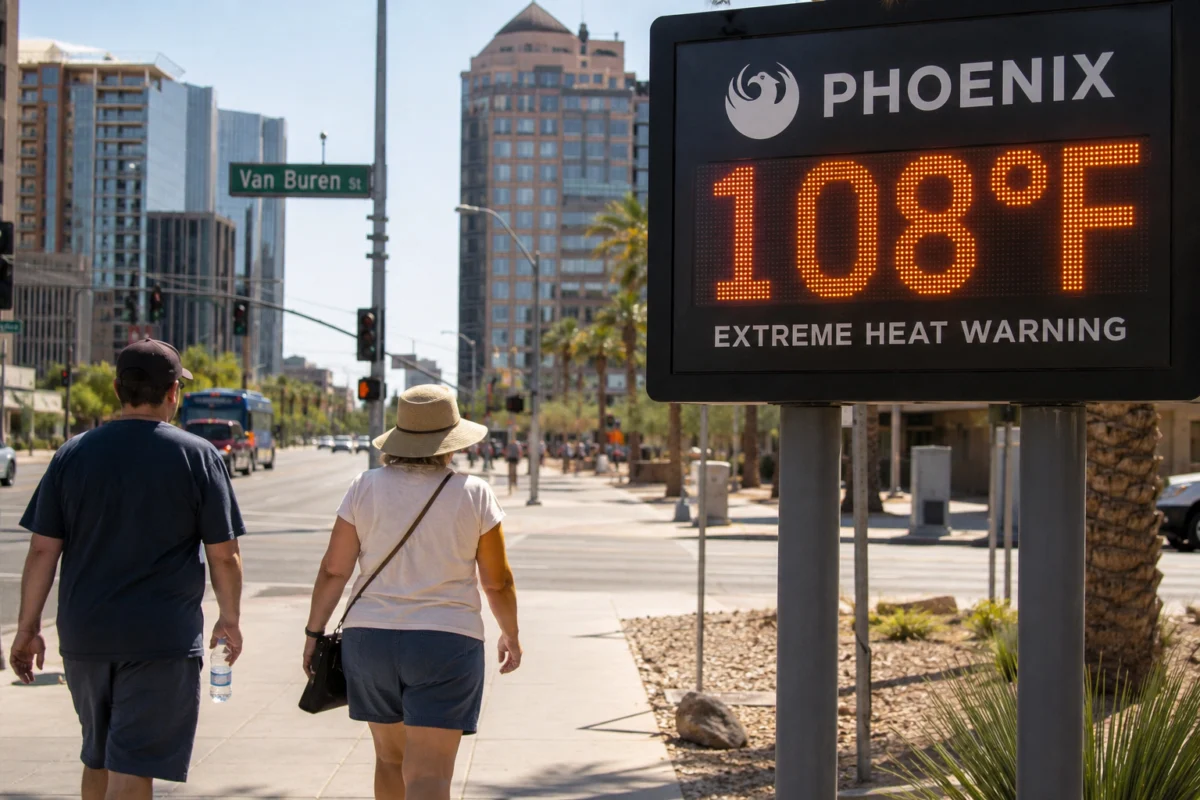
The confirmation of the first heat-related death of 2026 serves as a stark annual marker, signaling the official commencement of the desert Southwest’s most perilous season. This year, the grim reality arrived with alarming early intensity. Maricopa County’s health officials confirmed the fatality in April, following a historic March heatwave that saw temperatures soar above 100°F for multiple days. This early onslaught of extreme heat, a phenomenon typically not observed until late May or June, is a jarring deviation from historical patterns and a clear indicator of a rapidly changing climate. The National Weather Service amplified these concerns in the second week of May, issuing a formal Extreme Heat Warning for the entire Phoenix metro area. Forecasts predicted a steep climb in temperatures, with highs projected to reach 104°F on Saturday, 106°F on Sunday, and a dangerous 108°F on Monday, May 11th through the 13th. This widespread heat event placed over two million people at risk, necessitating the immediate activation of emergency public health protocols. These measures included the closure of popular hiking trails at Camelback Mountain and Piestewa Peak between 8 a.m. and 5 p.m. to prevent heatstroke among outdoor enthusiasts. Furthermore, cooling center hours were expanded across key cities including Phoenix, Glendale, Chandler, Mesa, and Tempe, and emergency public health messaging was disseminated to urge residents to prioritize hydration and seek air-conditioned shelter.
The Death Toll in Context: A City That Has Been Here Before
While Maricopa County recorded a notable decrease in heat-related fatalities in 2025, with 427 deaths compared to 608 in 2024 and 645 in 2023, this downward trend does not signify an end to the crisis. These figures reflect genuine and substantial efforts, including the City of Phoenix’s significant investment of nearly $185 million over five years in capital projects and homeless services, the establishment of a dedicated Office of Heat Response and Mitigation, and the addition of over 1,880 temporary and permanent shelter beds since 2022. The county’s Maricopa Heat Relief Network, launched on May 1, 2026, further coordinates cooling centers and water distribution points. However, even the "improved" figure of 427 deaths from 2025 represents a staggering human cost. Since 2013, Arizona has witnessed over 4,320 heat-related deaths, and the annual toll in Maricopa County has tripled since 2019. Public health experts emphasize that these are not unavoidable natural disasters, but preventable tragedies, each indicating a systemic failure to protect the most vulnerable populations. The county’s commitment to transparency is evident in its publicly accessible Maricopa County Heat-Related Illness and Death Dashboard, which provides near real-time data on heat deaths and illnesses, drawing from the medical examiner, hospitals, and the National Weather Service, offering a granular view of the crisis that few other counties can match.
Who Is Dying and Where
The demographic breakdown of heat-related deaths in Phoenix reveals critical insights into the intersection of housing policy, social safety nets, and climate vulnerability. In 2023, a year marked by a record high death toll, at least 45% of fatalities involved individuals experiencing homelessness, who were exposed to ground-level temperatures exceeding 150°F while ambient air temperatures reached 115°F or higher. Senior citizens constituted roughly one-third of these tragic losses. A geographic analysis of the data further illuminates a stark pattern: neighborhoods characterized by lower tree canopy coverage, an abundance of asphalt and concrete, and fewer green spaces—factors strongly correlated with lower household incomes—consistently experience higher heat intensity than their wealthier, more verdant counterparts. This disparity in the urban heat island effect is a direct consequence of historical planning and socioeconomic factors. Outdoor workers, including construction laborers, landscapers, agricultural workers, and delivery drivers, represent another significant at-risk demographic. Arizona currently lacks a legally enforceable state-level outdoor heat standard for workers. While federal OSHA’s heat standard offers national protections, its efficacy is contingent upon enforcement resources and political will.
The Cooling Infrastructure Gap: What Still Isn’t Working
Despite notable progress in heat mitigation efforts, significant gaps persist within Phoenix’s heat response infrastructure. A critical issue is the limited availability of 24-hour cooling centers. This is particularly problematic as nighttime temperatures in Phoenix frequently remain above 90°F during the peak summer months, rendering overnight exposure a lethal risk, especially for those without shelter. Transportation remains a substantial barrier for elderly residents, individuals with disabilities, and those lacking personal vehicles, hindering their access to vital cooling facilities. The anticipated expiration of federal pandemic-era funding that supported the heat relief network in 2026, a concern previously voiced by the county’s medical director, has materialized. This funding loss places considerable strain on a system that, by all available data, requires expansion rather than contraction. Compounding these challenges, the City of Phoenix is facing a $130 million reduction in tax revenue due to a change in Arizona state law, creating a fiscally challenging environment for scaling up essential heat response services.
How to Protect Yourself During Extreme Heat Warnings in Phoenix
During periods of extreme heat, proactive measures are essential for personal safety. Residents are strongly advised to consult the Maricopa County Heat Relief Network for the latest cooling center locations, accessible via maricopa.gov/heat. It is imperative to never leave children, the elderly, or pets unattended in parked vehicles, as interior temperatures can rapidly climb to lethal levels, often exceeding 150°F within minutes. Staying hydrated is paramount; individuals should drink water consistently, well before feeling thirsty, as the onset of thirst indicates that dehydration is already underway. Recognizing the signs of heat stroke—including hot, red, dry skin, confusion, and loss of consciousness—is critical. If these symptoms are observed in another person, calling 911 immediately and moving the individual to a shaded area while awaiting emergency services is crucial. For those whose homes lack air conditioning and who are unable to reach a cooling center, contacting 211, Arizona’s social services helpline, can provide necessary assistance. Current heat advisories and warnings for the Phoenix metro area are available on the National Weather Service website at weather.gov/phoenix.
Conclusion: Phoenix Cannot Afford a "Good Enough" Heat Strategy
Phoenix finds itself at the nexus of several accelerating crises: a warming global climate, a growing unhoused population, aging housing stock often lacking adequate cooling, and a tightening municipal budget. While the necessary tools to prevent heat deaths—cooling centers, early warning systems, and targeted outreach to vulnerable populations—exist, their effective deployment at the scale demanded by the crisis requires sustained political will and adequate funding. The first confirmed heat death of 2026 arrived in April, well before the official start of summer on June 21st. If recent years are indicative of future trends, the coming months are likely to bring thousands of emergency calls, hundreds of hospitalizations, and an unquantifiable number of additional deaths. Maricopa County’s data-driven approach to heat surveillance serves as a commendable model for national emulation. However, even the most sophisticated surveillance system is rendered ineffective if the resources to translate its findings into life-saving action are insufficient. The current trajectory demands more than incremental improvements; it requires a fundamental reevaluation of priorities and a commitment to building a heat-resilient future. The human cost of inaction is simply too high.
