
"A seven-month budget deadlock in Northern Ireland has escalated into a critical confrontation, as frustrated healthcare professionals, denied a recommended pay uplift, announce widespread strike action. This unprecedented gridlock highlights severe governance failures, threatening essential public services and placing immense pressure on frontline workers."
Northern Ireland’s political landscape is grappling with a profound fiscal crisis, now seven months into the financial year without an agreed budget. What initially manifested as a manageable administrative challenge, with public sector managers adapting to emergency financial procedures to ensure the continuity of services and payment of wages, has now undeniably spiraled into a crisis with tangible and severe consequences. The relative calm has shattered, replaced by the imminent threat of widespread industrial action, particularly within the beleaguered health sector.

The most prominent manifestation of this deepening crisis emerged this week with hospital doctors, their patience exhausted, announcing two days of strike action slated for the coming month. At the heart of their grievance lies the Northern Ireland Executive’s inability to implement a 3.5% pay uplift. This increase was not merely a demand from the unions; it was a recommendation from an independent body, subsequently accepted by the Health Minister. However, the absence of a ratified Stormont budget has rendered its implementation impossible, leaving Northern Ireland’s doctors in a significantly disadvantaged position compared to their counterparts across the rest of the United Kingdom, who have been receiving this additional 3.5% in their pay packets since April.
Clodagh Corrigan, representing the British Medical Association (BMA), articulated the collective frustration of healthcare professionals, questioning the indefinite waiting period imposed upon them. Following a meeting with the Health Minister two weeks prior, the BMA was informed that a pay rise before Christmas was highly unlikely, "if at all." This bleak outlook served as the catalyst for the announced industrial action. Junior doctors, or resident doctors as they are often termed, are set to stage a 24-hour walkout on Friday, 20th November. This will be followed by a more extensive disruption on the subsequent Monday, when consultants and specialists will operate a significantly reduced service, impacting a broad spectrum of medical care. The repercussions of these strikes are expected to be substantial, leading to cancelled appointments, postponed procedures, and increased strain on an already overstretched healthcare system.
The discontent is not confined to doctors alone. The Royal College of Nursing (RCN) has also initiated a ballot for industrial action, mirroring the doctors’ reasons for grievance. Professor Rita Devlin, executive director of the RCN in Northern Ireland, vehemently condemned the recurring situation, stating, "It is despicable that, year after year, nursing staff in Northern Ireland are forced to fight for a pay award that colleagues elsewhere in the UK receive as a matter of course." She highlighted the stark disparity, questioning why Northern Ireland’s health service staff are expected to endure indefinite delays in pay awards, a scenario she asserts would be unacceptable in England, Scotland, or Wales. This sentiment underscores a broader feeling of being undervalued and unfairly treated compared to the rest of the UK, contributing to a demoralized workforce and potential exodus of vital staff.

Health Minister Robbie Butler, caught between the demands of the healthcare sector and the realities of the budget impasse, has attempted to adopt a conciliatory stance. While acknowledging his commitment to implementing the recommended pay award, he has candidly admitted his inability to do so in the absence of a sufficient budget for his department. This statement, while empathetic, offers little immediate relief to the frontline workers facing mounting cost-of-living pressures.
The underlying cause of this paralyzing financial stasis is a fundamental disagreement among the Northern Ireland Executive parties concerning the adequacy of the UK’s devolution funding formula. There is a consensus among these parties that the current funding allocation leaves them critically short, making it impossible to formulate a viable financial plan for the region. The UK government has acknowledged the need for additional funding, proposing an injection of £1.5 billion over the next three years, with an initial tranche of £525 million earmarked for the current financial year. However, the Stormont parties have unequivocally rejected this offer, deeming it "nowhere near enough" to address the severe financial pressures facing the region’s public services.
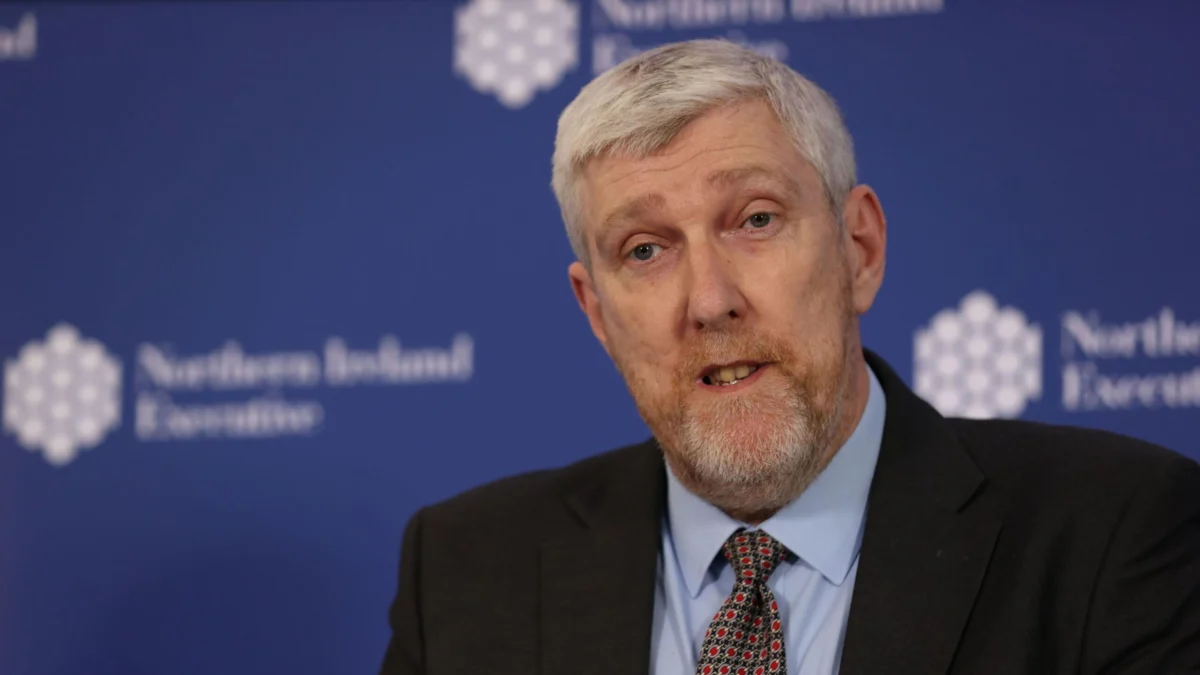
Finance Minister John O’Dowd elaborated on this disparity in the assembly, outlining that the total pressures across departments for the current financial year amount to approximately £1.6 billion. Against this backdrop, the UK government’s offer of £525 million falls drastically short. O’Dowd emphasized that public sector pay alone accounts for an estimated £500 million, asserting that any viable settlement or agreement must explicitly include provisions for pay uplifts for teachers, nurses, and other essential public-sector workers. The inability to fund these crucial pay awards not only fuels industrial unrest but also risks a significant brain drain, as skilled professionals seek better opportunities and more stable remuneration elsewhere.

The protracted negotiations and the executive’s intransigence have drawn a sharp reaction from the UK government. Sir Chris Bryant, the Secretary of State, expressed his exasperation, cautioning against "overspending willy-nilly" and warning of the inevitable consequences of such "irresponsible" financial management. A virtual meeting held between Bryant and Stormont ministers on Friday failed to yield any signs of a breakthrough, with further discussions scheduled for the following week. Bryant has set an "absolute deadline" of January for reaching a deal, citing that the funds available under current emergency arrangements will be exhausted by that point. However, to avert the looming strikes and prevent further degradation of public services, a resolution will undoubtedly be required much sooner than the end of the year.
The prolonged absence of a comprehensive budget extends far beyond the immediate issue of public sector pay. It undermines long-term planning, prevents strategic investment in infrastructure and services, and creates an environment of perpetual uncertainty. While public sector managers have demonstrated remarkable adaptability in navigating emergency procedures, this is an unsustainable model for governance. Critical decisions on resource allocation, service development, and investment are either delayed or cannot be made, leading to a slow but steady erosion of public service quality and capacity. The current impasse further highlights the inherent fragilities of Northern Ireland’s devolved governance structure, where political disagreements can directly impede the fundamental functioning of the state and the well-being of its citizens. The human cost, measured in delayed healthcare, struggling families, and a demoralized workforce, continues to mount, demanding an urgent and comprehensive resolution to this deepening crisis.
