
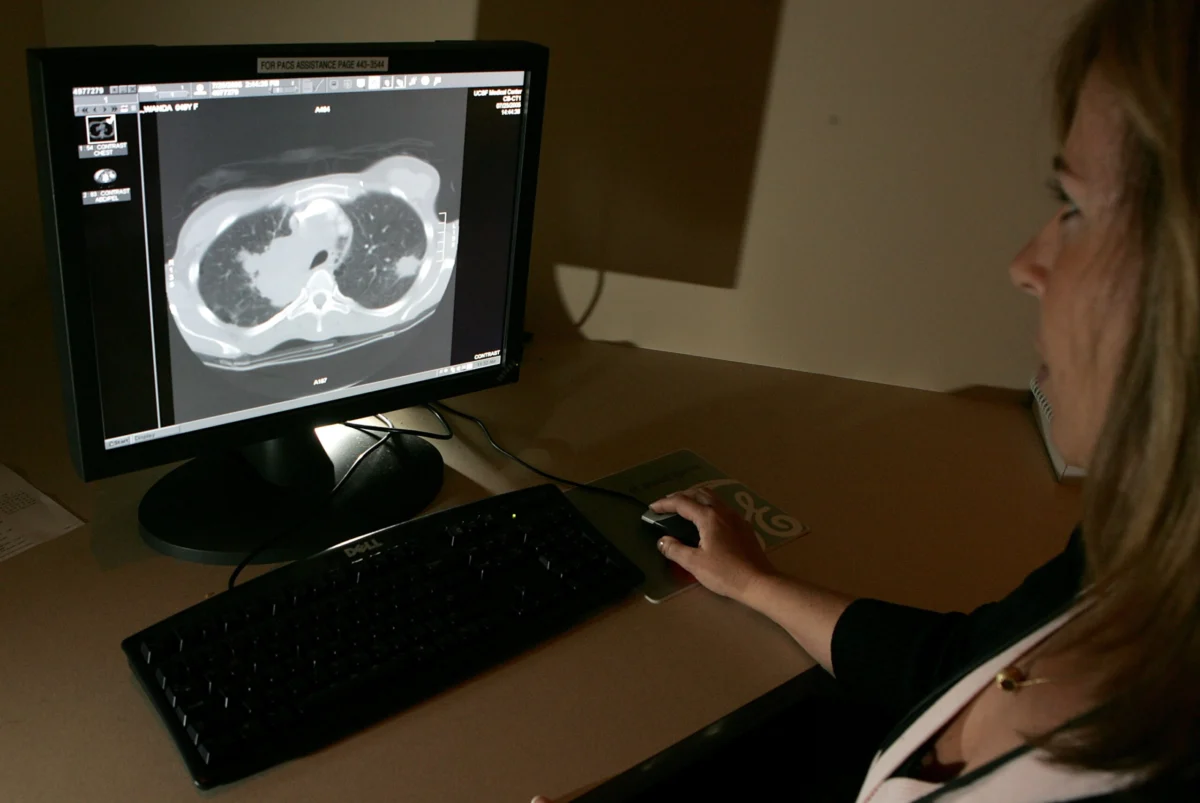
"A newly approved drug for pancreatic cancer is demonstrating significant activity against advanced lung tumors in early trials, potentially providing a much-needed targeted therapy for a patient population currently limited to chemotherapy."
A breakthrough drug, recently granted approval for pancreatic cancer, is now showing encouraging results in the fight against advanced non-small cell lung cancer (NSCLC). Daraxonrasib, marketed as Rasonque, has demonstrated a notable objective response rate in an early-stage clinical trial involving patients with previously treated RAS-mutant NSCLC. This development is particularly significant given the current lack of targeted treatment options for a substantial subset of lung cancer patients, offering a glimmer of hope where chemotherapy has been the primary recourse.
The findings, published in the prestigious New England Journal of Medicine and corroborated by reports from the trial’s lead research center, stem from the initial Phase 1/2 study of daraxonrasib. This first-in-human investigation explored the drug’s safety and efficacy in individuals with advanced RAS-mutant NSCLC who had already undergone prior systemic therapies. The results indicated a promising level of tumor shrinkage, with response rates varying between 31% and 37% across different dosage groups. A more focused post-hoc analysis, specifically examining the dose range intended for Phase 3 testing, revealed an even more compelling objective response rate of 42% among 38 patients. These individuals also experienced a median duration of response of 11.5 months, a median progression-free survival of 8.3 months, and a median overall survival of 16 months.
These statistics hold considerable weight due to the significant unmet need in current lung cancer treatment paradigms. RAS mutations represent one of the most prevalent drivers of lung cancer, identified in approximately 30% of all cases. While a targeted therapy, specifically for the KRAS G12C variant, is available, it addresses only a fraction of RAS-mutant lung cancers. For the vast majority of patients with other RAS mutations, the therapeutic landscape is considerably more limited. Once initial treatments prove ineffective, these patients are typically transitioned to chemotherapy, most commonly docetaxel, a regimen that often comes with its own set of challenges and limitations. The potential for daraxonrasib to address this gap is therefore a critical development.
The Safety Profile: A Crucial Component Alongside Efficacy
While the efficacy data is undeniably encouraging, a comprehensive understanding of the drug’s safety profile is equally paramount. The Phase 1/2 study revealed that nearly all participants experienced some form of adverse event. Dermatological reactions, specifically rash, were reported in 90% of patients, while gastrointestinal side effects such as diarrhea (73%), nausea (62%), and vomiting (54%) were also common. More concerningly, Grade 3 or higher adverse events, indicative of severe toxicity, were observed in 54% of participants across all dose levels. Tragically, four patients in the study died as a direct consequence of these adverse events.
It is imperative that this safety data is not relegated to a mere footnote. Phase 1/2 trials, particularly those involving dose escalation, are inherently designed to explore the upper limits of drug tolerability. As such, severe adverse events are an anticipated outcome, especially when examining a range of doses that may not ultimately be selected for further development. However, the occurrence of four deaths in an early-stage trial is critical information that patients and their families must have readily available alongside the efficacy metrics. This vital aspect of the drug’s profile is the most susceptible to being minimized in abbreviated summaries. Dr. David Hong, the lead investigator of the study and an oncologist at MD Anderson Cancer Center, emphasized that while these toxicities highlight the necessity of rigorous dose optimization, they are largely manageable when weighed against the limited alternatives available to these patients.
It is also important to note that the study received funding from Revolution Medicines, the pharmaceutical company that manufactures daraxonrasib. While industry funding is standard in oncology drug development and does not inherently invalidate trial results, it underscores the importance of applying the same level of critical scrutiny to these findings as one would to any company-sponsored research.
Dr. Kathryn C. Arbor, a thoracic medical oncologist at Memorial Sloan Kettering Cancer Center and the first author of the published paper, shared her perspective with Healio, noting that the observed tumor shrinkage and duration of disease control in lung cancer patients closely mirrored the patterns seen in the pancreatic cancer trials. She expressed optimism that this would translate into a tangible survival benefit. Dr. Arbor characterized the current findings as an "encouraging signal" rather than definitive proof, stressing that the optimal dosage might vary significantly between different diseases and even among individual patients.
An Innovative Mechanism for an Elusive Target
The development of drugs targeting RAS proteins has historically presented a formidable challenge to the pharmaceutical industry. For decades, the surface of these proteins offered no readily identifiable binding sites for small molecules, earning them the moniker of "undruggable." Daraxonrasib circumvents this obstacle through a novel mechanism of action. It functions as a "molecular glue," initially binding to a common cellular protein known as cyclophilin A. This binding event then creates a composite structure capable of latching onto RAS proteins, thereby inhibiting their ability to interact with downstream partners essential for driving tumor proliferation. This multi-selective approach, rather than targeting a single mutation, is what allows daraxonrasib to engage a broader spectrum of RAS variants beyond the KRAS G12C mutation.
This unique mechanism also offers a rationale for the observed toxicity profile. A drug that broadly influences RAS signaling is inevitably impacting a pathway utilized by healthy cells as well. The resulting side effect profile is a reflection of this inherent trade-off.
Bridging the Gap: From Promising Data to Prescribed Therapy
It is crucial to reiterate that daraxonrasib is not currently approved for the treatment of lung cancer, and the publication of these findings does not alter the immediate therapeutic options available to patients. The U.S. Food and Drug Administration (FDA) granted approval for Rasonque for metastatic pancreatic adenocarcinoma on August 26, several months ahead of its scheduled review deadline. This approval was for adult patients who had received at least one prior systemic therapy or who were not candidates for multiagent treatment regimens.
For daraxonrasib to be considered for lung cancer, further data from the ongoing randomized Phase 3 trial, known as RASolve 301, will be required. This trial is currently comparing the efficacy of daraxonrasib against standard chemotherapy in patients with previously treated RAS-mutant NSCLC. Regulatory bodies will almost certainly demand these data before considering an approval for lung cancer. It is also a common observation that Phase 1/2 response rates, while promising, can appear more favorable than the outcomes confirmed in larger, randomized trials. The company’s announcement regarding the publication of these results explicitly frames them as supportive of the ongoing Phase 3 trial, rather than as standalone evidence of clinical benefit.
For patients with RAS-mutant lung cancer whose current treatments are no longer effective, the most practical next step is a detailed discussion with their oncologist. This conversation should focus on determining their eligibility for the RASolve 301 clinical trial. Key aspects to cover include the specifics of the trial protocol, the accessibility of participating clinical sites, and a thorough understanding of how the known toxicity profile might impact their individual health status. Participation in clinical trials is not universally appropriate, and it is important for patients to understand that they may be randomized to receive the standard chemotherapy arm of the study.
Clarifying the meaning of a 42% response rate is also essential, as this figure can be easily misinterpreted. It quantifies the proportion of patients whose tumors exhibited a measurable shrinkage based on imaging criteria. It does not imply that 42% of patients were cured, nor does it suggest that the remaining 58% derived no benefit. Disease stabilization, where the tumor stops growing, is also considered a positive outcome and contributes to disease control. Therefore, response rate serves as an early indicator of a drug’s activity, not as a direct measure of patient survival duration.
Patients should also ascertain whether comprehensive genomic testing has been performed on their tumor. While this testing is considered standard practice for advanced NSCLC, it is not universally administered. The identification of the specific RAS mutation is critical for determining eligibility for targeted therapies. Patients who are uncertain about whether their tumor has been sequenced should proactively inquire with their oncology team.
Several key questions remain unanswered. The ultimate survival benefit in a randomized setting is yet to be determined. The precise dose that optimally balances therapeutic efficacy against toxicity requires further investigation. Furthermore, it is unclear whether specific RAS variants exhibit differential responses to daraxonrasib. These critical questions are expected to be addressed by the ongoing Phase 3 trial, with initial data anticipated next year. Until then, the current findings represent a significant and promising early development in a disease area that is in dire need of innovative therapeutic options.
