
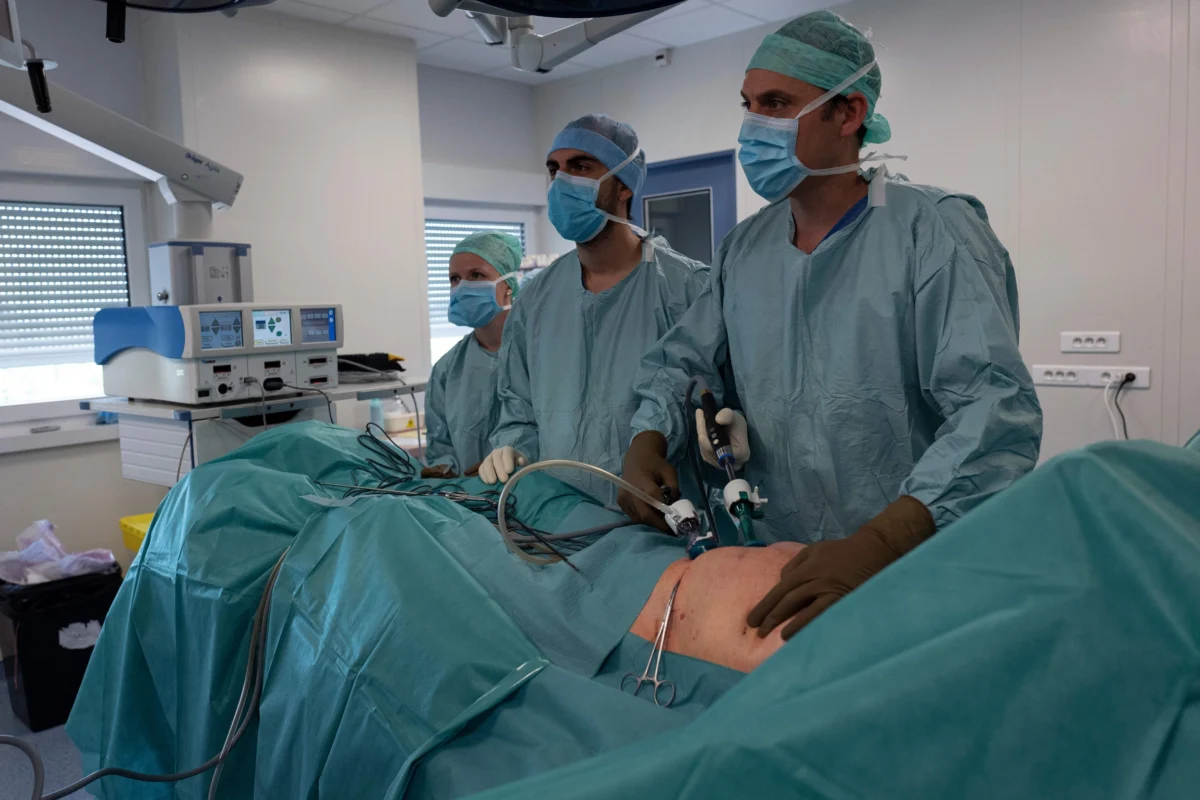
"A novel, five-session radiation approach for pancreatic cancer patients preparing for surgery significantly improved physical function and reduced fatigue compared to the standard 28-session regimen, though long-term survival benefits require further investigation in larger studies."
For patients battling pancreatic cancer, the journey from diagnosis to surgical intervention is often arduous, marked by demanding treatments designed to shrink tumors and improve surgical outcomes. A recent randomized trial presented at the American Society for Radiation Oncology annual meeting has illuminated a potentially less burdensome approach to pre-operative radiation therapy, demonstrating that a concentrated, five-session course of stereotactic body radiation therapy (SBRT) can significantly enhance a patient’s physical well-being without compromising key surgical metrics. This finding, from the SOFT Preop study, offers a glimmer of hope for patients already enduring chemotherapy and facing the prospect of major surgery, suggesting a way to potentially improve quality of life during a critical treatment phase. However, the data also highlights a nuanced survival picture, underscoring the ongoing need for comprehensive research to fully understand the long-term implications of different pre-operative treatment strategies.
The SOFT Preop study, a pivotal randomized trial spearheaded by William A. Hall, M.D., Chair of Radiation Oncology at the Medical College of Wisconsin in Milwaukee, enrolled 102 patients whose pancreatic cancer had not spread to distant organs and was deemed potentially resectable. These individuals had already undergone at least one month of chemotherapy, with most receiving more than two months of this systemic treatment. The trial aimed to compare two distinct radiation delivery methods: stereotactic body radiation therapy (SBRT), delivered in a condensed five-session course, and conventional radiation therapy administered alongside chemotherapy over 28 sessions. Both treatment arms meticulously targeted the primary tumor and adjacent high-risk lymph nodes, with surgical intervention planned for four to six weeks post-therapy.
The results regarding pre-operative physical function were striking. Patients who received the SBRT regimen reported substantially better physical function and overall physical health, coupled with a marked reduction in fatigue, in the period leading up to their surgery. This improvement in quality of life, while noted to fade after the surgical procedure, was a significant benefit for patients already navigating the physical toll of chemotherapy. "For patients with pancreatic cancer who have already spent months receiving chemotherapy and are preparing for major surgery, reducing the amount of time spent in radiation treatment matters," stated Dr. Hall, emphasizing the practical implications of this shorter treatment course.
Beyond subjective patient reports, the trial also assessed objective measures of treatment efficacy. The primary endpoint, concerning the presence of residual cancer in lymph nodes at the time of surgery, showed no significant difference between the two groups. Among the 83 patients who successfully completed both radiation treatment and surgery, 41% in the SBRT group and 38% in the chemoradiation group still exhibited cancer in their lymph nodes. Similarly, complication rates, tumor response, and the achievement of clear surgical margins did not reveal statistically significant disparities between the SBRT and conventional chemoradiation arms. This suggests that the reduced radiation burden of SBRT does not come at the cost of compromised tumor control or surgical success in the short term.
However, the narrative surrounding survival tells a more complex and cautious story. The median overall survival from the point of enrollment was 26 months for patients treated with SBRT, compared to 43 months for those who received conventional chemoradiation. At the three-year mark, 43% of the SBRT group remained alive, versus 58% of the chemoradiation group. Median progression-free survival also showed a difference, with approximately 14 months for SBRT and 22 months for chemoradiation. Over a median follow-up period of about 3.4 years, six patients in the SBRT group experienced cancer recurrence near the pancreas, compared to two patients in the chemoradiation group. Even when considering only patients who completed all therapies, including surgery, the median survival was 39.6 months with SBRT and 45.5 months with chemoradiation.
Crucially, none of these observed survival differences reached statistical significance. The SOFT Preop trial, with its cohort of approximately 100 participants, was not designed with sufficient statistical power to definitively detect survival differences. In studies of this size, a handful of outcomes can substantially influence median figures, making definitive conclusions about survival challenging. Nevertheless, a gap of this magnitude warrants attention, underscoring the necessity for larger, more robust trials to elucidate the true long-term survival impact of SBRT in this context. The trial’s limitations also include its single-institution nature, which means results might not be universally generalizable, and the fact that survival was measured from enrollment rather than from initial diagnosis, a common practice in pre-operative treatment trials.
Daniel Chang, M.D., Chair of ASTRO’s pancreatic cancer guideline committee and a practitioner at the University of Michigan, offered valuable perspective. He noted that "SBRT did not increase surgical complications, an often-cited concern," which is a significant finding given the potential apprehension surrounding intensified radiation techniques. However, he cautioned that these findings, in isolation, do not warrant a change in current standard treatment guidelines. Dr. Hall, in his defense of the SBRT approach, posited that as systemic therapies for pancreatic cancer continue to advance, local tumor control will become increasingly paramount. "If you want to cure these patients, they simply cannot recur locally," he asserted, highlighting the critical role of effective radiation in achieving long-term cure. "The next step is to build on these findings in larger studies."
Pancreatic cancer remains one of the most formidable and deadliest malignancies globally. The American Cancer Society estimates that approximately 67,530 Americans will be diagnosed with pancreatic cancer in 2026, with an estimated 52,740 succumbing to the disease. For the unfortunate minority whose cancer is localized and amenable to surgical removal, every phase of pre-operative treatment can profoundly influence their strength, recovery trajectory, and the daily routines of their families. The conventional approach of daily radiation for several weeks can translate into frequent travel, potential work disruptions for caregivers, and amplified fatigue at a time when patients need to conserve their energy for major surgery.
The prospect of a five-visit SBRT schedule offers a tangible reduction in this treatment burden. However, patients and their families must carefully weigh this convenience against the currently uncertain survival data. Choosing SBRT solely for its logistical advantages, without a thorough understanding of its potential long-term implications, may not be advisable. The National Cancer Institute provides comprehensive information on how chemoradiation and other pancreatic cancer treatment modalities are employed, guiding patients toward informed decision-making.
When discussing treatment options with their care team, patients should proactively ask several pertinent questions. These include: whether radiation therapy is recommended at all in their specific clinical situation; which treatment schedule the team prefers and the rationale behind that recommendation; the center’s level of experience with SBRT for pancreatic cancer; and whether participation in a clinical trial is a viable option. Recent reports have indicated an increase in the time from diagnosis to treatment initiation, making early discussions about scheduling and treatment sequencing all the more critical.
During treatment, patients must remain vigilant for any concerning symptoms. Prompt medical attention should be sought for signs such as yellowing of the skin or eyes (jaundice), fever, severe abdominal pain, persistent vomiting, or any indication of dehydration. It is imperative that patients do not alter their planned treatment regimen without a thorough discussion and explicit guidance from their oncology team. The integration of patient-reported outcomes, like physical function and fatigue, alongside oncological endpoints, is crucial for developing treatment strategies that not only aim for survival but also prioritize the quality of life for individuals facing this challenging disease. The evolution of treatment paradigms in pancreatic cancer, as exemplified by the SOFT Preop trial, underscores the ongoing commitment to refining therapeutic approaches to better serve the complex needs of patients.
Key Questions Answered
What did the trial compare? The trial compared a novel five-session course of stereotactic body radiation therapy (SBRT) against the standard 28-session regimen of radiation delivered with chemotherapy, both administered prior to pancreatic cancer surgery.
What was the benefit of SBRT? Patients receiving SBRT reported significantly better physical function and experienced less fatigue during the pre-operative treatment period. Crucially, this shorter regimen demonstrated comparable results in terms of lymph node involvement and surgical outcomes.
Was survival different? While the median survival figures were lower in the SBRT group, these differences were not statistically significant. The trial’s design was not specifically powered to detect definitive survival differences, indicating that further research is needed to clarify the long-term survival impact.
Who took part? The study enrolled 102 patients diagnosed with non-metastatic pancreatic cancer who had already completed a course of chemotherapy.
Does this change standard care? Not at this time. The current findings, while promising for quality of life, necessitate validation through larger, multi-center trials before they can alter standard clinical practice.
What should patients ask? Patients should inquire about the recommendation for radiation therapy, the rationale behind specific treatment schedules, the institution’s experience with SBRT for pancreatic cancer, and the availability of relevant clinical trials.
