
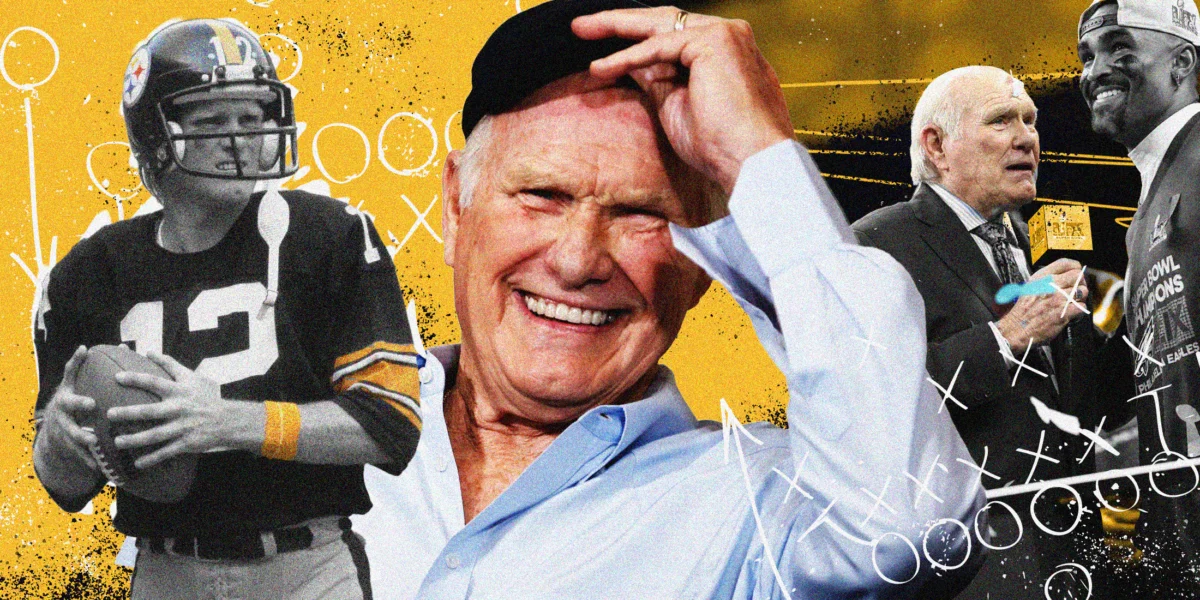
"Depression isn’t a weakness, it’s an illness; and once you strip away the Super Bowl rings and the television cameras, the most important thing a man can do is be honest about his own humanity."

Terry Bradshaw has spent five decades in the American spotlight, evolving from the "Blonde Bomber" of the Pittsburgh Steelers to the jovial, self-deprecating face of Fox NFL Sunday. Yet, behind the four Super Bowl rings and the boisterous laughter lies a complex narrative of clinical depression, cancer survival, and a calculated public persona that masks a deeply reflective private life. In his latest memoir, Looking for Terry, Bradshaw peels back the layers of his celebrity to offer a raw look at the realities of aging in the public eye and the internal battles that fame cannot fix.
At 78 years old, Terry Bradshaw finds himself in a peculiar state of physical exhaustion. It is not the lingering trauma of a 14-year NFL career or the rigors of maintaining his sprawling Texas ranch that has him feeling "achy" today. Instead, it is the sheer volume of his own legacy. Bradshaw recently completed the grueling task of signing 4,300 stickers in a fortnight, with thousands more waiting in the wings. For a man whose index finger is literally beginning to curve from the repetitive motion of the pen, the demand for his signature serves as a constant reminder that, despite his desire for a quiet life, the public’s appetite for "Terry" remains insatiable.

The release of Looking for Terry marks Bradshaw’s first major literary reflection in 25 years. His previous memoir, published at the turn of the millennium, captured a man still firmly in the middle of his broadcasting prime. The intervening quarter-century, however, has brought a profound shift in perspective. Since 2001, Bradshaw has navigated a fourth marriage to his longtime partner, Tammy, survived two distinct cancer diagnoses, and launched a successful bourbon brand. More importantly, he has become one of the most visible advocates for mental health in a demographic—older, "tough" athletes—that historically avoided the subject at all costs.
The central tension of Bradshaw’s life remains the "dumb" image he has cultivated since his playing days in Pittsburgh. During the 1970s, as he led the Steelers to four Super Bowl championships, media narratives often painted him as a physically gifted but intellectually lacking quarterback from Louisiana. Rather than fight the label, Bradshaw leaned into it, eventually weaponizing self-deprecation to become one of the most successful entertainers in sports history. He admits to playing into the caricature because it makes people comfortable, yet he acknowledges the fatigue that comes with being a permanent source of amusement. He views his TV role as a high-wire act: he provides hardline football analysis but wraps it in a smile, occasionally worrying that he tries too hard to entertain.

This desire to please is rooted in a deep-seated sense of personal responsibility toward his audience. Bradshaw rejects the modern "celebrity" archetype, viewing his interactions with fans at airports and grocery stores as a vital part of his human experience. To Bradshaw, the titles, the movies, and the Super Bowl rings are ephemeral. He believes that when those external accolades are stripped away, all that remains is the way a person treated others. This philosophy has guided his post-playing career, allowing him to transition from a legendary athlete to a beloved cultural fixture.
However, the joviality often hides a darker reality. Bradshaw’s struggle with clinical depression is a cornerstone of his new memoir. He describes the "dark, dark, dark times" that persist even with the aid of medication. For Bradshaw, the diagnosis was a revelation, providing a clinical explanation for the emotional "holes" he found himself in following divorces, injuries, and personal failures. He credit his wife, Tammy, with being the stabilizing force that prevents him from spiraling into destructive habits, such as excessive drinking or impulsive purchasing.

Bradshaw’s openness about his mental health has created a unique legacy. He recounts numerous instances of men approaching him in grocery store aisles to quietly thank him for his honesty. These men, often from a generation that viewed depression as a character flaw rather than an illness, found the courage to seek medical help because they saw a four-time Super Bowl champion admit to the same struggle. For Bradshaw, these quiet interactions are more meaningful than any Hall of Fame induction. He recalls a particularly harrowing two-year period following a divorce where the "emotional drag" of feeling he had lost his daughters became unbearable, ultimately forcing him to seek the professional help that saved his life.
In addition to his mental health battles, Bradshaw has recently faced significant physical health crises. In 2021 and 2022, he was diagnosed with skin cancer and bladder cancer, respectively. His reaction to these diagnoses was characteristically pragmatic, informed by his Christian faith. While he admits he did not initially grasp the severity of bladder cancer, he approached the illness as a "challenge" rather than a death sentence. He speaks candidly about the anxiety of "check-up culture"—the six-month intervals of waiting for a phone call that determines whether he remains cancer-free. This cycle of reprieve and anticipation is a reality for millions of survivors, and Bradshaw’s description of it adds a layer of relatability to his larger-than-life persona.

As he looks toward the future, Bradshaw is acutely aware that the curtain is beginning to close on his broadcasting career. He recently signed a two-year extension with Fox Sports, which will see him through the network’s coverage of the Super Bowl in 2029. While he remains "supremely confident" on the air, he is realistic about the industry’s penchant for youth and the likelihood that he will be replaced after his current contract expires.
Interestingly, Bradshaw is adamantly opposed to the traditional "victory lap." He has no desire for a televised retirement tribute or a sentimental send-off. In fact, he refuses to officially announce a retirement date, partly because he doesn’t want to give the network the satisfaction of a pre-planned eulogy for his career. "They’re pissing into the wind if they think I’m gonna tell them I’m retiring," he says with a laugh. His defiance is not born of bitterness, but of a desire to leave on his own terms, without the pomp and circumstance that he feels he doesn’t need.

When reflecting on his life outside of the spotlight, Bradshaw reveals a man who is surprisingly risk-averse. Despite his "Blonde Bomber" nickname and his history of taking hits from 300-pound linemen, he harbors a deep fear of heights and water. He has no interest in paragliding, snorkeling, or any activity that involves a tank of air or the threat of sharks. His life on the ranch is his sanctuary, a place where he can be the "open book" his wife describes, away from the pressure to perform.
Bradshaw’s final years at Fox will likely focus on what he does best: making people smile and offering unfiltered opinions. He is already planning a follow-up book, which he describes as a "strong opinion book" rather than a traditional memoir. This suggests that while his physical presence on television may eventually fade, his voice will remain a fixture in the cultural conversation.

Ultimately, Terry Bradshaw’s journey is a testament to the power of authenticity. In an era where public figures are often hyper-curated and guarded, Bradshaw has chosen to be vulnerable. Whether discussing the curve of his signing finger, the depths of his depression, or his pragmatism in the face of cancer, he remains a man who values human connection over celebrity status. As he approaches his 80th year, Bradshaw isn’t looking for a tribute; he’s simply looking to be understood as a man who, despite his extraordinary achievements, is "just people" like everyone else.
