
"Turkey has emerged as a global hub for hair transplantation, offering competitive pricing and accessible packages. However, the allure of medical tourism necessitates rigorous research to distinguish genuine medical expertise from marketing prowess, ensuring patient safety and optimal outcomes."
The burgeoning field of medical tourism has made international hair transplantation more attainable than ever before, with destinations like Istanbul becoming synonymous with advanced restoration procedures. While patients can now conveniently research surgeons and arrange consultations from the comfort of their homes, the rapid growth of this industry presents a challenge: discerning reliable medical information from persuasive advertising. The promise of attractive prices, comprehensive travel packages, and experienced medical teams, often found when searching for "hair transplant Turkey," is undeniable. Yet, it is crucial to remember that hair transplantation is a surgical procedure, not a consumer purchase, demanding thorough investigation, particularly as the final results manifest months after the patient’s return home.
Understanding the Scope of Hair Transplant Medical Tourism
Hair transplant medical tourism encompasses the practice of traveling to another country to undergo surgery aimed at restoring hair to thinning or balding areas. This intricate procedure involves the meticulous harvesting of hair follicles, typically from the occipital and temporal regions of the scalp where hair is genetically more resistant to androgenetic alopecia. These grafts are then strategically implanted into areas requiring increased density, guided by a precise plan that considers the desired hairline, aesthetic density, and the available donor supply.
The journey extends far beyond the surgical intervention itself. Prior to the procedure, patients are required to share detailed scalp photographs and comprehensive medical histories, allowing the medical team to formulate a personalized treatment strategy. Upon arrival, this is followed by a thorough in-person examination and any necessary diagnostic tests, culminating in the surgical procedure. Crucially, effective medical tourism necessitates a robust follow-up protocol, often conducted remotely, to monitor healing and assess the progress of hair growth. This integrated approach ensures that every stage of the process is thoughtfully connected, rather than the surgery being perceived as an isolated service.
The Ascendancy of Turkey as a Hair Restoration Destination
Istanbul’s strategic geographical location, offering convenient air travel from Europe, North America, and the Middle East, has significantly contributed to its popularity. Furthermore, the well-established network of clinics, hotels, and dedicated patient coordinators simplifies the logistical complexities for individuals undertaking their first medical trip abroad.
A primary driver for this trend is the more affordable operational costs within Turkey, which translate into more competitive treatment prices compared to many Western countries. These cost advantages are often bundled into comprehensive packages, further enhancing their appeal. However, it is imperative to recognize that clinics offering similar graft numbers may exhibit substantial disparities in physician involvement, the rigor of safety protocols, and the quality of post-operative care. These nuances, often overshadowed by price comparisons, are as critical as the financial outlay itself.
Deconstructing Hair Transplant Turkey Prices: What’s Included?
When searching for "hair transplant Turkey prices," prospective patients are met with a wide spectrum of figures. Published package estimates for 2026 commonly range between $2,000 and $6,000. The final quotation is influenced by several key factors: the specific technique employed, the level of physician involvement, and the breadth of included services. While some clinics adopt a per-graft pricing model, others offer fixed package rates. It is a critical oversight to assume that price alone is a definitive indicator of quality.
Before committing to any payment, patients should meticulously request a written breakdown of all services included. For instance, Smile Hair Clinic, a prominent provider, currently details three distinct packages on its website, each offering varying degrees of physician involvement and accommodation. These published price points serve as a valuable illustration of how a single clinic can cater to different patient needs and budgets through tiered treatment options.
| Smile Hair Clinic Package | Published 2026 Price | Main Distinction |
|---|---|---|
| Gold | €2,390 | Standard package including hotel, airport transfers, and post-operative care. |
| Platinum | €3,290 | Enhanced package with greater physician involvement in recipient-site preparation. |
| Diamond | €5,790 | Premium package led by a senior doctor, offering additional care and services. |
Beyond the clinic’s package, the overall budget must also account for ancillary costs such as flights, additional nights of accommodation, time taken off work, and potential expenses for post-return care. A transparent quotation should clearly delineate who performs each surgical stage, outline contingency plans for unforeseen changes, and specify the channels through which patients can contact the clinic after their departure from Turkey.
Assessing the Safety of Hair Transplants in Turkey
Hair transplantation is generally regarded as a safe procedure when executed within a proper medical environment by qualified professionals. Nevertheless, potential risks, though uncommon, can include infection, excessive bleeding, post-operative swelling, scarring, adverse reactions to local anesthesia, and suboptimal graft survival. The patient’s pre-existing medical conditions, the sterility and preparedness of the operating environment, and the expertise of the surgical team are all significant determinants of risk. It is crucial to understand that an aesthetically pleasing clinic interior cannot substitute for robust clinical protocols and rigorous safety standards.
The International Society of Hair Restoration Surgery (ISHRS) strongly advises against the involvement of unlicensed personnel in critical surgical steps. Patients have the right to know the identity of the responsible physician and the specific roles of each team member. Turkey maintains official registries of healthcare providers authorized for international health tourism, and it is highly advisable for prospective patients to verify these credentials directly.
Key questions to pose before booking include:
- Who is the lead surgeon, and what are their qualifications and experience in hair transplantation?
- What specific qualifications do the other members of the surgical team possess?
- What is the clinic’s protocol for managing potential complications?
- What level of post-operative follow-up is provided, and how is it administered?
Smile Hair Clinic: A Physician-Founded Philosophy in Istanbul
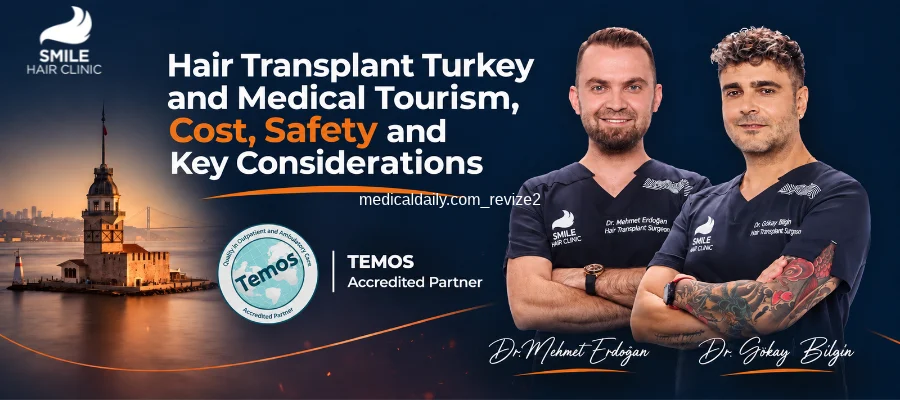
Established in 2018 by accomplished medical professionals Dr. Mehmet Erdoğan and Dr. Gökay Bilgin, Smile Hair Clinic has centered its practice on hair transplantation and the specialized needs of international clientele. Both founders are medical doctors with extensive experience in the field of hair restoration. Dr. Erdoğan brings a background in health services management and international patient care, while Dr. Bilgin excels in individualized treatment planning and the intricate art of hairline design.
The clinic offers advanced techniques such as Sapphire FUE and DHI, with dedicated medical teams actively involved in both the planning and execution phases of treatment. Their comprehensive service offerings, as detailed on their website, include initial consultations, accommodation arrangements, transportation, and ongoing support. It is important for patients to understand that the extent of founder or senior physician involvement can vary depending on the selected package, and these details should be clarified in writing to avoid any assumptions about personal involvement in every stage of the procedure.
For individuals seeking the "best hair transplant clinic in Turkey," the evaluation should extend beyond mere rankings or superficial assessments. A reputable provider will clearly articulate their treatment plan, identify the physicians involved, and candidly discuss the procedure’s limitations. Smile Hair Clinic’s international accreditation serves as an additional, valuable point of comparison in this rigorous selection process.
The Significance of TEMOS Accreditation for International Patients
In September 2025, the Germany-based accreditation body TEMOS International recognized Smile Hair Clinic as the first hair transplant clinic globally to achieve accreditation for "Quality in Outpatient and Ambulatory Care." Furthermore, Smile Hair Clinic reported receiving the TEMOS A-Rated accreditation, underscoring their unwavering commitment to patient safety and adherence to international healthcare quality benchmarks.
The clinic subsequently announced the renewal of its A-Rated status in September 2026, following a rigorous reassessment. This accreditation signifies a comprehensive evaluation of healthcare processes rather than a guarantee of specific surgical outcomes. The TEMOS assessment is particularly valuable as it scrutinizes aspects beyond the operating room, encompassing infection control, patient and staff safety, quality management systems, international patient services, ethical practices, and facility standards. These are critical considerations that can be challenging for patients located in a different country to fully assess through virtual consultations or a curated selection of before-and-after photographs.
The TEMOS accreditation provides an objective verification of a clinic’s operational systems, complementing assessments of individual qualifications, local regulatory authorization, and the initial consultation. The 2026 renewal is significant as it indicates that the clinic’s adherence to these high standards has been re-evaluated and maintained. Ultimately, accreditation should serve as a foundational element to inform patient inquiries, not as a substitute for them.
Differentiating Between FUE, Sapphire FUE, and DHI Techniques
The choice of hair transplantation technique is a critical component of the treatment plan. Follicular Unit Extraction (FUE) involves the meticulous removal of individual follicular units from the donor area. Sapphire FUE refines this process by utilizing specialized sapphire-tipped blades to create precise micro-incisions for recipient sites, potentially leading to faster healing and reduced scarring. Direct Hair Implantation (DHI) typically employs an implanter pen for the direct placement of harvested grafts into the scalp.
However, the mere naming of a technique does not reveal the surgeon’s skill in meticulously planning the hairline or their diligence in preserving the integrity of the donor hair. The optimal approach is highly individualized, depending on factors such as the extent of hair recession, the desired density, hair texture, scalp condition, and the projected progression of future hair loss. A responsible consultation should also explore whether surgical intervention is the most appropriate course of action. Individuals experiencing unstable hair loss or possessing insufficient donor hair may benefit more from further diagnostic evaluation or medical management prior to considering a transplant.
Pre- and Post-Journey Considerations
Effective medical tourism commences well before the departure date. Patients must disclose all relevant medical conditions, current medications, and any prior hair restoration treatments. Following this, they will receive detailed instructions on how to prepare for the procedure. On the day of surgery, the medical team will confirm the planned hairline, the estimated graft count, and all treatment specifics. The procedure itself, typically performed under local anesthesia, can last for several hours. Post-operatively, patients receive comprehensive guidance on scalp care, including washing, sleeping positions, and protective measures.
In the initial days following the procedure, patients may experience redness, swelling, and the formation of small scabs. The shedding of transplanted hairs in the subsequent weeks is a normal occurrence and can be disconcerting if not adequately explained beforehand. Visible regrowth typically commences around three to four months post-surgery, with more noticeable changes developing over the following months. The final result may continue to mature and integrate for up to 12 to 18 months. Remote follow-up consultations, utilizing photographs, enable the medical team to monitor progress without necessitating repeated travel to Istanbul.
It is crucial for patients to prioritize rest and wound care during the initial recovery period, deferring sightseeing activities. Any signs of severe pain, fever, spreading redness, or unusual discharge warrant immediate medical attention, rather than a delayed online check-in.
Essential Considerations Before Booking a Clinic
A visually appealing website, while indicative of a clinic’s marketing efforts, is not a substitute for a well-defined and medically sound treatment plan. Prospective patients should request to view results from individuals with similar hair loss patterns and scrutinize photographs taken many months post-surgery to assess long-term outcomes. Inquiries should also address the limitations of the donor area and the clinic’s strategy for managing continued hair loss. A candid discussion might reveal that a more conservative procedure, a phased treatment plan, or even no surgical intervention at this time is the most prudent course of action.
Before any financial commitment, the following details warrant thorough confirmation:
- Surgeon’s Expertise: Explicit identification of the surgeon performing the procedure and their specific qualifications.
- Team Composition: Clear understanding of the roles and qualifications of all team members involved.
- Graft Viability and Survival Rate: A realistic discussion of expected graft survival rates.
- Post-Operative Care Plan: Detailed information on follow-up appointments, support, and how to seek assistance.
- Contingency Planning: Protocols for managing unexpected complications or unsatisfactory results.
- Clinic Accreditation and Licensing: Verification of all relevant certifications and local authorizations.
Furthermore, it is prudent to develop a long-term strategy for managing ongoing hair loss. While transplanted follicles are generally permanent, the surrounding native hair may continue to thin. A realistic approach anticipates the hairline’s appearance five or ten years into the future, rather than solely focusing on the immediate post-operative period.
Frequently Asked Questions
Is Turkey a Good Place for a Hair Transplant?
Turkey boasts a high volume of experienced hair transplant teams and a well-developed medical tourism infrastructure. However, safety and the quality of results are fundamentally dependent on the individual provider, adherence to stringent clinical standards, and the patient’s suitability for the procedure. Verifying surgeon involvement, regulatory authorization, and the availability of comprehensive follow-up care is more informative than assessing the destination alone.
How Much Does a Hair Transplant in Turkey Cost in 2026?
Published package estimates typically range from approximately $2,000 to $6,000, though individual quotes may fall outside this bracket. The final cost is influenced by the technique employed, the medical team’s composition, accommodation arrangements, and the scope of aftercare. Always confirm precisely what is included in the written quotation.
Does TEMOS Accreditation Mean a Hair Transplant Is Risk-Free?
No. TEMOS accreditation evaluates organizational quality and healthcare processes. While Smile Hair Clinic’s A-Rated status and its 2026 renewal are significant indicators of quality, hair transplantation, like any surgical procedure, carries inherent risks, and individual outcomes can vary.
How Do I Choose the Best Hair Transplant Clinic in Turkey?
The selection process should prioritize the medical team’s credentials over discounted prices. Inquire about who will perform the procedure, review long-term results, verify accreditation claims, and engage in a detailed discussion about a personalized treatment plan tailored to your specific hair loss. A clinic that openly discusses limitations is often a more reliable choice than one that promises an unattainable perfect outcome.
How Long Should I Stay in Turkey After a Hair Transplant?
Many travel packages include a few days for the procedure and an initial post-operative review. The optimal duration of stay is contingent upon the specific clinical plan and individual travel circumstances. Patients should allocate sufficient time for recovery and ensure they have clear channels for communication and support upon their return home.
