
"A small sip of alcohol might actually make your foreign language pronunciation sound better to native speakers, according to a study that earned an Ig Nobel Peace Prize. While speakers themselves don’t notice a difference, listeners perceive an improvement, though researchers caution against using this as a fluency strategy."
The age-old adage suggesting that alcohol can loosen the tongue, particularly when navigating a foreign language, has received a surprising scientific validation. A groundbreaking study, which ultimately garnered the 2025 Ig Nobel Peace Prize, found that native speakers perceived a slight improvement in the Dutch pronunciation of non-native speakers who had consumed a low dose of alcohol. Intriguingly, the speakers themselves reported no change in their own perceived fluency, highlighting a fascinating disconnect between self-perception and external observation. This research, published in the Journal of Psychopharmacology, delves into the complex interplay between alcohol, anxiety reduction, and the subtle nuances of spoken language, offering a compelling, albeit cautious, insight into the "Dutch courage" phenomenon.
The study, conducted by a team of researchers including Fritz Renner, Inge Kersbergen, Matt Field, and Jessica Werthmann, affiliated with institutions such as Maastricht University, the University of Liverpool, and King’s College London, aimed to investigate the common belief that alcohol can enhance foreign language speaking abilities. Published online in October 2017 and in print in January 2018, the paper explored whether a modest alcohol intake could indeed facilitate smoother communication in a second language. The researchers hypothesized that alcohol might impair cognitive functions like memory and attention, thereby potentially hindering language performance. However, the experimental results painted a different, more nuanced picture.
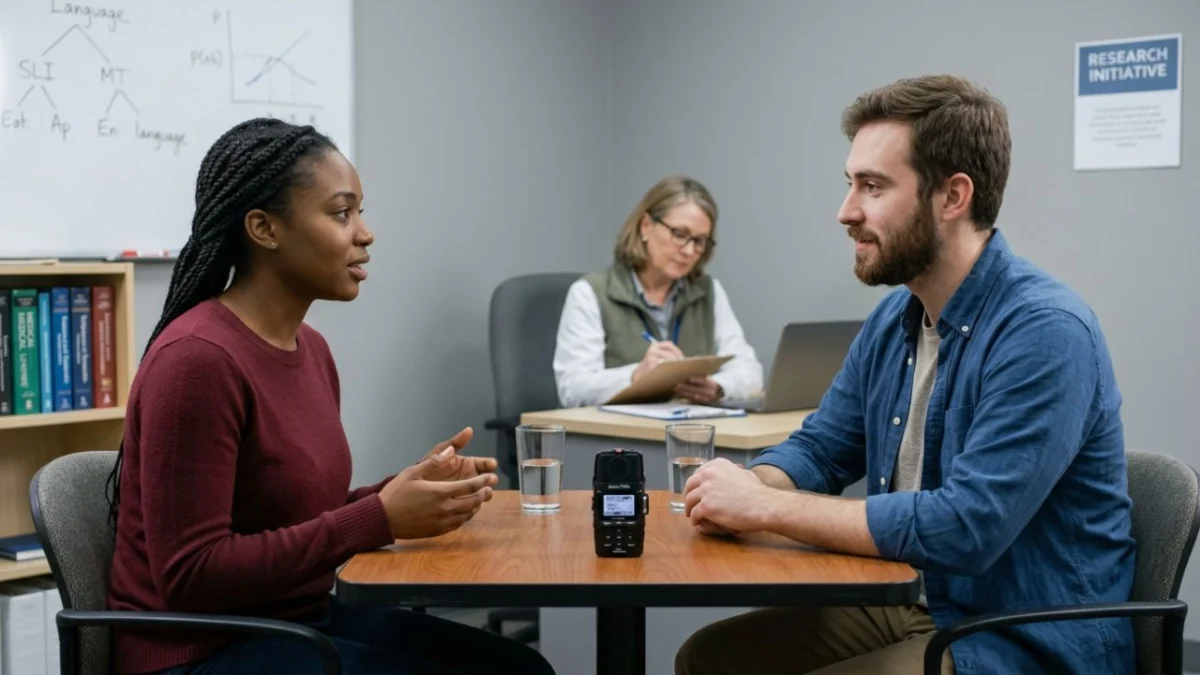
Fifty native German speakers, all of whom had recently acquired proficiency in Dutch and passed a Dutch language exam, were recruited for the experiment. These participants were then randomly assigned to one of two groups: one received a small dose of alcohol, while the other received a placebo of water. Following consumption, each participant engaged in a brief, standardized conversation in Dutch with an experimenter. Crucially, the experimenter was unaware of which participants had consumed alcohol, and the conversations were subsequently recorded. These recordings were then presented to two native Dutch speakers, who acted as evaluators, tasked with rating the overall quality of the Dutch spoken by the participants.
The alcohol administered was vodka mixed with bitter lemon, carefully calibrated based on the participant’s body weight and sex to achieve a low target breath alcohol concentration of approximately 0.04%. This dosage was likened by the University of Liverpool’s announcement of the study to just under a pint of a 5% ABV beer for a 70-kilogram individual, a level generally considered to be mild. The control group, in contrast, consumed an equivalent volume of water. The conversations themselves revolved around the topic of animal testing, a neutral subject designed to elicit natural speech patterns without undue stress.
The findings of the study were both surprising and illuminating. The native Dutch listeners who evaluated the recorded conversations rated the Dutch spoken by the group that had consumed alcohol significantly better overall compared to the control group. This positive perception was largely attributed to improvements in pronunciation. Interestingly, other aspects of language, such as grammar, vocabulary, and the coherence of argumentation, did not show statistically significant differences between the two groups. This suggests that the perceived improvement was primarily linked to the phonetic delivery of the language rather than a deeper understanding or mastery of its structural components.
Perhaps one of the most intriguing aspects of the study was the discrepancy between how the speakers perceived their own performance and how they were perceived by listeners. Participants in both the alcohol and water groups rated their own Dutch speaking abilities similarly; there was no significant difference in their self-assessment. This finding is particularly noteworthy because it indicates that alcohol did not simply boost confidence, leading speakers to believe they were speaking better, which would have likely translated into higher self-ratings. Instead, the perceived improvement was an external phenomenon, observed by those listening to the language.
Inge Kersbergen, a co-author of the study, commented on this aspect at the time of its release, stating, "This provides some support for the lay belief (among bilingual speakers) that a low dose of alcohol can improve their ability to speak a second language." This sentiment aligns with anecdotal evidence and common cultural notions surrounding "Dutch courage."
However, the researchers were quick to emphasize the need for caution in interpreting these results. Jessica Werthmann, another co-author, cautioned, "We need to be cautious about the implications of these results until we know more about what causes the observed results." She suggested that one potential explanation for the improved pronunciation could be alcohol’s anxiolytic effect, meaning its ability to reduce anxiety. Speaking a foreign language, especially in front of native speakers, can be a source of considerable stress and self-consciousness. By potentially lowering inhibitions and reducing anxiety, alcohol might have allowed participants to relax their articulatory muscles and speak more fluidly, leading to clearer pronunciation. However, the study did not directly measure anxiety levels, leaving this as a speculative, albeit plausible, hypothesis.
Fritz Renner further underscored the importance of dosage, stating, "It is important to point out that participants in this study consumed a low dose of alcohol. Higher levels of alcohol consumption might not have beneficial effects on the pronunciation of a foreign language." This is a critical caveat, as excessive alcohol intake is well-known to impair cognitive functions, including speech articulation, motor control, and judgment, leading to slurred speech and reduced comprehension. The observed benefits, therefore, appear to be specific to a very low, carefully controlled dose.
The research team’s work was recognized with the prestigious 2025 Ig Nobel Peace Prize in September 2025. The award, presented by the journal Improbable Research, honored the study "for showing that drinking alcohol sometimes improves a person’s ability to speak a foreign language." Fritz Renner and Jessica Werthmann, now based at the University of Freiburg in Germany, accepted the award on behalf of the research team at the ceremony held in Boston. The Ig Nobel Prizes are awarded annually to recognize achievements that "first make people laugh, and then make them think," celebrating unconventional and often humorous scientific endeavors.
Despite the intriguing findings and the recognition they received, the researchers and their affiliated institutions were adamant in their stance against recommending alcohol consumption for language learning. The University of Bath, where Inge Kersbergen is now employed, explicitly stressed that the findings do not endorse or encourage drinking. Kersbergen herself stated, "I would not recommend that anyone uses alcohol to improve their fluency in a second language." This cautionary advice stems from the broader understanding of alcohol’s detrimental effects on health and well-being.
The National Institute on Alcohol Abuse and Alcoholism (NIAAA) highlights that harms can be associated with any amount of alcohol consumption. For instance, even one drink per day can increase a woman’s risk of breast cancer by 5% to 15% compared to abstaining. The NIAAA strongly advises against alcohol consumption before driving or operating machinery, when taking medications that interact with alcohol, during pregnancy or when pregnancy is a possibility, and for individuals under the age of 21. These risks far outweigh any potential, and highly specific, benefit observed in a controlled laboratory setting.
It is crucial to acknowledge the limitations of this study. The experiment was characterized by its small scale and brevity. It utilized a convenience sample of psychology students, a group that may not be representative of the general population. The study tested only one low dose of alcohol and involved a single, short conversation. Furthermore, the language pair used, German and Dutch, are closely related Germanic languages with significant lexical and grammatical similarities. This raises questions about the generalizability of the findings to learners of languages that are linguistically more distant from their native tongue.
The experimental design also presented certain constraints. Because the control group received water, it is difficult to entirely disentangle the pharmacological effects of alcohol from the psychological effects of expectation. Participants who drank alcohol might have anticipated feeling more relaxed and speaking more freely, and this expectation alone could have influenced their performance, irrespective of the alcohol’s direct impact. Moreover, the study did not employ professional language assessment tools; rather, it relied on subjective ratings of perceived sound quality. The evaluation focused on how the speech sounded, not on objective measures of comprehension, accuracy, or long-term language acquisition. It is also highly probable that higher doses of alcohol would lead to a significant decline in all aspects of language performance.
While the direct recommendation of alcohol for language learning is ill-advised, the study does offer a potential insight into the psychological barriers that can impede language acquisition. The observed improvement in pronunciation, particularly if linked to anxiety reduction, suggests that tackling performance anxiety in low-pressure environments could be a more effective and healthier strategy for improving foreign language speaking skills. Practicing in relaxed settings, engaging in informal conversations, or utilizing language exchange partners can help build confidence and reduce the self-consciousness that might hinder fluent pronunciation.
For individuals concerned about their alcohol consumption, resources are available to provide support and guidance. The NIAAA’s Alcohol Treatment Navigator offers a pathway to find appropriate treatment services, and consulting with a healthcare professional can provide personalized advice and support for managing alcohol intake.
In summary, the "Dutch courage" study, while an amusing and thought-provoking investigation that earned a 2025 Ig Nobel Peace Prize, offers a nuanced perspective on alcohol’s effect on foreign language speaking. It suggests that a very low dose of alcohol may, for some individuals, lead to a perceived improvement in pronunciation by native listeners, possibly due to reduced anxiety. However, the speakers themselves do not experience this change, and the researchers strongly caution against using alcohol as a tool for language learning due to its significant health risks and the potential for negative impacts at higher doses. The more valuable takeaway may lie in understanding and addressing the anxiety that often accompanies speaking a new language, rather than seeking artificial facilitators.
