
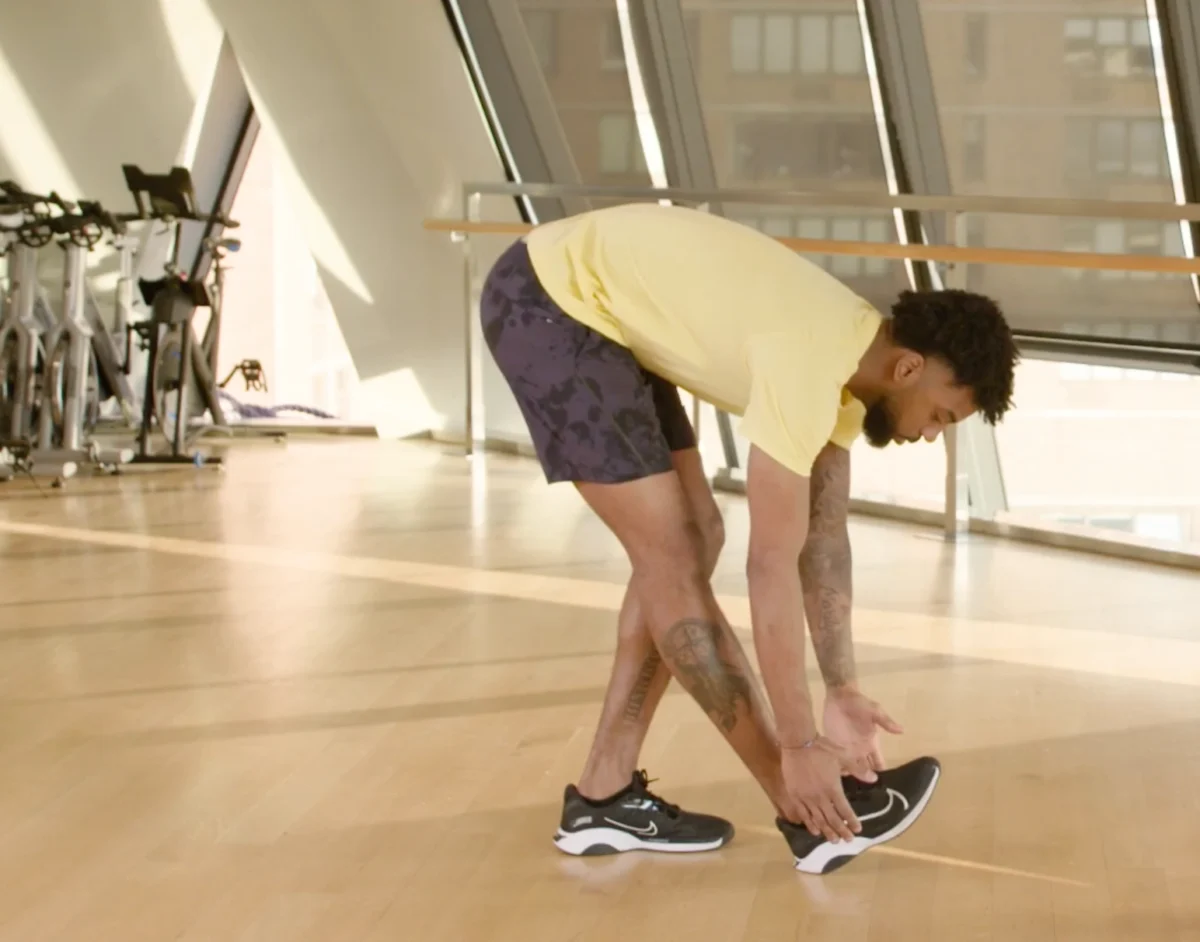
Tight hamstrings do more than limit your ability to touch your toes; they fundamentally alter pelvic alignment, creating a chain reaction of postural stress that often manifests as chronic lower back pain. Mastering hamstring mobility is not merely a matter of flexibility, but a critical intervention for maintaining the structural integrity of the lumbar spine and optimizing lower-body power.
The hamstrings are among the most influential muscle groups in the human body, acting as a primary bridge between the hips and the knees. While often discussed as a single entity, the hamstrings are a complex of three distinct muscles—the biceps femoris, semitendinosus, and semimembranosus—that originate at the ischial tuberosity (the "sit bone") and attach below the knee. Because they are bi-articular, meaning they cross two joints, their tension levels dictate the positioning of the pelvis and the curvature of the spine. In an era defined by sedentary behavior and prolonged sitting, the hamstrings frequently remain in a shortened state, leading to a host of secondary physical ailments that extend far beyond the legs.
The Biomechanics of Tightness and Postural Decay
When the hamstrings become chronically tight, they exert a constant downward pull on the posterior aspect of the pelvis. This tension facilitates a "posterior pelvic tilt," a condition where the pelvis tucks under the torso. As Brett Warner, P.T., D.P.T., C.S.C.S., of Bespoke Physical Therapy, explains, this tilt forces the lumbar spine into flexion, increasing postural stress on the intervertebral discs and supporting ligaments. This mechanical shift is a leading contributor to both acute and chronic back pain, transforming simple daily tasks—such as sitting at a desk or transitioning from a seated to a standing position—into painful endeavors.
The implications of limited hamstring mobility are equally significant for the active population. For runners, cyclists, and athletes, tight hamstrings act as a "brake" during explosive movements. When the muscle cannot lengthen sufficiently during a stride or a jump, the body compensates by overusing the lower back or the quadriceps, significantly increasing the risk of strains and ligament tears. Therefore, improving hamstring length is as much about injury prevention as it is about performance enhancement.
Identifying the Need for Intervention
The population that can benefit from targeted hamstring work is vast. While athletes often prioritize flexibility to improve their range of motion, individuals suffering from localized lower back pain are perhaps the most critical candidates. Sam Becourtney, PT, DPT, C.S.C.S., notes that many patients present with back pain that is actually a symptomatic manifestation of hamstring tightness. If the hamstrings are too tight to allow the hips to hinge properly, the lower back is forced to round to compensate for the lack of depth, placing excessive load on the spine.

Furthermore, individuals who experience "sharp" sensations during traditional stretching may be dealing with sciatic nerve tension rather than simple muscular tightness. This distinction is vital; stretching a sensitized nerve as if it were a muscle can exacerbate symptoms. Understanding the nuance of hamstring health requires a multi-faceted approach that includes dynamic movement, nerve "flossing," and neurological techniques like PNF stretching.
Strategic Mobility Exercises
To effectively release the hamstrings, a routine must go beyond passive reaching. The following exercises, curated by physical therapy experts, address the muscles through various planes of motion and neurological states.
1. The Hamstring Scoop
This is a dynamic movement ideal for a pre-workout warm-up. It encourages the hamstrings to lengthen while the body is in motion, mimicking the demands of walking and running. To perform this, stand with one heel planted forward and the toes pointed up. Hinge at the hips while keeping the front leg straight, and sweep your arms down toward the floor and then up toward the ceiling in a "scooping" motion. Switch legs with every step.
2. Hamstring Flossing (Nerve Gliding)
Nerve flossing is designed to ensure the sciatic nerve moves freely through the surrounding tissues. Lie on your back and hug one thigh toward your chest, holding behind the knee. Slowly extend the lower leg toward the ceiling until a mild stretch is felt, then flex the foot toward the face before pointing the toes and lowering the leg. This "gliding" helps desensitize the nervous system and improves perceived mobility.
3. Lying Hamstring Stretch with Implement
Using a towel, belt, or yoga strap provides a controlled environment for static lengthening. Lie flat on your back and loop the strap around the arch of one foot. Keeping the opposite leg flat on the floor to stabilize the pelvis, gently pull the strapped leg toward your head. The use of a strap allows the upper body to remain relaxed, preventing compensatory tension in the neck and shoulders.
4. Standing Hamstring Stretch with Flat Foot
For those with known lower back issues or sciatica, traditional standing stretches can be too intense. By placing the foot of the target leg on a small step or curb while keeping the foot flat (rather than pulling the toes up), you reduce the tension on the sciatic nerve. This focuses the stretch on the "belly" of the muscle, providing relief without the sharpness often felt behind the knee.
5. Half-Kneeling Dynamic Stretch and Sliders
Active stretches allow the body to control the intensity of the movement, which Philip Tam, P.T., D.P.T., notes helps the nervous system perceive the movement as safe. In a half-kneeling position, straighten the front leg and hinge the hips back toward the rear heel. To progress this, place a slider or towel under the front heel and slowly slide it forward, using the hamstrings to pull the leg back to the starting position. This incorporates eccentric control, which is vital for muscle health.
The Power of PNF Stretching
Proprioceptive Neuromuscular Facilitation (PNF) is a sophisticated technique that leverages the body’s natural reflexes to "reset" muscle length. The most common method is the "contract-relax" technique. While in a lying hamstring stretch, the individual contracts the hamstring by pushing their leg against the resistance of a strap (or a partner) for 5 to 10 seconds. After the contraction, the muscle is relaxed and immediately moved into a deeper stretch. This process bypasses the stretch reflex, allowing for rapid gains in range of motion.
"Locking In" Gains Through Strength Training
Stretching alone provides a temporary window of increased mobility, but without reinforcement, the body will eventually return to its default tight state. To create lasting change, experts recommend following mobility work with loaded strength training. Exercises like the Romanian Deadlift (RDL) are essential. By performing a hinge movement with a kettlebell or dumbbell, you train the hamstrings to be strong and stable in their newly lengthened range.
This combination of mobility and loading ensures that the "new" range of motion is functional. It teaches the brain that it is safe to operate in these positions, leading to a permanent decrease in tension. For the average person, this translates to a more resilient back and better posture; for the athlete, it results in a more powerful stride and a lower risk of the common hamstring strains that often sideline performers for weeks.
In summary, the state of your hamstrings is a primary indicator of your overall musculoskeletal health. By dedicating even a few minutes a day to a mix of dynamic scoops, nerve flossing, and PNF techniques, you can alleviate the postural stresses that lead to chronic pain. Improving hamstring flexibility is not a vanity goal; it is a foundational requirement for anyone looking to move efficiently and age without the burden of unnecessary physical restriction.
