
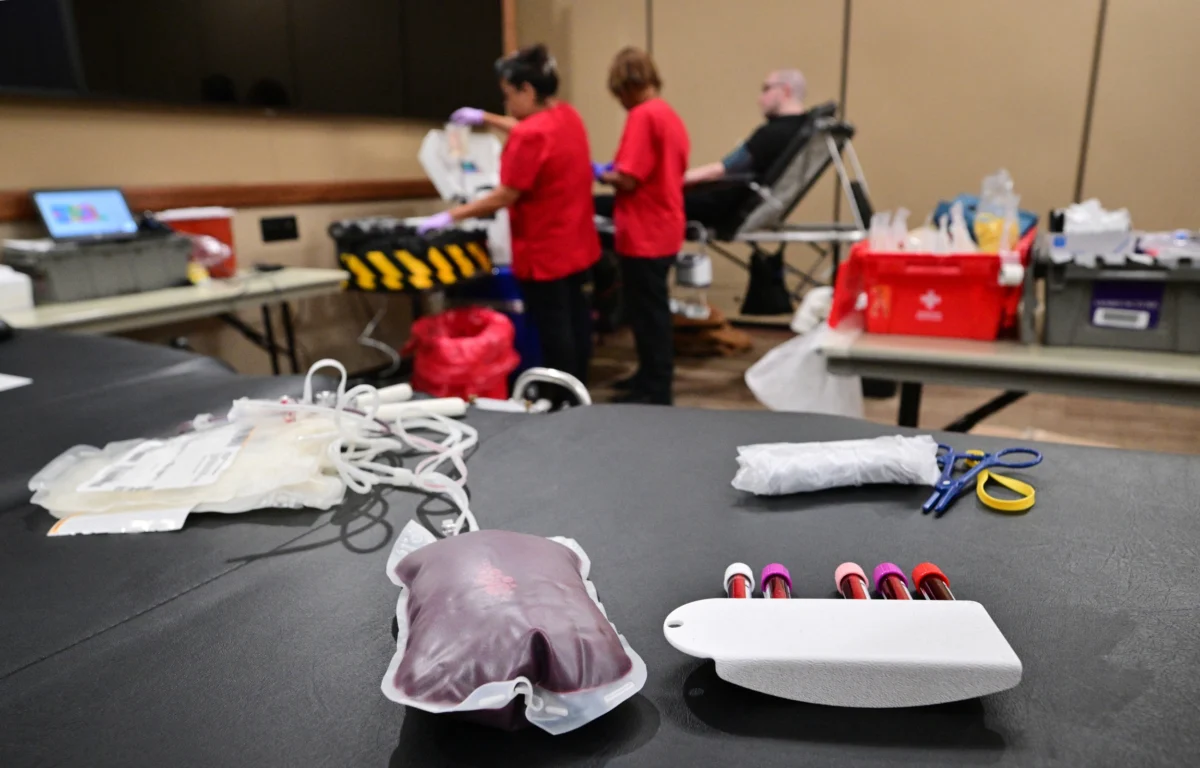
"The national blood crisis is no longer solely a collection challenge; it’s a dual threat of dwindling donations and unprecedented hospital demand. This complex reality means even robust donor turnout may not be enough to bridge the critical gap, impacting patient care across a spectrum of medical needs."
The American Red Cross has escalated its alarm regarding the ongoing national blood shortage, now identifying a significant increase in hospital demand as a critical factor exacerbating the crisis. While public appeals have largely focused on the need for more donors, Red Cross officials emphasize that the current shortfall is a multifaceted problem. Dr. Courtney Lawrence, divisional chief medical officer for the American Red Cross, has highlighted that blood demand this summer has surged beyond typical seasonal expectations, a trend that is directly contributing to the persistent gap between supply and need. This elevated demand means that simply returning to historical donation rates may not be sufficient to stabilize the nation’s blood supply. For patients and their families, the practical consequences remain dire: when supply is critically low, hospitals are forced to ration blood products, leading to unavoidable delays in transfusions and procedures, even for life-saving treatments.
The Calendar’s Cruel Convergence
The path to replenishing the nation’s blood supply is fraught with calendrical challenges, as two significant dates converge to impede recovery efforts. The Red Cross’s incentive program, which offered a twenty-dollar gift card to donors throughout August, concludes at the end of the month. This initiative, designed to boost collections during a critical period, will cease just as the summer trauma season draws to a close with Labor Day. The period between Memorial Day and Labor Day traditionally marks an annual peak in hospital demand for blood due to an increase in serious injuries.
Compounding this issue, the transition from summer activities to the academic year presents a dual-edged sword for donation efforts. The Red Cross has acknowledged that as communities shift to back-to-school schedules and families finalize summer plans, both donor availability and the logistical capacity for blood drives are affected. Historically, college and university campuses serve as vital hubs for blood donations, and their return to session in the fall is a key component in the usual replenishment cycle. However, the process of organizing and executing these drives is time-consuming, requiring weeks for scheduling, staffing, and logistical arrangements. This delay is particularly problematic given the limited shelf-life of blood products. Red blood cells remain viable for approximately 42 days, while platelets, essential for clotting, must be used within a mere five days. This short turnaround time means that even a week’s delay in collections can have a cascading effect on availability. The Red Cross has provided a concrete metric, stating that an increase of just three additional donors at each blood drive could be sufficient to end the crisis and stabilize the supply, underscoring the significant impact individual contributions can have.
Type O Blood: A Critical Artery Under Strain
The Red Cross’s decision to limit the distribution of Type O blood to individual hospitals, implemented after the crisis declaration on July 27th, highlights the profound and far-reaching implications of this specific blood type’s scarcity. Type O blood accounts for a substantial portion of the Red Cross’s overall distributions, representing approximately 60 percent of all transfused blood. Type O positive, the most common blood type, can be administered to roughly 80 percent of patients, making it a cornerstone of routine transfusion therapy. Even more critically, Type O negative is the universal donor blood type, the first choice in emergency situations when there is insufficient time to determine a patient’s blood group. The crisis declaration revealed that the national supply of Type O positive had fallen below a one-day reserve, with donations reaching a four-year summer low after a nearly 25 percent decline in the overall blood supply during June.
The ramifications of this shortage extend far beyond the realm of trauma care. The American College of Surgeons, in a recent bulletin, emphasized that such a scarcity impacts a wide array of medical specialties. Emergency surgeries, complex cancer resections, intricate cardiovascular procedures, organ transplantation surgeries, and the management of obstetric hemorrhages all rely heavily on the pre-operative availability of sufficient blood products. The surgical assessment from the College of Surgeons paints a stark picture: a compromised blood supply can directly impede a hospital’s ability to perform these critical interventions. This national inventory deficit trickles down to affect ordinary households in tangible ways. A family member scheduled for a non-urgent surgery, a relative undergoing cancer treatment that necessitates regular transfusions, or an individual living with a chronic condition like sickle cell disease who depends on consistent blood transfusions, all find their medical care directly contingent on the stability of this vital national resource.
Overcoming Barriers to Donation: Eligibility and Accessibility
A significant impediment to addressing the blood shortage lies not in outright refusal, but in the prevalent misconception that individuals are ineligible to donate. The general eligibility criteria for donating whole blood are broadly accessible. Donors must typically be at least 17 years old in most states, or 16 with parental consent where permitted by law. A minimum weight of 110 pounds and generally good health are also required. For whole blood donations, individuals must observe a waiting period of 56 days before their next donation. Crucially, there is no cost associated with donating blood; the Red Cross covers all expenses related to the collection, testing, and processing of donated blood.
Individuals seeking to donate can conveniently book appointments through the RedCrossBlood.org website, the dedicated Blood Donor App, or by calling 1-800-RED CROSS. Even if immediate appointment slots are unavailable, scheduling donations for several weeks in the future remains immensely beneficial. The current shortage is characterized as a continuous flow problem, meaning that consistent donations over time are essential for sustained supply, rather than addressing a single day’s deficit.
However, certain health conditions necessitate a deferral of donation. Individuals experiencing fever, active diarrheal illness, or a recent infection are advised to postpone their donation and consult eligibility requirements. Anyone uncertain about the impact of a particular medication or medical condition should raise these concerns with the screening staff at the donation center rather than self-assessing their eligibility. The Red Cross has identified several factors that contributed to reduced donor turnout during the summer months, including extreme heat, poor air quality, and a prevalence of foodborne illnesses. Individuals who are currently unwell fall within this category and should prioritize their recovery before considering donation. For patients currently in need of blood transfusions, there is no direct mechanism to source specific blood for their individual care. The most impactful contribution a patient or their family can make is to encourage eligible friends and relatives to donate blood.
Tracking the Path to Recovery: Future Indicators
Previous reports highlighted the persistent nature of Type O blood distribution limits, indicating that the crisis was not a transient issue. The newly emphasized demand-side pressures, coupled with the narrowing window of opportunity presented by the calendar, underscore the escalating complexity of the situation. Several key uncertainties remain. The Red Cross has not yet provided a definitive timeline for lifting the restrictions on Type O blood distributions. Furthermore, the organization has not disclosed the precise number of hospitals experiencing reduced orders or the extent of these reductions. The critical question of whether the return of school and college blood drives will be sufficient to bridge the gap before the onset of autumn remains unanswered.
Moving forward, stakeholders and the public should closely monitor Red Cross announcements regarding the status of Type O blood restrictions, noting whether they are lifted or extended. Updates on overall blood supply levels as the summer trauma season concludes will also be crucial indicators. The Red Cross, which is responsible for supplying approximately 40 percent of the nation’s blood, states that it continuously monitors national supply levels and collaborates with hospital partners to prioritize patients with the most urgent transfusion needs.
Ultimately, the current situation is quantifiable and serious. The blood shortage is a tangible reality that has persisted beyond a typical seasonal fluctuation. The primary impact is borne by patients requiring transfusion support, rather than the general population. For eligible adults, the most direct and impactful action is to schedule a blood donation appointment. The central uncertainty lies in whether the elevated hospital demand will recede with the end of the peak trauma season or if it will persist into the fall, further straining an already vulnerable supply chain.
