
"Homer’s epics were never meant to be static relics of the past; they are living, oral traditions designed to evolve alongside the cultures that decode them."
As Christopher Nolan transitions from the historical gravity of Oppenheimer to the mythological grandeur of The Odyssey, he finds himself at the center of a modern cultural firestorm. Set for release on July 17, Nolan’s IMAX-scaled epic, starring Matt Damon as the titular hero, attempts to bridge the 2,800-year gap between the Bronze Age oral tradition and contemporary cinematic storytelling. By integrating a diverse ensemble cast and grounded, visceral aesthetics, Nolan is not merely retelling a story of a long voyage home; he is challenging the audience to reconsider how we define "authenticity" in the context of a myth that was never intended to be a fixed historical record.

The Power of the Oral Tradition
To understand Nolan’s approach to The Odyssey, one must first acknowledge that the source material is not a "text" in the traditional sense. Originating in the 8th century BCE, the story of Odysseus’s decade-long struggle to return to Ithaca was performed by bards long before it was ever etched into papyrus. This oral tradition was fluid, adaptive, and performative—traits that Nolan has embraced in his production.
The director’s choice to cast rapper Travis Scott as a bard in the banquet halls of Ithaca is perhaps the most direct nod to this history. Nolan has noted that the rhythmic, storytelling nature of rap is a modern analog to the ancient Greek bards who used meter and cadence to keep the narrative alive in the collective memory of their audience. By framing the story through this lens, Nolan strips away the "museum-piece" feel of many sword-and-sandal epics, opting instead for a narrative that feels immediate and urgent.
The "Woke" Controversy and the Reality of the Mediterranean
Despite the film’s pedigree, it has not escaped the "culture wars" of the 2020s. Armchair critics and social media commentators, including figures like Elon Musk, have leveled accusations of "wokeness" against the production. The primary targets of this criticism are the casting of Black and transgender actors in roles traditionally depicted as white in Western art.

Lupita Nyong’o stars as Helen of Troy, the woman whose face launched a thousand ships. While some have balked at the casting, prominent classicists like Daniel Mendelsohn have pointed out the irony of the outrage. Mendelsohn notes that Matt Damon, a man of Scottish descent, is arguably further removed from the genetic reality of an Eastern Mediterranean voyager like Odysseus than Nyong’o is from the multicultural landscape of the ancient Aegean.
The University of Leeds has long maintained that the modern racial constructs of "Black" and "White" are products of the Enlightenment and would have been entirely foreign to the ancient Greeks. For Homer’s audience, identity was tied to city-state, lineage, and language rather than skin tone. In this light, Nolan’s diverse casting—including Elliot Page in a significant male role—is less a political statement and more a reflection of the fluid way myths have always been interpreted. As Mendelsohn famously quipped at the Hay Festival, it is a testament to the power of the legend that "Helen of Troy is still causing men to melt down" thousands of years later.
Aesthetics vs. Archeology
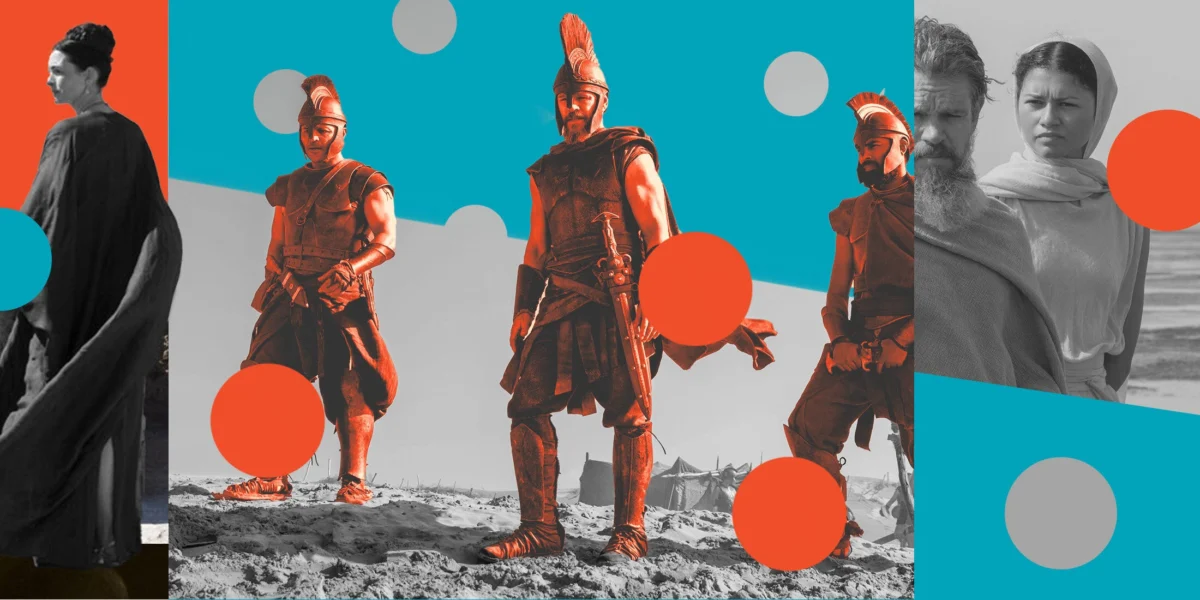
Nolan’s The Odyssey also takes liberties with the physical world of the Bronze Age, much to the chagrin of historical purists. Critics have pointed to the architecture of the ships—hulking, Viking-like vessels—as being inaccurate compared to the smaller, sleeker Mycenaean galleys favored by maritime historians. Similarly, the armor worn by Agamemnon, played by indie auteur Benny Safdie, has been compared to a "Batsuit" due to its sleek, blackened bronze finish and exoskeleton-like gold embellishments.

However, Nolan’s defense is rooted in the "emotional meaning" of the imagery. For a modern audience to understand Agamemnon’s status as a "King of Kings," his appearance must be intimidating and visibly superior to the rank-and-file soldiers. The costume department, led by Ellen Mirojnick, utilized theories of ancient metallurgy—specifically the use of sulfur to blacken bronze—to create a look that feels plausible within a high-fantasy context while maintaining the director’s signature grounded aesthetic.
This tension between historical accuracy and cinematic impact is a hallmark of Nolan’s filmography. Just as he used practical effects to simulate a nuclear explosion in Oppenheimer, he uses the vastness of the IMAX format to make the Cyclops and the sea god Poseidon feel like elemental forces of nature rather than mere CGI monsters.
Grounding the Divine
Perhaps the most difficult hurdle in any adaptation of The Odyssey is the depiction of the gods. In Homer’s original poem, the gods are petty, visible, and frequently intervene in human affairs. They argue amongst themselves on Mount Olympus and physically manifest on the battlefield.

Nolan’s approach to the divine is a calculated middle ground. While Charlize Theron’s Calypso and Samantha Morton’s Circe are portrayed as flesh-and-blood entities with tangible powers, other deities remain more abstract. Zendaya’s Athena appears as a guide whose presence is felt through wisdom and strategic instinct as much as physical appearance.
Carolina López-Ruiz, a professor at the University of Chicago’s Divinity School, suggests that modern adaptations often struggle with this "theological modernity." Filmmakers typically choose between making the gods aloof, abstract entities representing the weather or fate, or going "full Homeric" with quarreling, visible deities. Nolan seems to lean into the former, treating the supernatural elements of the story as extensions of the characters’ psychological and environmental struggles. This choice grounds the film in the "earthy narrative" Nolan sought, ensuring that the stakes remain human even when the obstacles are monstrous.
The Enduring Quest
At its core, The Odyssey is a story about the trauma of war and the desperate desire for home. Matt Damon’s Odysseus is not a shining, infallible hero; he is a man haunted by the decade he spent at Troy and the decade he has spent lost at sea. His wife, Penelope (played by Anne Hathaway), is not merely a passive figure waiting to be rescued, but a shrewd political actor holding a crumbling kingdom together in her husband’s absence.

By stripping away the "artificially elevated speech" of past translations and opting for colloquial, contemporary dialogue, Nolan allows the emotional core of the story to shine through. He reminds us that the quest for identity and the struggle against overwhelming odds are universal themes that transcend the specificities of Bronze Age boat architecture or racial demographics.
Nolan’s The Odyssey is a "banger" not because it adheres to a textbook definition of history, but because it understands that myth is a mirror. As we change, the stories we tell about ourselves must change too. In casting a wide net of actors and utilizing a bold, modern aesthetic, Nolan has ensured that Homer’s epic remains as relevant—and as controversial—as it was when it was first sung in the banquet halls of ancient Greece. Whether the "anti-woke" critics agree or not, the voyage of Odysseus continues to evolve, proving that the greatest stories are those that can survive any sea change.
