
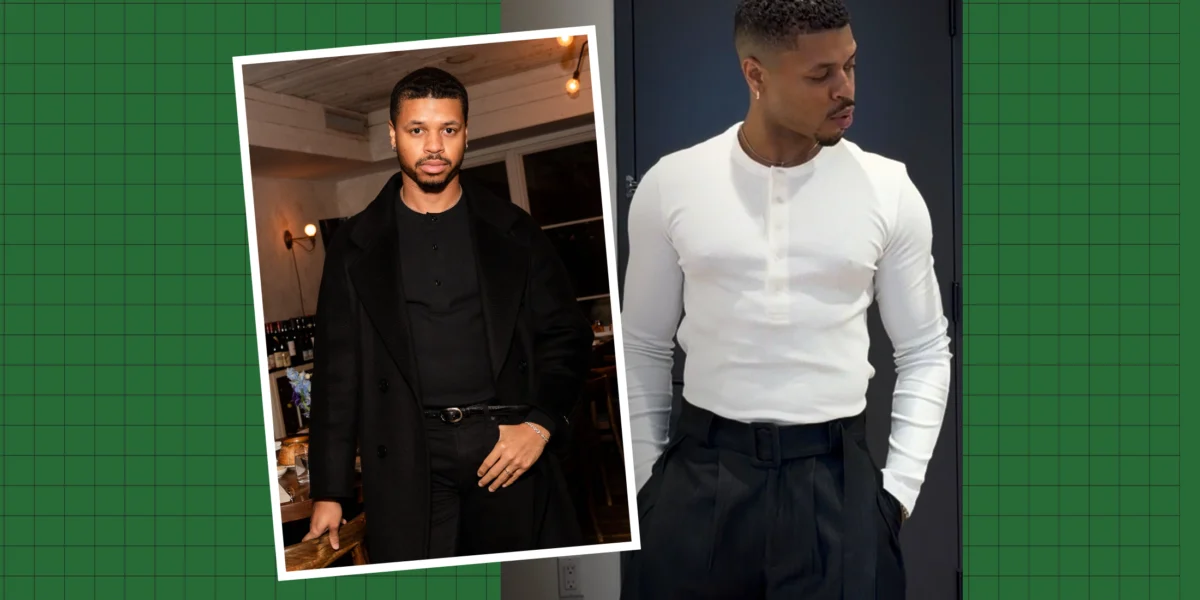
"The henley’s return to the fashion forefront signifies a shift toward versatile, texture-rich staples that prioritize both the male physique and effortless functionality."
As menswear moves away from hyper-trendy silhouettes and toward a "heritage-luxe" aesthetic, the henley has emerged as the season’s most critical layer. Once relegated to the status of an undergarment or a gym-bound basic, this button-placket shirt is now being reimagined by high-fashion houses and celebrity style icons alike, proving that the most enduring trends are often those rooted in utility and historical longevity.
The Evolution of an Icon: From the Thames to the Runway
The henley is currently experiencing a cultural saturation that few wardrobe staples ever achieve. It is ubiquitous, appearing with equal frequency in the curated feeds of social media influencers, the high-octane environment of Men’s Fashion Week, and on the backs of Hollywood’s most watched leading men, such as Michael B. Jordan. For years, the henley was the "silent partner" of the male wardrobe—a shirt one might wear while lounging on a Sunday morning or as a thermal layer hidden beneath a heavy flannel. However, the fashion industry has collectively decided that the henley deserves to be the centerpiece of the ensemble.
To understand why the henley is having such a significant "moment," one must look back to its origins in 19th-century England. The shirt was originally designed as a comfortable undergarment, but it gained its name and its prestige on the waters of the Thames. It became the standard uniform for rowers in the town of Henley-on-Thames, particularly during the Royal Regatta. The lack of a collar reduced wind resistance and prevented chafing, while the buttoned placket allowed athletes to regulate their body temperature during intense physical exertion. This transition from functional sportswear to a fashion obsession highlights a recurring theme in menswear: the most successful garments are those that were built for a specific purpose before being adopted by the masses.
The Design Philosophy: More Than Just a T-Shirt
The primary appeal of the henley lies in its structural "heavy lifting." While a standard crewneck T-shirt can sometimes feel overly casual or even unfinished, the henley introduces a level of intentionality without the formality of a collared shirt. It occupies a unique middle ground, offering the ease of a T-shirt with the visual interest of a polo. The defining feature—the button placket—serves as a focal point that draws the eye upward toward the face and broadens the appearance of the chest.

In the current market, the henley is no longer restricted to basic jersey cotton. The trend is being driven by a variety of textures that add depth to an outfit. Ribbed styles offer a sleek, modern look that hugs the frame, while waffle-knit and thermal variations provide a rugged, tactile quality that is synonymous with autumn. These fabrics do more than just look good; they provide functional warmth and breathability, making the henley the ultimate transitional piece for the fluctuating temperatures of fall.
High Fashion’s Endorsement
The henley’s status as a "must-have" has been solidified by its presence on the Fall/Winter 2026 runways. Designers are increasingly looking toward heritage pieces to anchor their collections, moving away from the "fast fashion" cycles of previous years. Paul Smith, a designer known for his mastery of British tailoring and quirky elegance, showcased a stark white henley tucked into wide-leg black trousers. The look was a masterclass in minimalism, proving that a well-fitted henley can hold its own against more traditional formalwear.
Similarly, Isabel Marant utilized the henley to explore the art of layering. By pairing a light blue henley with a navy corduroy jacket, Marant demonstrated how the shirt acts as a bridge between different textures. The corduroy’s ridges combined with the soft knit of the henley created a visually rich ensemble that felt grounded and sophisticated. These runway appearances signal to the broader market that the henley is no longer just "leisurewear"; it is a legitimate component of the modern uniform.
The Physics of Fit: Proportions and the Physique
One of the reasons the henley has become a favorite of celebrities like Michael B. Jordan is its ability to accentuate the male form. Unlike the boxy fit of many modern oversized tees, the henley is traditionally cut closer to the body. For those who spend time in the gym, the shirt is a subtle way to highlight gains in the shoulders, chest, and biceps. By leaving one or two buttons undone, a man can create a slight V-shape that enhances the silhouette without the overt aggression of a deep V-neck.
However, the modern way to wear a henley is all about the "contrast of proportions." While the top remains relatively fitted, style experts recommend pairing it with roomier bottoms. Baggy jeans or relaxed-fit trousers create a balanced silhouette that feels contemporary rather than dated. This play on volumes—tight on top, loose on the bottom—is a cornerstone of current menswear trends, moving away from the "slim-everything" look of the 2010s.
Styling the Henley for the Modern Era
The versatility of the henley is perhaps its greatest strength. It can be dressed up or down with minimal effort, making it a "cheat code" for men who want to look put-together without overthinking their wardrobe.

The Elevated Casual Look:
For a look that works for a casual office or a dinner date, a henley should be paired with tailored trousers—perhaps in a wool blend or a heavy chino—and leather loafers. Tucking the henley in and adding a high-quality leather belt instantly elevates the shirt from a basic to a piece of refined attire. This outfit relies on the "quiet luxury" principle: high-quality fabrics and a perfect fit.
The Rugged Weekend Look:
For a more utilitarian approach, the henley shines when paired with loose-fit denim and sturdy leather boots. In this context, a waffle-knit or thermal henley is preferable, as the texture complements the rugged nature of the denim. Adding an overshirt or a chore coat on top provides an extra layer of warmth and style, with the henley’s buttons adding a touch of detail that a plain T-shirt would lack.
The Future of the Trend
As we look toward the future of menswear, the henley represents a broader return to "slow fashion." Consumers are increasingly seeking out items that offer longevity, both in terms of durability and style. The henley is not a "micro-trend" that will disappear by next season; it is a piece of history that has been rediscovered. Its ability to adapt to different styles—from the minimalist aesthetic of Paul Smith to the rugged Americana of a weekend hiker—ensures its place in the wardrobe for years to come.
The henley is finally receiving its "flowers" because it solves a common problem in men’s style: how to look masculine, comfortable, and stylish simultaneously. It is a garment that respects its wearer’s physique while providing a canvas for personal expression through texture and color. Whether in classic cream, deep navy, or earthy forest green, the henley is the definitive essential for the modern man’s fall rotation. It is a testament to the idea that sometimes, the most innovative move a designer can make is to look back at what has always worked and give it the spotlight it deserves.
