
The return of Sunfyre is not merely a biological miracle of dragon recovery, but a pivotal narrative shift that transforms Aegon II from a broken fugitive into a renewed and lethal threat in the Dance of the Dragons. This resurrection underscores the mystical, symbiotic bond between Targaryen riders and their mounts, proving that as long as a dragon breathes, the claim to the Iron Throne remains dangerously alive.
In the seventh episode of the third season of House of the Dragon, titled “The Dragon in Winter,” the series delivered one of its most profound subversions of audience expectations. For much of the season, the narrative surrounding Aegon II Targaryen was one of tragic decline and physical ruin. Following the catastrophic Battle at Rook’s Rest in the previous season—where he was betrayed and scorched by his own brother Aemond and the massive Vhagar—Aegon appeared to be a king in name only, stripped of his dignity, his health, and his dragon. However, the revelation that Sunfyre survived his seemingly fatal wounds changes the calculus of the war entirely. This development moves Aegon out of the shadows of King’s Landing and back into the center of the conflict, fueled by a visceral desire for vengeance against both his usurping brother and his rival sister, Rhaenyra.
The Arc of the Broken King
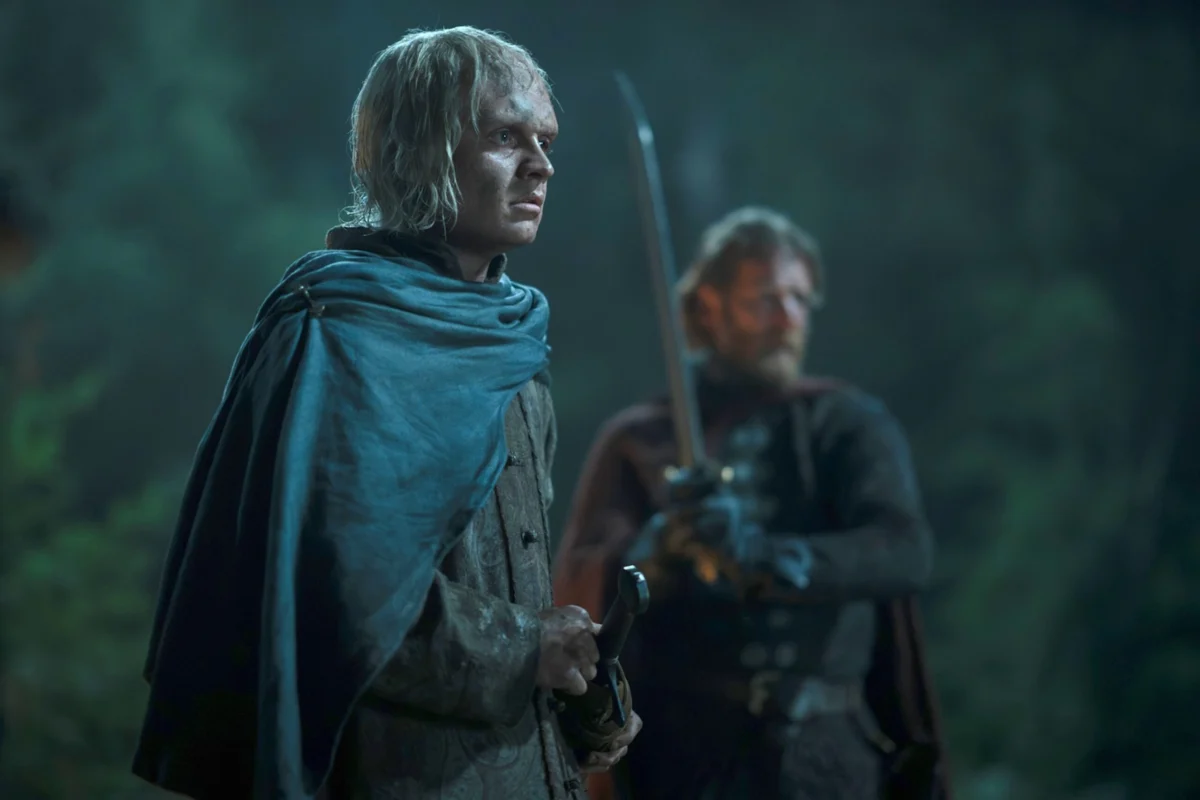
Season 3 has meticulously tracked the degradation of Aegon II. Portrayed with nuanced vulnerability by Tom Glynn-Carney, Aegon began the season as a man literally and figuratively forced to "eat dirt." Under the tutelage of the master manipulator Larys Strong, Aegon was spirited away from the Red Keep, living a life of anonymity and hardship. This period of "laying low" was presented as a strategic necessity, yet it weighed heavily on a character whose identity was inextricably linked to the power of the crown and the majesty of his dragon.
The psychological toll on Aegon was most evident in the earlier episodes of the season, where he visited the site of Sunfyre’s collapse. The sight of the golden dragon, motionless and graying, served as a metaphor for Aegon’s own perceived end. In the world of Westeros, a Targaryen without a dragon is a bird without wings; for Aegon, the loss of Sunfyre was the loss of his soul. The narrative led the audience—and Aegon himself—to believe that the "Sunfyre the Golden" was a relic of the past. This belief made his eventual reunion in "The Dragon in Winter" all the more impactful, as it represented a dual resurrection of both beast and master.

The Biology of Dragon Survival
The survival of Sunfyre has sparked significant discussion regarding the physiology of dragons in the Game of Thrones universe. While the show had previously hinted at the dragon’s demise, biological precedents within the lore and real-world reptilian analogies provide a framework for his recovery. As noted by observers of the series, large reptiles often enter states of suspended animation or extreme metabolic depression following trauma. This "coma-like" state allows the organism to divert all remaining energy to cellular repair, often appearing dead to the untrained eye.
Director Nina Lopez-Carrado elucidated this phenomenon, suggesting that Sunfyre’s recovery was not merely a matter of biology but of emotional connection. The director noted that Sunfyre was indeed on the brink of death, but the presence of Aegon earlier in the season may have acted as a catalyst for the dragon’s rejuvenation. In the lore of George R.R. Martin, the bond between a dragon and its rider is psychic and profound. It is suggested that Sunfyre drew strength from Aegon’s survival, just as Aegon eventually draws strength from Sunfyre’s return. When Sunfyre emerges in Episode 7, he is not the pristine, shimmering creature of the coronation; he is scarred, charred, and rugged, mirroring the physical state of his rider. This shared trauma binds them closer than ever before, creating a duo defined by resilience rather than inherited right.
The Tactical Shift in the Dance
The re-emergence of Sunfyre comes at a critical juncture in the civil war. Last week’s episode saw the unceremonious end of Ser Criston Cole, the Kingmaker, who met a blunt and anti-climactic death at the hands of Rhaenyra’s forces. Cole’s death signaled the end of the old guard of Team Green’s military leadership. With Aemond Targaryen ruling as Regent in King’s Landing with an increasingly erratic and tyrannical hand, the return of the true King with a functional dragon creates a massive internal conflict for the Greens and a terrifying external threat for the Blacks.
In "The Dragon in Winter," Aegon finds himself cornered by a patrol loyal to Rhaenyra. In a moment of desperate defiance, he reveals his identity, seemingly resigned to a fate similar to Criston Cole’s. The tension of the scene is broken not by a sword, but by the heavy, rhythmic thrum of dragon breath. Sunfyre’s intervention is swift and total. The "Dracarys" command is no longer a formal royal decree; it is a scream of survival. By incinerating the patrol, Aegon and Sunfyre announce their return to the board.
For Rhaenyra, this is a catastrophic intelligence failure. Her strategy has been predicated on the belief that Aegon was incapacitated and Sunfyre was dead. The "Secret Weapon" of the Greens is no longer the massive Vhagar, who is predictable in her sheer size, but the scarred Sunfyre, who can operate from the shadows and strike where least expected.

A Masterclass in Performance and Direction
The success of this subplot rests heavily on Tom Glynn-Carney’s performance. Throughout Season 3, he has portrayed Aegon not as a cartoonish villain, but as a man suffering from profound PTSD and chronic pain. His "utter glee" upon seeing Sunfyre alive is perhaps the most authentic emotional beat of the season. It is a rare moment of pure, unadulterated joy in a series often defined by cynicism and gloom.
Director Nina Lopez-Carrado’s framing of the reunion emphasizes the scale of the dragon while maintaining the intimacy of the character moment. The use of sound design—the "notable breathing" and "powerful steps"—builds dread for the soldiers but hope for the audience, who have grown to sympathize with the underdog version of Aegon. This direction ensures that the audience views Sunfyre’s return not just as a plot device, but as a hard-earned victory for a character who has lost everything.
The Path to the Finale and Season 4
As House of the Dragon approaches its Season 3 finale and looks toward its fourth and final season, the "Revenge Tour" of Aegon and Sunfyre is set to be a central pillar of the narrative. In the source material, Fire & Blood, the relationship between Aegon II and Sunfyre is one of the most enduring and tragic elements of the Dance. Their journey together is marked by a series of increasingly desperate battles that eventually determine the fate of the Targaryen dynasty.
The show has successfully set the stage for this endgame. By establishing Aegon as a "major player" once again, the writers have complicated the moral landscape of the show. While Aemond represents raw, unchecked power and Rhaenyra represents the struggle for legitimacy, Aegon now represents the fury of the discarded. He is a king who has seen the bottom of the world and has clawed his way back up.
The implications for the Season 3 finale are immense. With Sunfyre mobile and Aegon emboldened, the "Dance" becomes far more volatile. The board has been reset, and the golden dragon, though scarred and bloodied, is ready to fly again. The return of Sunfyre reminds the lords of Westeros that a dragon’s fire does not go out easily—it merely smolders until it is ready to consume everything in its path.
