
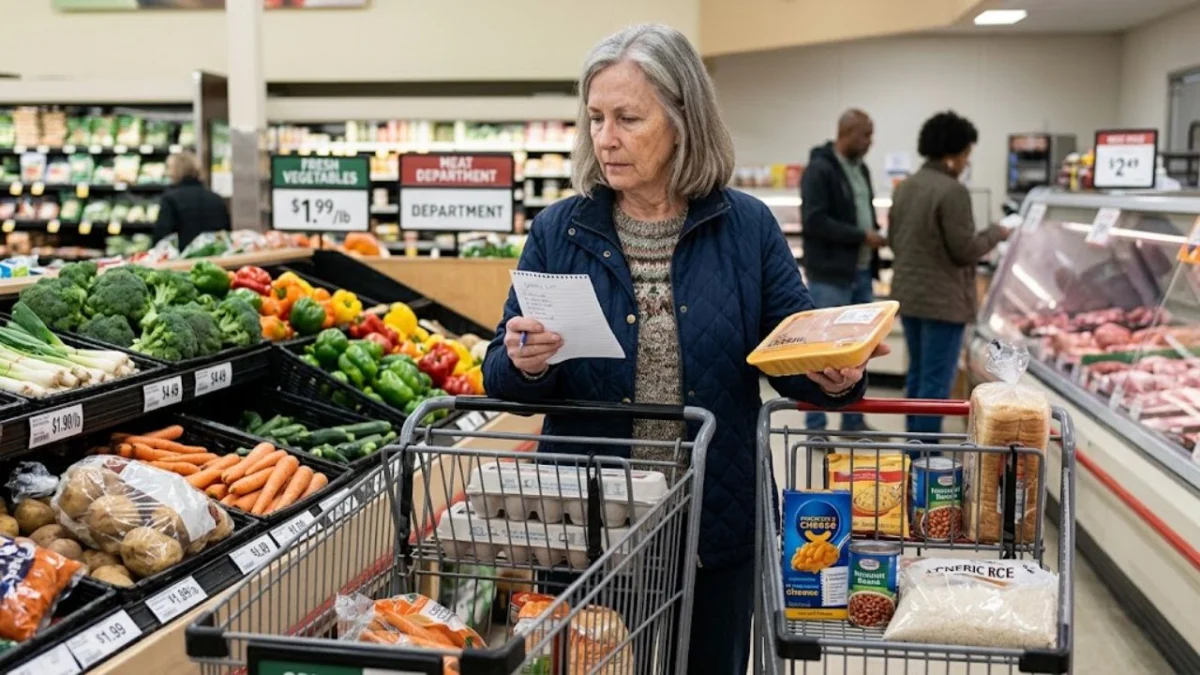
"When budgets tighten, total calories often hold roughly steady while diet quality declines. This slow, insidious shift in dietary patterns, driven by economic pressures, disproportionately impacts older adults whose chronic health conditions make nutrient-dense foods essential for well-being and disease management."
The increasing cost of groceries, while a seemingly modest 3 percent rise between June 2025 and June 2026 according to the U.S. Department of Agriculture, is exerting a profound and often unseen influence on the health and well-being of older Americans living on fixed incomes. This economic reality is compelling a significant portion of the senior population to make difficult choices, trading vital fresh produce and lean proteins for less expensive, shelf-stable alternatives. In more severe cases, the financial strain is leading some to forgo essential medications altogether. This trend, highlighted by reporting from the Midwest Newsroom and Harvest Public Media, underscores a growing crisis where economic pressures directly undermine nutritional health, with potentially serious long-term consequences for a vulnerable demographic.
While recent food price increases are notably lower than the nearly 10 percent spike experienced in 2022, which represented the largest annual leap in over four decades, their impact on individuals whose incomes are static is considerably more pronounced. For working-age adults, wage growth can often offset inflationary pressures on household budgets. However, retirees, whose incomes are largely determined by Social Security benefits, find themselves in a precarious position. Social Security cost-of-living adjustments are typically applied only once a year and are calculated based on a broad basket of goods, not specifically on the escalating costs of groceries. As Gina Plata-Nino, director of policy and advocacy at the Food Research and Action Center, succinctly stated, "Your rent didn’t decrease because you turned 60." This sentiment extends to other essential living expenses, including utilities, fuel, and, critically, food.
The health consequences of this dietary shift are rarely characterized by outright hunger in the dramatic sense. Instead, it manifests as a gradual erosion of nutritional quality, a subtle but significant change in the composition of meals. This transformation is particularly concerning because it most acutely affects individuals whose pre-existing medical conditions render diet quality paramount for managing their health.
In 2023, over 7.4 million Americans aged 60 and older experienced food insecurity, a figure representing approximately one in eleven seniors, according to the National Council on Aging. Jessica Johnston, a senior strategist at the organization, points out that older adults are frequently overlooked in public discourse concerning food insecurity, which often centers on children and families, despite seniors being substantial users of federal food assistance programs. Recent legislative changes have further tightened the existing safety net. The One Big Beautiful Bill Act, enacted in 2025, introduced stricter SNAP eligibility criteria, including an increase in the age at which recipients are fully exempt from work requirements. This change directly impacts individuals in their sixties who may not yet qualify for Medicare and who may have spent a lifetime in physically demanding occupations. Compounding these economic pressures, recent AARP survey data reveals a concerning trend: nearly half of older adults burdened by credit card debt have resorted to using credit cards to purchase food.
The core health narrative within this economic story lies in substitution. When household budgets are squeezed, the total caloric intake often remains relatively stable, but the nutritional density of those calories declines precipitously. This pattern is a significant concern for clinicians, as it can be easily missed because it may not be accompanied by noticeable changes in body weight.
The lived experiences of older adults illustrate this stark reality. Linda Rufus, a 67-year-old resident of senior housing in Storm Lake, Iowa, described her dietary recalibration: she can no longer afford premium cuts of meat like steak, lamb chops, or oxtails, and has shifted to purchasing ground turkey. Her meals now increasingly rely on skillet preparations and boxed mixes. Toni Keller, 65, who recently completed breast cancer treatment and is striving to incorporate more fruits and vegetables while reducing red meat intake, finds her $304 monthly Social Security payment insufficient to accommodate these healthier dietary choices post-cancer.
The medical implications of these dietary shifts are specific and far-reaching. Adequate protein intake is crucial for maintaining muscle mass, and insufficient protein in later life can accelerate frailty, increase the risk of falls, impair wound healing, and prolong hospital stays. Similarly, fruits and vegetables rich in potassium are vital for individuals managing high blood pressure. Fiber, abundant in whole foods, plays a critical role in blood sugar control for those with type 2 diabetes. Conversely, shelf-stable convenience foods, often chosen for their affordability and longevity, typically contain higher levels of sodium than their fresh counterparts. This increased sodium intake poses a direct risk to individuals managing heart failure or hypertension. It is crucial to understand that this dietary substitution is not a reflection of a lack of willpower, but rather a predictable nutritional consequence of economic pressure that interacts directly with the chronic health conditions commonly experienced by individuals over the age of 60.
A significant and addressable gap exists in ensuring that eligible individuals receive the assistance they need. Across the central United States, more than two million individuals aged 65 and older were eligible for federal food benefits but did not utilize them, according to data compiled by the National Council on Aging. Iowa, for instance, reported the third-lowest SNAP participation rate among eligible older adults in 2023, at a mere 19 percent. Kansas, Missouri, and Nebraska also fell below the national average. Researchers attribute this underutilization to a confluence of factors, including administrative complexities, the perception that benefits are intended for others, transportation barriers, and a lack of robust local support infrastructure. Preliminary data suggest a correlation between lower participation rates and a scarcity of community-based organizations actively assisting individuals with applications.
The repercussions of this underutilization extend beyond individual households. Plata-Nino emphasizes that older adults who receive SNAP benefits are less likely to face the agonizing choice between paying for essential medications and purchasing food. Furthermore, adequate nutrition contributes to improved stress tolerance and enhanced cognitive function. Dr. Preeti Malani, a professor of medicine at the University of Michigan and a participant in the university’s National Poll on Healthy Aging, notes that individuals struggling to maintain a healthy diet often find it more challenging to remain healthy enough to participate in the workforce.
Fortunately, several concrete and often underutilized resources are available to alleviate food insecurity among seniors. Anyone aged 60 or older who has not recently assessed their SNAP eligibility should do so, particularly if their income or medical expenses have changed. A critical, yet often overlooked, provision allows out-of-pocket medical expenses to be deducted from income in SNAP calculations for older applicants, potentially qualifying individuals who might otherwise assume they earn too much. The National Council on Aging offers a free screening tool, BenefitsCheckUp, which assesses eligibility for SNAP and a wide array of other programs simultaneously.
The Commodity Supplemental Food Program (CSFP) provides a monthly box of staple foods to individuals aged 60 and older through designated local distribution sites. Many food pantries have implemented specialized senior distribution days, specifically designed to minimize the number of trips required, a crucial consideration for those facing transportation challenges.
To further extend the purchasing power of benefits, produce matching programs are invaluable. Iowa’s Double Up Food Bucks initiative, for example, matches SNAP dollars spent on fresh fruits and vegetables on a dollar-for-dollar basis, up to $15 per day. Similar programs are operational in most states, often found at farmers’ markets and participating grocery stores.
Older adults experiencing reduced food intake due to cost, loss of appetite, dental issues, or difficulties with meal preparation should proactively discuss these concerns with their healthcare providers during their next medical appointment. Unintentional weight loss and a diminished appetite are significant clinical findings that warrant thorough evaluation. Increasingly, health systems are incorporating food insecurity screenings into routine care and can directly connect patients with local resources. For home-delivered meals or congregate meal sites, the Eldercare Locator service can provide contact information for Area Agencies on Aging.
Key Questions Answered:
How much have food prices actually risen?
About 3 percent between June 2025 and June 2026, according to the USDA. This follows much larger increases earlier in the decade, including nearly 10 percent in 2022.
How many older Americans are affected?
More than 7.4 million adults aged 60 and older experienced food insecurity in 2023, approximately one in 11, according to the National Council on Aging.
What changed with SNAP?
The One Big Beautiful Bill Act, passed in 2025, tightened eligibility rules, including raising the age at which recipients are fully excluded from work requirements.
Why does swapping to cheaper food matter medically?
Diet quality tends to fall even when calories hold steady. Lower protein intake contributes to frailty and slower healing, while higher sodium content in shelf-stable foods poses challenges for people managing blood pressure or heart failure.
Who is most at risk?
Adults in their sixties who are not yet Medicare-eligible, people managing diabetes, heart failure, or hypertension, those recovering from serious illness, and people in rural areas with fewer community support organizations.
What help is available?
SNAP, the Commodity Supplemental Food Program monthly senior box, produce matching programs at farmers markets, home-delivered meals through Area Agencies on Aging, and local food pantries with senior distribution days.
How can someone check what they qualify for?
The National Council on Aging’s BenefitsCheckUp tool screens for multiple programs at once. Out-of-pocket medical expenses can be deducted in the SNAP calculation for applicants 60 and older.
