
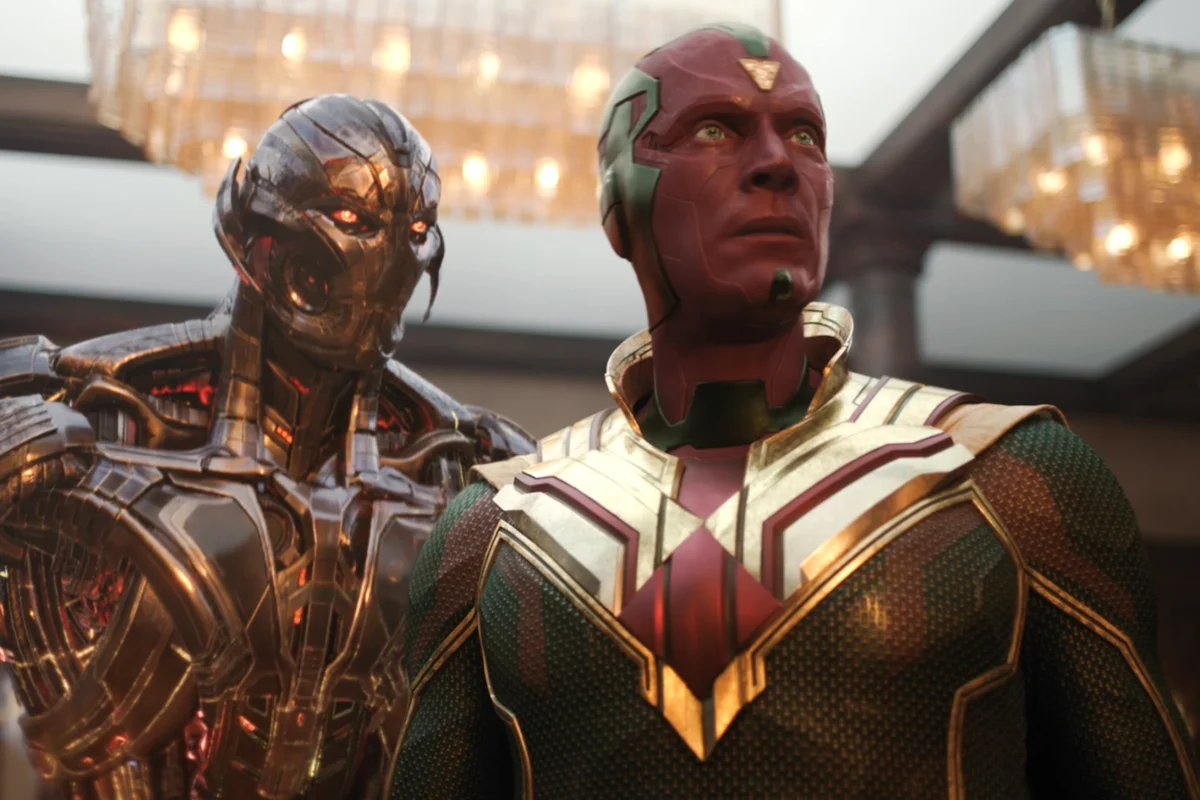
“As Vision confronts his fragmented past and synthetic lineage, VisionQuest serves as the definitive resolution to a narrative arc that redefined the Marvel Cinematic Universe’s approach to grief, identity, and legacy.”
The debut of VisionQuest on Disney+ marks a pivotal moment for Marvel Studios, functioning as the final chapter in a thematic trilogy that began with the groundbreaking success of WandaVision. By shifting the focus from the Scarlet Witch’s grief to the existential reconstruction of the White Vision, the series explores the philosophical boundaries of artificial intelligence and the enduring nature of the soul. This narrative expansion not only resolves lingering cliffhangers from the 2021 series but also integrates the broader implications of the Multiverse and the emergence of a new generation of heroes within the Marvel Cinematic Universe (MCU).
The Legacy of the WandaVision Era
It has been over five and a half years since WandaVision premiered, an event that fundamentally altered the trajectory of the MCU. Launching at a time when global audiences were confined by the pandemic, the series became a cultural touchstone, blending classic sitcom tropes with high-concept superhero drama. Its success was not merely measured in viewership but in critical acclaim, garnering 23 Emmy nominations and establishing stars Elizabeth Olsen, Paul Bettany, and Kathryn Hahn as the foundational pillars of Marvel’s television efforts.
The narrative architecture of this era was designed as a triptych. Following the reality-warping events of Westview, Elizabeth Olsen’s Wanda Maximoff transitioned to the silver screen in Doctor Strange in the Multiverse of Madness (2022), where her journey took a tragic, villainous turn. In 2024, the "trilogy" continued with Agatha All Along, which focused on the recovery of Kathryn Hahn’s Agatha Harkness and the introduction of Billy Maximoff (Wiccan). Now, the spotlight returns to Paul Bettany’s Vision, completing the cycle by addressing the fate of the synthezoid who was left behind.
The Philosophical Core: The Ship of Theseus
At the heart of VisionQuest is the "White Vision," a version of the character introduced in the final episodes of WandaVision. Rebuilt by the clandestine organization S.W.O.R.D. using the original Vision’s remains, this entity possesses the physical capabilities of the hero but lacks his emotional core and memories. The series leans heavily into the "Ship of Theseus" thought experiment—a philosophical paradox discussed by the two Visions in the Westview library. If every part of a ship is replaced over time, is it still the same ship?

In VisionQuest, this abstract concept becomes a lived reality. The protagonist is a being in search of a soul, navigating a world that remembers him as a hero while he perceives himself only as a weapon or a machine. The eight-episode structure allows for a deep dive into this internal conflict, moving beyond the traditional action-oriented tropes of the genre to provide a character study of a man—or a machine—trying to find his place in a universe that has moved on without him.
The Internal Architecture: Spader, Ultron, and the Psyche
One of the most significant creative choices in VisionQuest is the exploration of Vision’s internal psyche. The series utilizes Vision’s history as an artificial intelligence to populate his mind with the voices of his past. This includes the return of James Spader as Ultron, providing a narratively rich "father-son" dynamic that has been largely dormant since Avengers: Age of Ultron (2015).
In this context, Ultron represents a dark reflection of Vision’s potential—a nihilistic view of synthetic life. To balance this, the series incorporates representations of J.A.R.V.I.S., F.R.I.D.A.Y., and E.D.I.T.H., the various AI systems created by Tony Stark. By personifying these systems as facets of Vision’s subconscious, the show examines the "genetic" makeup of his personality. He is not just a singular entity but a mosaic of Stark’s genius, Banner’s intellect, and Ultron’s ambition, all tempered by the power of the Mind Stone.
Fatherhood and the Next Generation
While the internal struggle defines Vision’s identity, his external journey is shaped by the appearance of Tommy (played by Ruaridh Mollica). Within the MCU continuity, Tommy and Billy were the magically conjured children of Wanda and Vision during the Westview anomaly. Following the events of Agatha All Along, which detailed the return of Billy’s soul into a new body, VisionQuest tackles the physical and emotional reality of Tommy’s existence.
This development introduces a profound irony: Ultron is technically Vision’s creator, making him a "father" figure, and now Vision must navigate the complexities of fatherhood himself. The interactions between Vision and Tommy serve as the emotional anchor of the series, mirroring the family dynamics that made WandaVision so resonant. It raises the stakes from a mere quest for memory to a quest for connection, as Vision attempts to protect a son he technically never had, yet feels a biological—or technological—imperative to guide.
Technical Prowess and Episodic Structure
The series is structured into eight distinct chapters, many of which utilize technological metaphors for their titles. Episodes such as "Reboot," "Malware," and "Firewall" suggest a narrative that is as much about debugging a broken consciousness as it is about fighting external threats. This naming convention reinforces the show’s commitment to its central conceit: the struggle of a digital being to navigate a physical, emotional world.

The rollout of the series has followed a strategic weekly release schedule on Disney+, building anticipation toward a finale that promises to resolve several long-standing MCU mysteries. While fans continue to speculate on the potential returns of Wanda Maximoff or Agatha Harkness, the show has remained disciplined in its focus on Vision’s individual agency.
The Road to the Finale
As the series approaches its conclusion, the stakes have shifted from personal recovery to existential survival. The penultimate episode, "Immolation," set the stage for a final confrontation that is expected to determine whether the White Vision can truly integrate the memories of his predecessor or if he must forge an entirely new path.
The finale, titled "Forever," is scheduled for release on November 10. It carries the weight of concluding not just this series, but the broader "WandaVision Trilogy." Whether Vision finds peace or continues as a wandering soul within the MCU, VisionQuest has already succeeded in elevating the discourse surrounding synthetic life in popular media, proving that even a being made of vibranium and logic can suffer from the most human of conditions: the need to belong.
Complete Release Schedule for VisionQuest
For those looking to catch up before the final chapter, the following is the official release history for the first season:
- Episode 1, “No Strings” – Premiered October 13: Established the initial awakening of White Vision and his departure from the confines of his laboratory origin.
- Episode 2, “Theseus” – Premiered October 13: Explored the philosophical foundations of Vision’s identity and his first encounter with the remnants of his past.
- Episode 3, “Reboot” – Premiered October 20: Focused on the internal digital landscape of Vision’s mind, featuring the first appearances of his internal AI "voices."
- Episode 4, “Malware” – Premiered October 20: Introduced the return of Ultron as a corrupting influence within Vision’s psyche.
- Episode 5, “Firewall” – Premiered October 27: Detailed Vision’s attempts to protect his burgeoning consciousness from external manipulation.
- Episode 6, “Deadlock” – Premiered October 27: A pivotal episode involving the first physical meeting between Vision and Tommy.
- Episode 7, “Immolation” – Premiered November 3: The high-stakes lead-up to the finale, dealing with the consequences of Vision’s choices regarding his "family."
- Episode 8, “Forever” – Streaming November 10: The series conclusion, expected to define Vision’s future role in the Marvel Cinematic Universe.
As the curtain falls on this chapter of the MCU, VisionQuest stands as a testament to the franchise’s ability to evolve. It moves away from the spectacle of universal threats to focus on the intimate, often painful process of self-discovery. In doing so, it ensures that the legacy of the Vision—and the family he was part of—will endure long after the screen goes black.
