
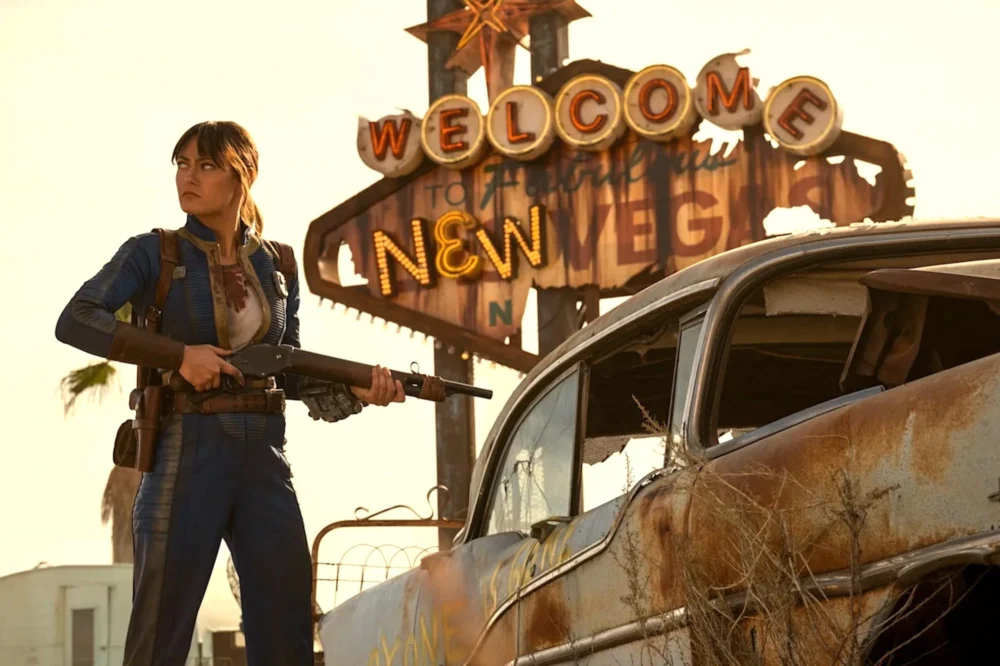
“The transition of Fallout to a weekly release format underscores a strategic shift in streaming media, transforming a high-budget spectacle into a sustained cultural dialogue that deepens the narrative stakes of the post-apocalyptic frontier.”
The television landscape is currently witnessing a paradigm shift in how interactive media is translated for the screen, moving away from the "curse" of poorly received video game adaptations toward a new era of prestige storytelling. Prime Video’s Fallout has emerged as a cornerstone of this movement, balancing high-fidelity world-building with a character-driven narrative that appeals to both seasoned gamers and general audiences. By moving from a binge-release model in its first season to a methodical, weekly rollout for Season 2, the series has successfully cultivated a "slow burn" tension, allowing its complex themes of corporate greed, survivalism, and retro-futuristic decay to resonate more deeply with its global viewership.
For decades, the term "video game adaptation" was synonymous with creative failure. Early attempts to bring digital worlds to the silver screen often resulted in projects that either strayed too far from the source material or failed to capture the unique internal logic that made the games successful. However, the 2020s have ushered in a "Golden Age" for the genre. This shift began in earnest with HBO’s The Last of Us, which demonstrated that the emotional weight of a digital narrative could be translated into a prestige drama capable of garnering critical acclaim and major awards. Simultaneously, blockbusters like The Super Mario Bros. Movie and A Minecraft Movie proved that these intellectual properties possess immense box-office gravity. Within this burgeoning ecosystem, Prime Video’s Fallout has carved out a unique niche, blending the grit of a post-apocalyptic survivalist drama with the biting satire of a conspiracy thriller.
The first season of Fallout, which debuted in the spring of 2024, set a high bar for production value and casting. Led by showrunners Graham Wagner and Geneva Robertson-Dworet, and executive produced by Jonathan Nolan and Lisa Joy, the series captured the specific "atompunk" aesthetic of the Bethesda game franchise. It presented a world where the 1950s vision of the future—complete with nuclear-powered cars and domestic robots—was frozen in time by a global thermonuclear war. The success of the debut season rested heavily on its trifecta of protagonists: Ella Purnell as Lucy MacLean, an optimistic Vault Dweller; Aaron Moten as Maximus, a conflicted squire in the Brotherhood of Steel; and Walton Goggins as The Ghoul, a cynical, irradiated bounty hunter who survived the Great War.

As the series transitioned into its second season, the stakes were raised significantly, both narratively and structurally. While the first season was released in its entirety as a "bingeable" event, Season 2 adopted a weekly release schedule. This move mirrors the strategy used by other prestige hits, such as The White Lotus or Succession, designed to foster "watercooler" conversations and allow the audience to digest the dense lore of the Fallout universe. The second season officially premiered on December 17, with subsequent episodes dropping every Wednesday, concluding with the finale on February 3. This pacing allowed the show to lean into its "slow burn" qualities, building anticipation for the inevitable collision of its disparate factions.
One of the most significant developments in the second season is the expansion of the cast, most notably the addition of Justin Theroux. Theroux, a veteran of prestige television known for his transformative roles in The Leftovers and Maniac, stepped into the pivotal role of Mr. House. The character, a mysterious and Machiavellian industrialist, was teased in the closing moments of the first season. In the lore of the games—specifically Fallout: New Vegas—Robert House is the founder of RobCo Industries and the self-appointed ruler of the New Vegas Strip. Theroux’s portrayal brings a fresh layer of sophisticated menace to the series, embodying the "sinister capitalist" archetype that serves as the show’s primary ideological antagonist. His presence bridges the gap between the pre-war world of corporate maneuvering and the post-war struggle for absolute control.
The returning cast continues to provide the emotional core of the series. Ella Purnell’s Lucy has evolved from a naive subterranean inhabitant into a hardened survivor, forced to reckon with the dark truth behind Vault-Tec and her own family’s legacy. Walton Goggins, who has become a breakout star of the series, continues to humanize the grotesque figure of The Ghoul. His performance serves as a bridge to the past, offering glimpses of the world before the bombs fell and the slow erosion of morality that followed. The chemistry between these characters, set against the backdrop of a decaying California and the Mojave Wasteland, creates a "hangout" atmosphere that balances the show’s more violent and conspiratorial elements.
The narrative arc of Season 2 is meticulously structured across eight episodes, each titled to reflect the grim realities of the wasteland. The season kicked off with "The Innovator," reintroducing the audience to the power vacuum left in the wake of Season 1’s finale. As the story progressed through episodes like "The Golden Rule" and "The Profligate," the scope of the conspiracy involving Vault-Tec and the rival factions of the Brotherhood of Steel and the New California Republic (NCR) widened. The mid-season episodes, including "The Demon in the Snow" and "The Wrangler," delved deeper into the psychological toll of survival, while "The Other Player" and "The Handoff" set the stage for a grand confrontation.
The season finale, titled "The Strip," brings the narrative to the iconic gates of New Vegas. For fans of the game series, this location represents a crucial turning point. The Strip is a bastion of pre-war luxury and vice, preserved amidst the chaos of the desert. By centering the climax of the season in this location, the showrunners have effectively integrated one of the most beloved chapters of the game’s history into the television canon. The inclusion of Mr. House in this setting reinforces the show’s exploration of how the power structures of the old world continue to haunt and dictate the future of the new one.

Beyond the immediate plot points, Fallout Season 2 succeeds because it respects the intelligence of its audience. It does not shy away from the moral ambiguity of its characters or the political complexities of its world. The show functions as a critique of unchecked corporatism and the hubris of those who believe they can "manage" the end of the world. The production design remains a standout feature, utilizing practical effects and expansive sets to create a world that feels lived-in and tactile. The contrast between the sterile, brightly colored environments of the Vaults and the rusted, sun-bleached ruins of the surface serves as a constant visual reminder of the show’s central dichotomy.
As the television industry continues to look toward video games for fresh intellectual property, Fallout serves as a blueprint for success. It demonstrates that the key to a successful adaptation is not just mimicry of gameplay mechanics, but an understanding of the world’s tone and the humanity of its inhabitants. By investing in high-caliber talent like Purnell, Goggins, and Theroux, and by adopting a release strategy that prioritizes narrative depth over immediate gratification, Prime Video has ensured that Fallout remains at the forefront of the cultural conversation.
The completion of the Season 2 release schedule on February 3 marks a significant milestone for the franchise. All eight episodes are now available for streaming, providing a comprehensive look at a world that is as terrifying as it is fascinating. Whether viewed as a cautionary tale about nuclear proliferation or a thrilling adventure through a lawless frontier, Fallout has solidified its place as a definitive work of modern science fiction. As the dust settles on the New Vegas Strip, the series leaves viewers with a haunting question: in a world where everything has been lost, what is actually worth rebuilding? The answer, as the show suggests, is rarely simple, and usually comes at a devastating cost.
