
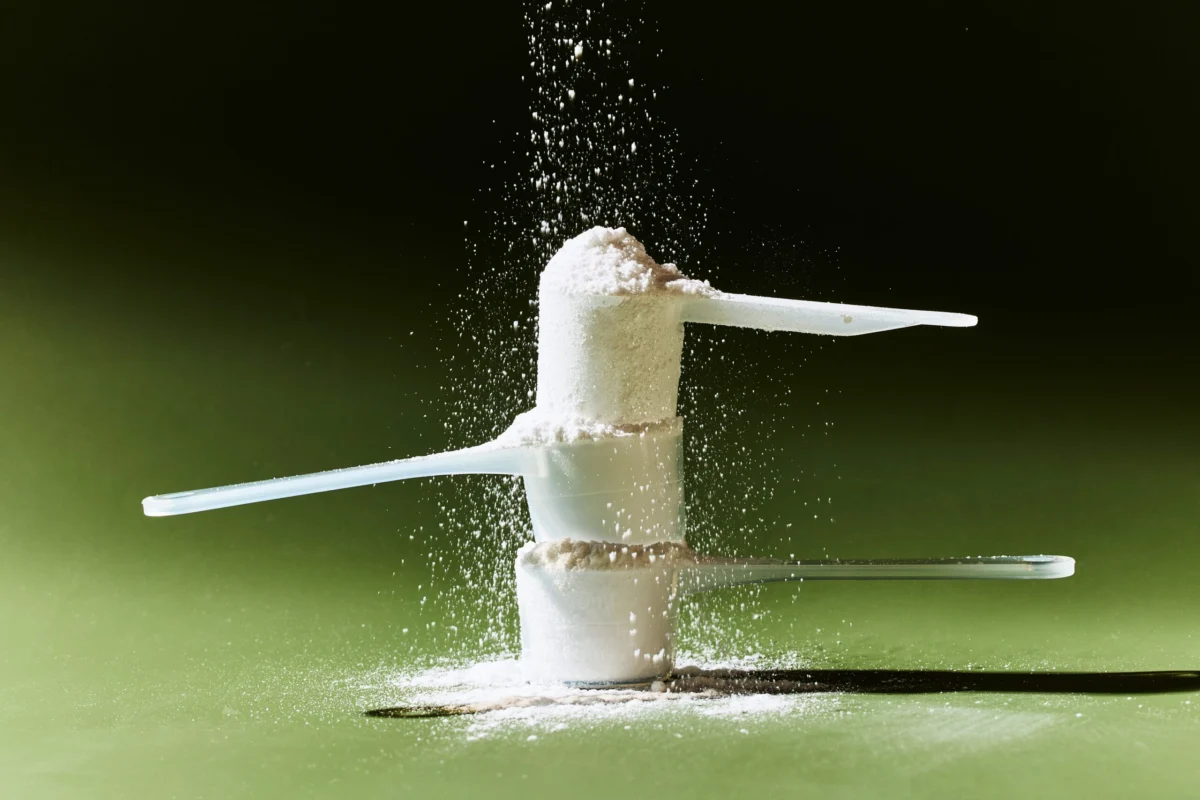
"While five grams remains the gold standard for muscle saturation, emerging research suggests that doubling the daily dose may be necessary to overcome the blood-brain barrier and unlock systemic benefits for cognitive function and bone density."
For decades, the protocol for creatine supplementation was considered a settled science: five grams of creatine monohydrate daily was the definitive dose required to saturate the muscles and enhance athletic performance. However, a new wave of clinical research is challenging this long-standing consensus, suggesting that while five grams suffices for the biceps, it may fall short of the requirements for the brain and skeletal system. As scientists delve deeper into the metabolic demands of the "stressed" brain and the structural integrity of aging bones, the conversation is shifting toward higher dosages, potentially redefining creatine from a niche bodybuilding supplement into a foundational tool for holistic longevity.
The Biological Foundation: ATP and the Muscle Standard
To understand why the dosage is changing, one must first understand what creatine does. Within the human body, energy is currency, and that currency is adenosine triphosphate (ATP). During high-intensity exercise—whether it is a heavy bench press or a set of explosive box jumps—the body exhausts its ATP stores within seconds. Creatine serves as a cellular backup battery; it is stored in the muscles as phosphocreatine, which can rapidly donate a phosphate group to ADP (adenosine diphosphate) to regenerate ATP.
For nearly thirty years, the "five-gram rule" has dominated the fitness industry because it is the most efficient dose for achieving muscle saturation. Once the muscles are saturated, they can perform more work, recover faster between sets, and ultimately grow larger when paired with adequate protein intake. This foundational benefit is well-supported by thousands of peer-reviewed studies, making creatine monohydrate the most researched and validated supplement in history. Yet, as researchers like Darren Candow, PhD, and Scott Forbes, PhD, have discovered, the muscles are not the only organs that crave this energy-boosting molecule.
The Cognitive Frontier: Crossing the Blood-Brain Barrier
The most significant shift in creatine research involves the brain. Though the brain represents only about 2% of total body weight, it consumes approximately 20% of the body’s total energy. Like muscle, the brain utilizes the ATP-phosphocreatine system to maintain cognitive function, particularly during tasks that require intense focus or when the system is under stress.
The primary challenge in using creatine for brain health is the blood-brain barrier (BBB). While muscle cells have highly efficient transporters that "pull" creatine from the bloodstream, the BBB is significantly more restrictive. Richard Kreider, PhD, a professor at Texas A&M University, notes that the brain requires higher circulating levels of creatine to force the nutrient across this barrier. This biological hurdle is why many of the most promising cognitive studies utilize doses far exceeding the traditional five grams—often ranging from 10 to 20 grams per day.
The implications for cognitive health are vast. Emerging research has investigated creatine’s role in mitigating the effects of traumatic brain injury (TBI), Alzheimer’s disease, and clinical depression. While the data is still in its infancy, the "stressed brain" hypothesis suggests that creatine is most effective when the brain is compromised. For instance, studies have shown that creatine can significantly improve cognitive performance in individuals suffering from sleep deprivation or those experiencing mental fatigue.
The Influencer Wave and the 25-Gram Debate
The burgeoning science of "neuro-creatine" has caught the attention of the wellness industry’s most influential voices. Andrew Huberman, PhD, has highlighted creatine as a vital nutrient for the forebrain—the area responsible for executive function, planning, and rule-setting. Biohackers like Dave Asprey and Gary Brecka have similarly touted its benefits for "consciousness" and mental clarity.

However, the enthusiasm of the influencer community sometimes outpaces the caution of the scientific community. Some social media personalities now advocate for dosages as high as 25 grams per day. While researchers like Darren Candow acknowledge the hype, they also urge context. Taking 25 grams may be unnecessary for the average healthy adult and could lead to practical issues, such as gastrointestinal distress or "pill fatigue." The goal, according to researchers, is not to take the maximum dose the body can tolerate, but the minimum dose required to achieve brain saturation—which currently appears to hover around the 10-gram mark for most individuals.
Creatine and Bone Geometry: A New Structural Benefit
Beyond the brain and biceps, a "sliver of research," as Scott Forbes describes it, is revealing that creatine may play a role in bone health. Bone is a metabolically active tissue that requires significant energy for remodeling and repair. Preliminary studies suggest that creatine may change the "geometry" of bones, potentially increasing their strength and density.
However, there is a critical caveat to this benefit: creatine does not work on bones in a vacuum. Brian St. Pierre, RD, a director at Precision Nutrition, emphasizes that the bone-strengthening effects of creatine are only realized when the supplement is combined with resistance training. The mechanical load of lifting weights, paired with the increased cellular energy provided by creatine, creates a synergistic environment for bone growth. This makes creatine an increasingly attractive supplement for aging populations concerned with osteoporosis and frailty.
Addressing the Safety Myth: The Kidney Question
One of the greatest barriers to higher-dose creatine adoption has been the persistent myth that it damages the kidneys. This misconception stems from the fact that creatine supplementation increases levels of creatinine—a waste product used as a marker for kidney function. However, elevated creatinine from supplementation is not indicative of kidney damage; it is simply a byproduct of increased creatine turnover.
A 2024 study review co-authored by Forbes, Candow, and Kreider reaffirmed that even at doses of 10 grams or more over long durations, creatine monohydrate is remarkably safe. The study concluded that there is no increased risk of renal, liver, or gastrointestinal side effects compared to a placebo. While the "crunchy" texture of the powder remains a minor aesthetic complaint for many users, the safety profile of the molecule itself is nearly impeccable for healthy individuals.
The Practical Protocol: How to Implement 10 Grams
If the goal is to maximize muscle, brain, and bone health, the current expert consensus is leaning toward a 10-gram daily dose. However, the method of delivery matters. Richard Kreider suggests that instead of taking 10 grams in a single sitting—which can occasionally cause an upset stomach—it is more effective to split the intake into two five-gram doses throughout the day. This "pulsing" method ensures a steady supply of creatine in the bloodstream, potentially aiding the slow transport across the blood-brain barrier.
For those who are satisfied with their current results on five grams, there is no urgent medical necessity to change. But for those looking to push the boundaries of their cognitive performance or those who are training specifically for longevity and skeletal strength, the shift to 10 grams represents a low-risk, high-reward experiment.
The Future of Supplementation
As the scientific community continues to conduct randomized controlled trials on specific conditions like Long COVID, depression, and TBI, the "consensus" on creatine will likely continue to evolve. We are moving away from an era where creatine was viewed solely as a tool for the aesthetic pursuit of muscle, and into an era where it is recognized as a fundamental metabolic optimizer.
Whether it is through the lens of a "stressed" brain needing more ATP to recover from a sleepless night, or an aging skeletal system needing more energy to maintain density, creatine’s versatility is its greatest asset. The standard five-gram dose served the fitness world well for three decades, but the next thirty years of research may well belong to the ten-gram protocol. As the science catches up to the hype, the message is clear: creatine is for everyone, at every age, and its benefits reach far beyond the gym floor.
