
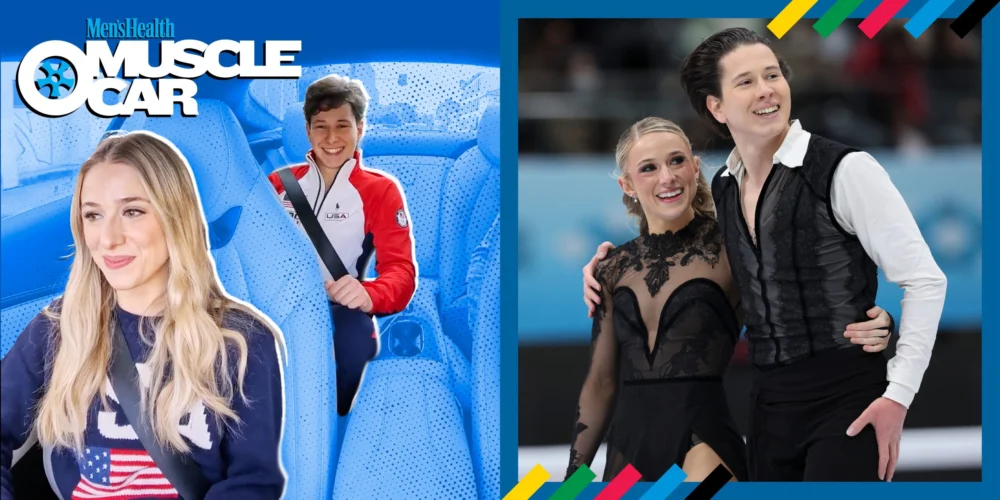
"While ice dancing is defined by its fluid storytelling and artistic connection, the discipline demands elite-level lower-body strength and core stability to execute the high-speed maneuvers required for the 2026 Milano-Cortina Games."
As the 2026 Milano-Cortina Winter Olympics approach, the preparation for Team USA’s elite athletes shifts from general conditioning to the hyper-specific physical demands of their respective disciplines. In the latest installment of the Men’s Health Muscle Car series, fitness director Ebenezer Samuel sat down with ice dancing partners Emilea Zingas and Vadym Kolesnik to deconstruct the unique intersection of aesthetic grace and raw athletic power. Having recently secured gold at the ISU Four Continents Championships, Zingas and Kolesnik represent the next generation of American figure skating, offering a rare look into the grueling gym work, nutritional strategies, and mental preparation required to sustain a world-class partnership on the ice.
The Technical Distinction of Ice Dancing
To the casual observer, figure skating is often viewed as a monolith of jumps and spins. However, within the Olympic program, the distinction between "Pair Skating" and "Ice Dancing" is profound. Zingas, 23, and Kolesnik, 24, have been refining their partnership since 2022, focusing on the nuances that separate their discipline from the high-flying acrobatics of pairs. In ice dancing, the emphasis shifts away from multi-rotational jumps and toward the "depth of edge"—the ability to lean precariously into the blade’s curve while maintaining speed and control.
Their current free dance, a rendition of Romeo and Juliet, serves as a masterclass in this distinction. Rather than relying on the "big ticket" elements of solo jumps, the pair utilizes choreo-assisted jumps, intricate lifts, and synchronized step sequences to narrate a story. This requires a level of "connection" that is both emotional and physical; the partners must move as a single entity, a feat that demands an extraordinary level of proprioception and mutual strength.
The Physical Engine: Quads, Core, and Nordics
The grace exhibited during a performance often masks the sheer force required to move across the ice. For Vadym Kolesnik, the foundation of an ice dancer’s performance is found in the quadriceps. "When you’re on the ice, you’ve got to have good quads," Kolesnik noted. "Without that leg strength, you can’t pick up the girl, you can’t skate, you can’t do anything." In ice dancing, speed is generated through powerful leg extensions and deep knee bends, making lower-body hypertrophy and explosive power non-negotiable.

While Kolesnik emphasizes the "engine" of the legs, Zingas highlights the "stabilizer" of the core. The ability to maintain a rigid yet expressive torso while being whipped across the ice at high speeds requires immense abdominal and oblique strength. Among their preferred exercises, Zingas points to "Nordics"—referring to Nordic hamstring curls—as a staple in their routine. This exercise is notoriously difficult, requiring the athlete to lower their body weight toward the floor using only their hamstrings for control. For skaters, this eccentric strength is vital for protecting the knees and providing the stability needed for complex lifts and edge work.
Interestingly, the partners differ on their approach to cardiovascular conditioning. While Kolesnik finds utility and even enjoyment in high-intensity sprints, Zingas views the track with less enthusiasm. This highlights a common tension in elite training: the necessity of high-output aerobic work to survive a four-minute program versus the localized muscular fatigue that comes with repetitive impact. Despite their differing preferences, both acknowledge that the "free dance" is a grueling cardiovascular event that leaves little room for error.
The Mental Edge and Musical Motivation
The psychological preparation for a four-minute Olympic-level program is as rigorous as the physical. For Zingas and Kolesnik, music serves as the primary catalyst for competitive focus. Zingas revealed an unconventional choice for her "hype" music: Frank Sinatra’s "My Way." The song’s themes of autonomy and resilience provide a stoic foundation before she takes the ice. In contrast, Kolesnik leans into the high-energy, aggressive lyricism of Eminem, a choice that aligns with the explosive physical requirements of his role as the "lead" in their lifts and sequences.
When discussing the history of their sport, the pair looks toward the legends of the 1980s for inspiration. Specifically, they cited Jayne Torvill and Christopher Dean, the 1984 Olympic gold medalists whose "Bolero" routine remains the gold standard for ice dancing. By measuring themselves against the historical greats, Zingas and Kolesnik maintain a perspective that honors the tradition of the sport while pushing its modern physical boundaries.
Survival in the Cold: Nutrition and Environment
Training for the Winter Games introduces environmental challenges that summer athletes rarely face. Staying warm on the ice is a matter of both performance and safety. Zingas emphasizes a strict regimen of layering, noting that "if you let your sweat freeze, it’s game over." This physiological reality means that warm-up routines must be continuous; there is no downtime in a cold rink. Kolesnik adds a patriotic sentiment to his warmth, noting that the American flag on his uniform serves as a symbolic and emotional "heater" during international competition.
Nutrition in the Olympic Village is another hurdle. For elite athletes, protein is the primary focus for muscle recovery and satiety. While Zingas and Kolesnik joked that village food can be "hit or miss," they identified mozzarella as a surprising and reliable protein staple. This reflects the broader dietary needs of skaters who require high-quality fats and proteins to sustain long training sessions without the bloating that can sometimes accompany higher-fiber diets.

The Business of Being an Olympian
Beyond the rink and the gym, modern Olympians must navigate the world of sponsorships and personal branding. When asked about their "dream" partnerships, the duo looked toward companies that facilitate the grueling travel schedule of the ISU Grand Prix circuit. Delta Air Lines was a top choice for both, highlighting the importance of comfort and logistics for athletes who spend a significant portion of their year in the air.
Kolesnik, however, shared a more idiosyncratic ambition: a sponsorship with Costco. His self-proclaimed status as a "Costco fanatic" underscores a relatable side of elite athletes. His "off-season" plan to eat lunch at the warehouse club until they notice him provides a lighthearted contrast to the intensity of his Olympic aspirations. Zingas, on the other hand, pointed toward "Alo" (Alo Yoga), reflecting the aesthetic and lifestyle branding that aligns with the grace of figure skating.
Strength Training Beyond the Lower Body
A common misconception is that figure skaters focus exclusively on their legs. However, Zingas and Kolesnik confirmed that upper-body strength is essential, particularly for the male partner who must execute overhead lifts. "If you skate with a partner, you have to be strong," Zingas stated. Their routine includes traditional compound movements like the bench press and targeted exercises like triceps kickbacks. Kolesnik advocates for pull-ups as the "best" upper-body exercise, a movement that builds the functional back and arm strength necessary for maintaining a stable frame during partner holds.
As they look toward Milano-Cortina 2026, the partnership between Emilea Zingas and Vadym Kolesnik remains a testament to the dual nature of ice dancing. It is a sport that demands the soul of an artist and the body of a powerlifter. Through a combination of Sinatra, Eminem, mozzarella, and a relentless focus on "the depth of edge," this Team USA duo is carving a path toward the podium, proving that the road to gold is paved with both sweat and style.
