
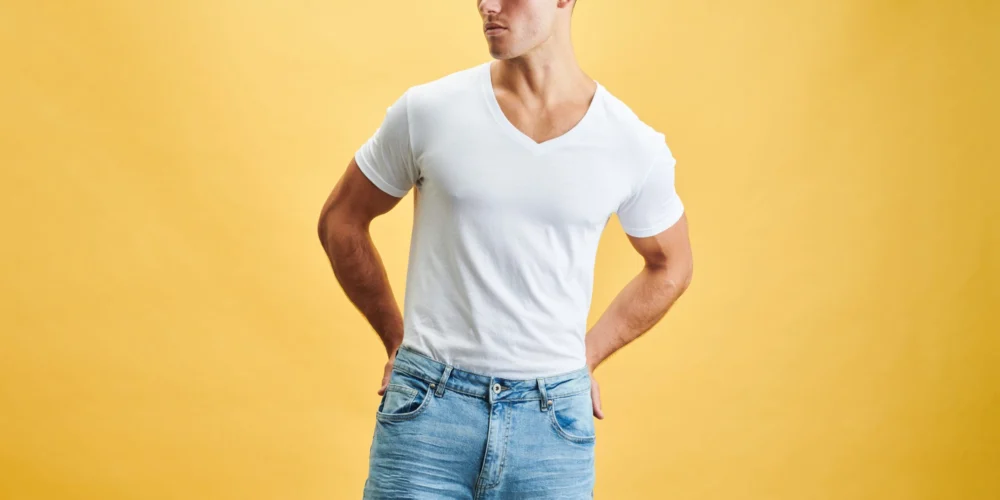
"A high-quality undershirt is the unsung hero of a man’s wardrobe, serving as a critical barrier that preserves expensive shirting while regulating the body’s microclimate through advanced textile engineering."

The evolution of the men’s undershirt represents a shift from basic necessity to a specialized category of performance apparel. Once a standard-issue cotton garment designed purely for modesty and sweat absorption, the modern undershirt now incorporates a sophisticated range of materials—including antimicrobial merino wool, moisture-wicking synthetic blends, and silky modal—to address the diverse needs of the contemporary lifestyle. Whether navigating a high-stakes boardroom meeting or enduring a long-haul flight, the right base layer serves as the foundation for both physical comfort and sartorial confidence, ensuring that outer garments remain pristine while the wearer remains cool and dry.

The Foundation of Daily Comfort: Legacy and Value
For decades, brands like Hanes and Fruit of the Loom have defined the undershirt market by prioritizing accessibility and reliable fit. The Hanes Performance Undershirt, for instance, has evolved significantly from its early iterations. Utilizing a blend of 60% rayon and 40% polyester, this garment moves away from the traditional "tissue-thin" feel of budget cotton. Instead, it offers a snug, classic fit that drapes close to the chest and shoulders without clinging. This material choice is intentional; the rayon provides a cool-to-the-touch sensation, while the polyester ensures the shirt maintains its structure through dozens of wash cycles.

Similarly, Fruit of the Loom’s 8-Pack offers a pragmatic solution for the man who requires a fresh rotation for every day of the week. By using a 50/50 cotton-polyester blend, these shirts provide a "natural" hand-feel that avoids the synthetic, "plastic-y" texture often associated with low-cost multi-packs. This blend is particularly effective at wicking moisture while retaining its shape, making it a staple for those who value utility and cost-per-wear.
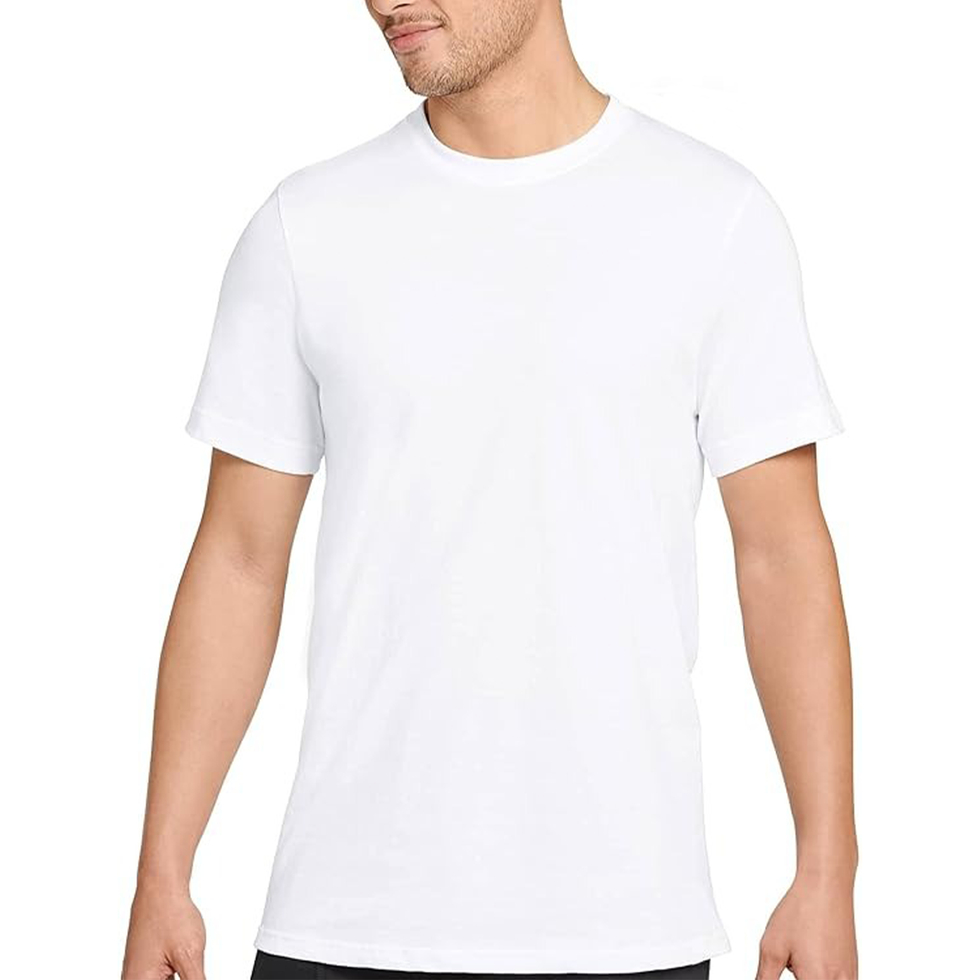
Engineering the Perfect Fit: The Technical Revolution
As textile technology has advanced, a new tier of "technical" undershirts has emerged, led by brands like Mack Weldon and Uniqlo. The Mack Weldon AIRKNITx V-Neck is a prime example of this shift. Constructed from a polyamide-elastane blend—the same technical fabrics found in high-end workout gear—it offers a silky-soft texture with significant mechanical stretch. This allows for unrestricted movement, whether reaching for a subway handle or layering under a tailored blazer. The breathability of the AIRKNITx series is designed specifically for "hot runners," ensuring that even under heavy knitwear, the wearer avoids the discomfort of overheating.
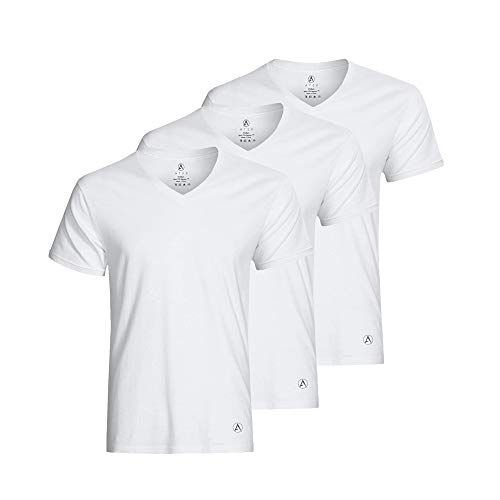
Uniqlo’s AIRism technology has become a global benchmark for breathable base layers. Composed of 88% polyester and 12% spandex, the AIRism T-shirt is engineered to regulate body temperature by accelerating the evaporation of sweat. Its ultra-lightweight profile makes it virtually invisible under dress shirts, providing a "second-skin" feel that is particularly effective in high-humidity environments. For men who find traditional cotton too stifling, these synthetic blends offer a transformative level of cooling.

The Luxury of Skin-Feel: Modal and Pima Cotton
When the priority shifts from pure performance to luxurious comfort, fabrics like Lenzing Modal and Pima cotton take center stage. Tommy John’s Second Skin High V-Neck utilizes a 90% modal and 10% spandex blend. Modal, a semi-synthetic fiber made from beech tree pulp, is prized for its buttery softness and its ability to resist pilling and shrinking. A key innovation in this category is the "stay-tucked" design; the slim cut and added length prevent the shirt from bunching at the waistline, maintaining a clean silhouette under formal attire.

In the realm of natural fibers, Brooks Brothers and Bugatchi leverage the superior properties of long-staple cotton. Brooks Brothers’ Supima Cotton V-Neck is noticeably smoother and more durable than standard cotton, offering a premium feel that does not require synthetic additives to achieve softness. Bugatchi’s Hank Crew Neck, made from 100% Pima cotton, blurs the line between a base layer and a standalone piece. Its fluid drape and silky finish make it appropriate for "cocktail hour" attire, proving that a base layer can be as elegant as the garment it supports.

Specialized Solutions: Travel and Durability
For the frequent traveler, the requirements for an undershirt change from mere comfort to odor management and longevity. The Proof 72-Hour Merino T-shirt is a testament to the natural power of wool. By using 16.5-micron merino wool reinforced with nylon, Huckberry has created a shirt that can be worn for three consecutive days without retaining odors. Merino wool is naturally antimicrobial and temperature-regulating, making it the ideal choice for long-haul flights where climate control is inconsistent and laundry facilities are unavailable.

On the opposite end of the spectrum is the need for physical durability and protection. Jockey’s "Made in America" collection focuses on heavy-duty construction. These 100% cotton shirts feature reinforced necklines designed to resist the "bacon neck" curling that often plagues cheaper garments. Similarly, Buck Mason’s Field-Spec Cotton Heavy Tee offers a 100% cotton jersey fabric inspired by vintage rugby jerseys. Twice as thick as a standard tee, it serves as a robust base layer for cold weather or rugged outdoor activities, though its thickness makes it less suitable for high-intensity exercise where sweat absorption could lead to a heavy, damp garment.

The Hybrid Layer: Style Beyond the Button-Down
Modern fashion has seen the undershirt step out from the shadows. Brands like Skims, Gap, and Cos have designed pieces that function equally well as standalone tops. The Skims Classic T-shirt offers a middle ground between a compression shirt and a relaxed tee, utilizing a stretchy cotton blend that works as well with joggers as it does under a cardigan. Gap’s Classic T-Shirt uses a superfine jersey that is nearly weightless, making it a favorite for lounging or sleeping.

Cos distinguishes its offering through texture. The Slim Ribbed Cotton T-Shirt uses a fine ribbing to provide natural stretch and recovery. This texture adds a level of visual interest and structural integrity that allows the shirt to "hold its own" if the wearer decides to remove their overshirt. This "style flex" is a hallmark of the modern undershirt—it is no longer a garment to be hidden at all costs, but a versatile component of a layered ensemble.

Maintenance and Longevity: Preserving the Investment
To maintain the performance and feel of high-quality undershirts, specific care is required. Technical blends containing spandex or elastane are particularly sensitive to high heat, which can break down the elastic fibers over time. Many experts and manufacturers recommend air-drying or using a low-tumble setting to prevent shrinkage and maintain the "slim fit" integrity of the garment. Furthermore, cold-water washes are generally preferred to preserve the brightness of white fabrics and prevent the pilling of modal and rayon blends.

Conclusion: The Strategic Value of the Base Layer
Choosing the right undershirt is a strategic decision that impacts the lifespan of a man’s entire wardrobe. By absorbing oils and perspiration, the undershirt prevents the yellowing of collars and the degradation of outer fabrics, ultimately reducing the frequency of dry cleaning and harsh laundering for expensive dress shirts and sweaters. Beyond the practical benefits, the psychological comfort of a dry, breathable base layer cannot be overstated. Whether it is the classic reliability of a Jockey cotton tee or the high-tech cooling of an ATEK nylon-spandex blend, the undershirt remains the most intimate and essential component of the modern male uniform.
