
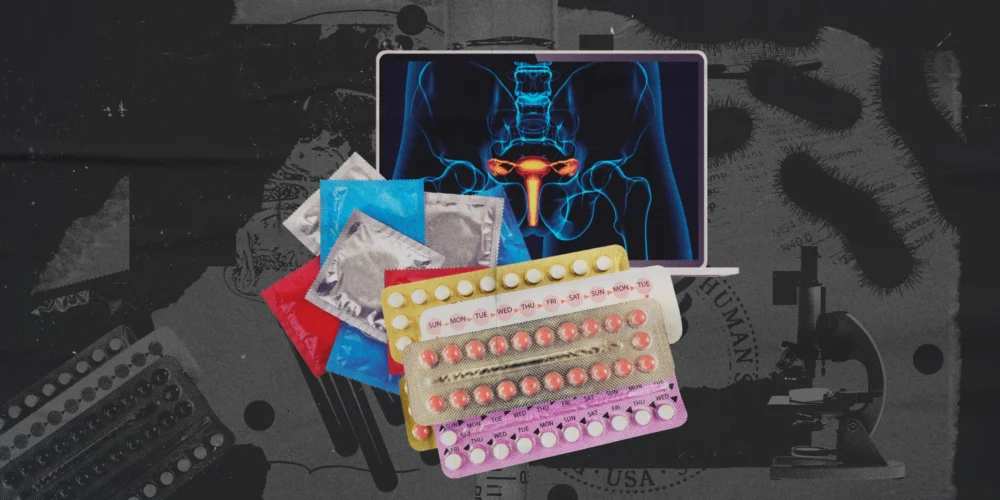
"Comprehensive sexuality education serves as a vital safeguard for public health by replacing stigma with evidence-based knowledge, ultimately reducing rates of unintended pregnancy, sexual violence, and infection while fostering personal autonomy."
The recent removal of long-standing health resources from the Centers for Disease Control and Prevention (CDC) website has sparked a significant debate regarding the intersection of political policy and public access to scientific information. Among the deleted materials were the "Guidelines for Comprehensive Sexuality Education," a foundational framework developed by the Sexuality Information and Education Council of the United States (SIECUS) to provide educators and healthcare providers with a structured approach to adolescent development and sexual health. This article explores the significance of these guidelines, the public health implications of their removal, and the expert consensus on why comprehensive education remains a non-negotiable component of modern healthcare.
The Genesis of the Guidelines
The "Guidelines for Comprehensive Sexuality Education" represent more than just a curriculum; they are the result of decades of collaborative research involving a national task force of experts in adolescent development, healthcare, and education. Originally published and periodically updated—most recently in a 2021 edition—these guidelines were designed to assist local communities and school districts in creating programs that are developmentally appropriate and scientifically accurate.
At their core, the guidelines provide a framework of key concepts, topics, and messages that all sexuality education programs should ideally encompass. Unlike narrow programs that focus solely on the mechanics of reproduction or the promotion of abstinence, these guidelines address the totality of the human experience. They cover six key concept areas: Human Development, Relationships, Personal Skills, Sexual Behavior, Sexual Health, and Society and Culture. By providing a roadmap for these topics, the guidelines ensure that educators are not merely reacting to crises, but are proactively building a foundation of literacy that lasts a lifetime.
The Impact of Information Erasure
The deletion of these pages from federal domains under executive directives marks a shift in how the government manages public health data. For years, the CDC’s National Prevention Information Network (NPIN) served as a central clearinghouse for evidence-based publications. When such resources are removed, it creates a "knowledge vacuum" that can be filled by misinformation or anecdotal advice.
Public health experts argue that the removal of these guidelines does not stop sexual activity among young people; rather, it removes the safety net of accurate information. When federal agencies cease to host these resources, the burden of information dissemination shifts to non-profit organizations, private archives, and academic institutions. This fragmentation of information can lead to disparities in access, particularly in underserved communities that rely on federal websites as a primary, trusted source of truth.
The Expert Perspective: Why Comprehensive Education Matters
Medical professionals, including Dr. Nayna Shah, a Complex Family Planning Fellow, and Dr. Ashley Navarro, a Complex Family Planning Specialist at Boston Medical Center, emphasize that access to this information is a matter of reproductive justice. According to Dr. Shah and Dr. Navarro, comprehensive sex education is an "invaluable resource" precisely because it addresses the psychological barriers of stigma and shame.
The medical community has long observed a direct correlation between inadequate education and negative health outcomes. Data suggests that countries and states with robust, comprehensive sexuality education programs see lower rates of sexually transmitted infections (STIs) and unintended pregnancies. Furthermore, these programs are instrumental in reducing sexual violence. By teaching concepts of consent, boundaries, and healthy communication from an early age, educators empower young people to recognize and report abusive behavior, thereby fostering safer environments.
The experts argue that "blocking important information and simply telling [young people] to not engage in sexual behaviors" is an ineffective strategy. Human behavior, particularly during the formative adolescent years, is driven by curiosity and biological development. Without a framework to understand these changes, young people are left to navigate complex social and physical landscapes without a compass.
The Framework of the 2021 SIECUS Guidelines
The 3rd edition of the SIECUS guidelines, which was the version archived before its removal, reflected a modern understanding of identity and health. The ID number 362478 in the CDC’s former database pointed to a document that addressed:
- Human Development: Understanding the physical, social, and emotional changes of puberty, as well as reproductive anatomy and body image.
- Relationships: Defining healthy versus unhealthy relationships, the importance of family, and the role of friendship and romantic partnerships.
- Personal Skills: Developing decision-making abilities, communication skills, and the capacity for critical thinking regarding media and social influences.
- Sexual Behavior: Discussing the spectrum of human sexuality, including abstinence, and providing a realistic context for sexual expression throughout the lifespan.
- Sexual Health: Practical information on preventing STIs and HIV, understanding contraception, and the importance of regular healthcare screenings.
- Society and Culture: Examining how gender roles, laws, and cultural diversity impact our understanding of sexuality.
By categorizing these topics, the guidelines allow educators to tailor information to different age groups (Level 1 through Level 4), ensuring that a five-year-old receives different information than a fifteen-year-old, while still maintaining a cohesive educational trajectory.
The Consequences of Political Censorship
The removal of these guidelines is often framed as a move to return "parental control" to education. However, health advocates suggest that comprehensive education actually supports parents by providing them with the language and facts needed to have these difficult conversations at home. When the government removes these tools, it signals that certain health topics are "taboo," which reinforces the very shame that Dr. Shah and Dr. Navarro warn against.
Furthermore, the erasure of such data has a chilling effect on researchers and state-level health departments that look to the CDC for gold-standard recommendations. If the CDC does not endorse a specific guideline, state legislatures may use that absence of endorsement to justify the defunding of local programs, creating a domino effect that reaches into classrooms across the country.
Alternative Pathways to Information
In the absence of federal hosting, the preservation of the "Guidelines for Comprehensive Sexuality Education" has fallen to organizations like the Internet Archive and publications such as Men’s Health, which have worked to mirror deleted content. Additionally, evidence-based information remains available through a network of dedicated organizations.
Groups such as Planned Parenthood, Bedsider, Advocates for Youth (AHSA), and Scarleteen continue to provide the data that was once centralized on the CDC website. These organizations maintain that sexual health information is a fundamental human right. By continuing to disseminate accurate information, these groups aim to preserve bodily autonomy and ensure that young people are not left in the dark due to shifting political tides.
Conclusion: The Future of Public Health Information
The debate over the CDC’s deleted webpages is ultimately a debate over the role of the state in public health. Should a government agency provide all available scientific data to its citizens, or should it curate that data based on the prevailing political ideology?
The consensus among healthcare providers at institutions like Boston Medical Center is clear: the dissemination of accurate sexual health information is essential for fostering healthier communities. As we move forward, the challenge will be ensuring that "reproductive justice" and "bodily autonomy" are not just buzzwords, but are supported by accessible, evidence-based resources. The preservation of the SIECUS guidelines serves as a reminder that while websites can be deleted, the need for comprehensive education remains constant. Through the efforts of the medical community and independent archivists, the path toward informed decision-making remains open, even when the traditional gateways are closed.
