
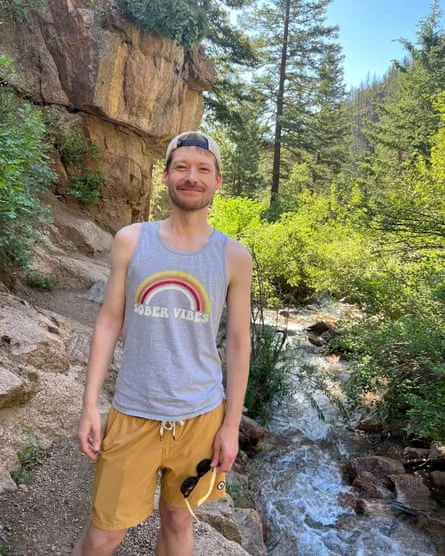
"The relentless pursuit of a longer life often comes at the expense of actually living it, turning health into a cage built from data, supplements, and existential fear."
As the global wellness industry pivots from simple fitness to the high-stakes world of biological optimization, a new psychological phenomenon is emerging: Longevity Fixation Syndrome. This condition, characterized by an obsessive, anxiety-driven compulsion to extend one’s lifespan through rigorous biohacking and data monitoring, reveals a growing disconnect between physical health and mental well-being. While the market for anti-aging solutions is projected to reach hundreds of billions of dollars, the human cost is becoming increasingly apparent as individuals trade their present-day peace for the promise of a distant, indefinite future.
For Jason Wood, the breaking point was not a medical crisis or a failed biometric scan, but a simple pitta bread. Having painstakingly researched a restaurant weeks in advance to ensure his dietary requirements were met, the arrival of hummus instead of his preordered vegetable crudités triggered a total psychological collapse. At 40 years old, Wood found himself shaking and crying in a public space, crushed by the weight of the self-imposed pressure to control every variable of his existence. His story is a hallmark of a burgeoning crisis where the tools intended to improve life end up consuming it.

At the height of his obsession, Wood’s life was a rigid architecture of numbers. He monitored his heart rate, blood pressure, body fat, and sleep schedules with religious fervor. He tracked his glucose levels multiple times a day and adhered to a grueling exercise regime that saw him in the gym twice daily, seven days a week. His diet fluctuated between exclusively organic, raw, or unprocessed foods, with every calorie accounted for. Beyond the basics, he sought out wellness clinics for intravenous vitamin cocktails and oxygen treatments, spending upwards of $300 per session. Every six months, he requested extensive blood panels to check dozens of biomarkers, from testosterone to lipids. In total, Wood estimates he spent $10,000 in his quest for longevity—a quest that eventually became a "cage."
The motivation behind such extreme behavior is often rooted in deep-seated trauma rather than a simple desire for health. For Wood, the fixation was a response to the premature loss of both parents to cancer—his father when he was 11 and his mother when he was 19. This existential fear of death, triggered by early loss, manifested as a need to control the uncontrollable. By managing his biology, he felt he could outrun the fate that had claimed his family.
Jan Gerber, CEO of the Swiss mental health clinic Paracelsus Recovery, coined the term "Longevity Fixation Syndrome" to describe this unofficial but increasingly common diagnosis. Gerber notes a significant rise in patients presenting with these compulsive habits, which share many traits with orthorexia—an eating disorder centered on an obsession with "clean" eating. However, longevity fixation goes further, incorporating an expansive array of variables including sleep data, chemical supplements, and environmental "hacks" like infrared saunas and ice baths.
The phenomenon is fueled by a massive and aggressive global market. In 2023, the complementary and alternative medicine market for anti-aging was valued at $63.6 billion, with projections suggesting it will balloon to $247.9 billion by 2030. What began in Silicon Valley labs as experimental research into gene manipulation and blood transfusions has trickled down into the mainstream, rebranded as "biohacking." High-profile figures have accelerated this trend: Orlando Bloom has experimented with filtering microplastics from his blood; Jennifer Aniston reportedly uses peptide injections; and venture capitalist Bryan Johnson has become the "poster boy" for the movement, famously attempting to reverse his biological age through a $2-million-a-year regimen that included infusions of his son’s plasma.
While these elite "tech bros" and celebrities seek immortality, the psychological fallout is reaching the middle class. Clinicians across Europe and the US report a surge in "health optimization" anxiety. Dr. Sarah Boss, clinical director of the Balance Rehab Clinic, observes that many wealthy clients now travel with their own hyperbaric oxygen chambers and infrared saunas as if they were standard luggage. One client, under the age of 40, was taking 15 different supplements daily and requesting stem cell injections, entirely disconnected from his body’s natural signals.
The COVID-19 pandemic acted as a powerful catalyst for this trend. Lina Mookerjee, a psychotherapist based in the UK, estimates that 75% of her clients now show symptoms of longevity fixation. She describes a "step-change" in hypervigilance following the global health crisis. The pandemic stripped away the illusion of safety, leading many professional, university-educated individuals to regain a sense of agency through wearable devices and biometric tracking. This "superhero syndrome," as Mookerjee calls it, is an attempt to override human vulnerability with data.
However, the scientific reality often fails to support the hype. Research published in the Proceedings of the National Academy of Sciences indicates that for generations born after 1939, reaching an average age of 100 remains statistically unlikely, regardless of lifestyle interventions. The "holy grails" of longevity—such as the diabetes drug metformin, which some believe slows aging—are often used off-label by healthy individuals without conclusive evidence of their long-term benefits in non-diabetic populations.
The path to recovery for those trapped in longevity fixation involves a radical shift: moving from data-reliance back to intuitive living. At clinics like Balance Rehab, patients are weaned off their trackers and supplements. They are encouraged to engage in yoga, breathwork, and sports not for the sake of a "metric," but for enjoyment. The goal is to regulate the nervous system and address the underlying "attachment trauma" or existential dread that drives the obsession.

For Mark, a 26-year-old from the Netherlands, recovery meant learning to accept the "danger" of a single beer or a slice of cake. His fixation had led to panic attacks and a social life that was virtually non-existent. Through therapy, he had to train his brain to recognize that a slight fluctuation in blood pressure was not an immediate death sentence. He realized that while physical health is a component of a good life, mental health is the foundation upon which that life is built.
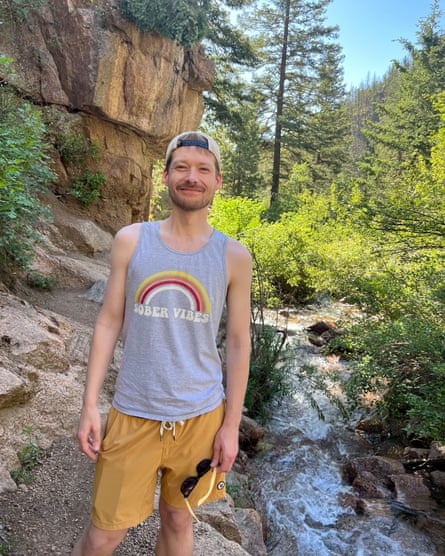
Jason Wood eventually found his way back to balance by accepting the inevitability of death. Under the guidance of a therapist, he deleted his tracking apps and relaxed his rigid routines. He describes the process as having his "security blanket" ripped away, but the result was a return to humanity. Wood now serves as a director for the National Association of Anorexia Nervosa and Associated Disorders, helping others navigate the toxic intersections of wellness culture and mental health.
The challenge remains, however, that the modern environment is designed to keep people fixated. Social media influencers loudly proclaim the benefits of the latest cold plunge or "bio-identical" supplement, creating a constant sense of inadequacy in those who are not "optimizing" their every waking moment. In a culture that views aging as a failure and death as an avoidable glitch, the act of simply living becomes a radical form of resistance.
As Wood reflects, the naming of "Longevity Fixation Syndrome" is a vital step toward providing support for those who have turned their health into a full-time job. By recognizing that the pursuit of more years can often drain the quality from the years we already have, society may begin to value presence over permanence. The ultimate biohack, it seems, is not a supplement or a blood test, but the ability to sit at a table, eat a piece of bread, and be at peace with the fact that we are mortal.
