
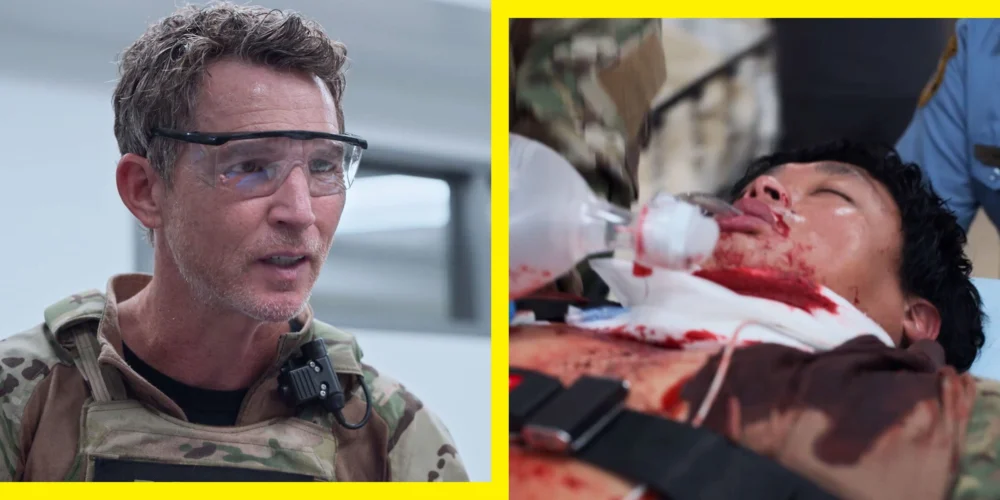
"In the chaotic intersection of tactical medicine and emergency care, the margin for error is measured in seconds, as a Zone 1 neck injury transforms a routine rescue into a desperate race against irreversible brain damage."
Following the devastating emotional climax of "12:00 P.M.," The Pitt shifts its narrative gears in Season 2, Episode 7, titled "1:00 P.M.," to explore the harrowing realities of field trauma and tactical medicine. By reintroducing fan-favorite Dr. Abbot in the unexpected role of a SWAT medic, the series bridges the gap between high-octane action cinema and the clinical precision of the emergency room, utilizing expert medical insights to ground its most intense subplot to date.
The Narrative Rhythm of Recovery and Intensity
To sustain a 15-episode season of hour-long dramas, a series must master the art of pacing. The Pitt has demonstrated a keen understanding of this requirement, particularly following the traumatic events of Episode 6. The death of Louie (Ernest Harden Jr.) served as a crushing blow to both the characters and the audience, providing a somber exploration of grief and tragic backstories. However, a medical drama cannot remain in a state of mourning indefinitely; it requires a catalyst to propel the story forward.

Episode 7, "1:00 P.M.," serves as that catalyst. It intelligently recognizes that after an emotional low, the audience requires a shift in energy—something "new, fun, and exciting." This shift arrives in the form of Dr. Abbot (Shawn Hatosy), the nighttime attending physician who has been notably absent for much of the second season. His return is not a quiet reentry into the hospital hallways but a visceral, adrenaline-fueled sequence that places him at the heart of a tactical firefight.
The Evolution of Dr. Abbot: From Veteran to SWAT Medic
Dr. Abbot has always been a complex figure within the halls of the hospital. Established in Season 1 as a war veteran, his stoic demeanor and clinical efficiency were clearly forged in high-pressure environments. In "1:00 P.M.," we learn that his therapist suggested he find a "hobby" to manage the transition to civilian life. In a move that Dr. Santos (played by a vibrant cast member) describes as "badass," Abbot chose to moonlight as a field medic for a SWAT team.
This development is more than just a character quirk; it is a logical extension of his backstory. For a man accustomed to the life-and-death stakes of a combat zone, standard domestic hobbies likely felt hollow. By joining a SWAT unit, Abbot finds a way to reconcile his military training with his medical expertise. When he arrives at the ER in full tactical gear, escorting an officer named Hiro who has sustained a gunshot wound (GSW) to the neck, the transition from "soldier" to "doctor" is seamless. He is "locked in," immediately collaborating with colleagues like Robby, Al-Hashimi, Santos, and Garcia to stabilize a patient who is teetering on the edge of mortality.
The Anatomy of a Zone 1 Injury
The medical centerpiece of the episode is Hiro’s neck wound, which provides a grim look at the "aftermath" of the firefights often glorified in action films like Training Day or End of Watch. While those films focus on the exchange of lead, The Pitt focuses on the repair of the flesh. To understand the gravity of Hiro’s condition, one must look at the clinical definition of a "Zone 1" injury.

According to Dr. Robert Glatter, Assistant Professor of Emergency Medicine at Lenox Hill Hospital and Men’s Health Advisory Board member, a gunshot wound to the base of the neck (Zone 1) is one of the most lethal injuries a human can sustain. The primary danger lies in the potential for "full separation" of the windpipe (trachea). When the upper and lower ends of the airway are severed, the patient loses the ability to move oxygen into the lungs, leading to rapid asphyxiation.
In the field, Abbot attempted to secure the airway—a procedure known as intubation. However, the episode highlights the extreme difficulty of performing this under fire. Dr. Glatter notes that in cases of tracheal separation, the lower end of the windpipe often retreats into deep tissue planes. A medic must delicately locate and grasp this tissue with specialized instruments, pulling it forward to create a "makeshift" emergency tracheostomy.
Clinical Accuracy: Esophageal vs. Tracheal Intubation
One of the most tense moments in "1:00 P.M." occurs when the hospital team realizes that Abbot’s field intubation may have been unsuccessful. While Abbot is a highly skilled veteran, the show highlights the fallibility of even the best doctors under duress.
Dr. Glatter points out several "red flags" that the show accurately portrayed. First, Hiro arrived with oxygen saturation levels in the mid-80s; a stable, correctly intubated patient should ideally be above 93 percent. Second, Abbot reported feeling "resistance" when advancing the tube, despite seeing the vocal cords. Finally, the presence of air "bubbling" in the open neck wound was a definitive sign that the integrity of the windpipe was compromised.

The resolution of this crisis showcased the modern tools of the emergency room. Dr. Santos utilized an ultrasound probe—a critical device in trauma bays—to confirm the tube’s placement. By checking for "lung sliding" (the movement of the lung pleura against the chest wall), the team could confirm whether air was actually reaching the lungs. If the tube had remained in the esophagus, the lungs would remain static, and the patient would suffer irreversible brain damage within a four-to-six-minute window.
The "Vibe" of the ER: Jargon and Atmosphere
For the average viewer, the dialogue in these scenes is a dense thicket of medical jargon. Terms like "GSW," "Zone 1," "intubation," and "ventilation" fly across the screen with rapid-fire delivery. However, The Pitt excels at using this jargon not just for accuracy, but for atmospheric effect. The show understands that the audience doesn’t need to pass a medical board exam to feel the "vibe" of the scene.
The intensity is conveyed through the actors’ performances—the sweat on Abbot’s brow, the frantic but controlled movements of the nursing staff, and the rhythmic beeping of monitors. By grounding the episode in the technical breakdown provided by experts like Dr. Glatter, the show ensures that the "vibe" is backed by substance. It portrays the ER not as a place of miracles, but as a place of high-stakes problem-solving where minutes truly matter.
Conclusion: The Impact of Realism
By bringing Dr. Abbot back in such a dramatic fashion, The Pitt has successfully revitalized its second season. The subplot involving the SWAT team serves as a bridge between the show’s medical roots and the broader world of tactical emergency services. It reminds the audience that while the ER is a controlled environment, the world outside is chaotic, and the transition between the two requires a unique breed of physician.

The collaboration with medical experts to explain procedures like the emergency tracheostomy and ultrasound confirmation elevates The Pitt above standard procedural dramas. It offers a sober, bloody, and ultimately fascinating look at the human body’s fragility and the extreme measures required to preserve life when every second counts. As Season 2 continues, the return of Dr. Abbot promises more of this intersection between character-driven drama and unflinching medical realism.
