
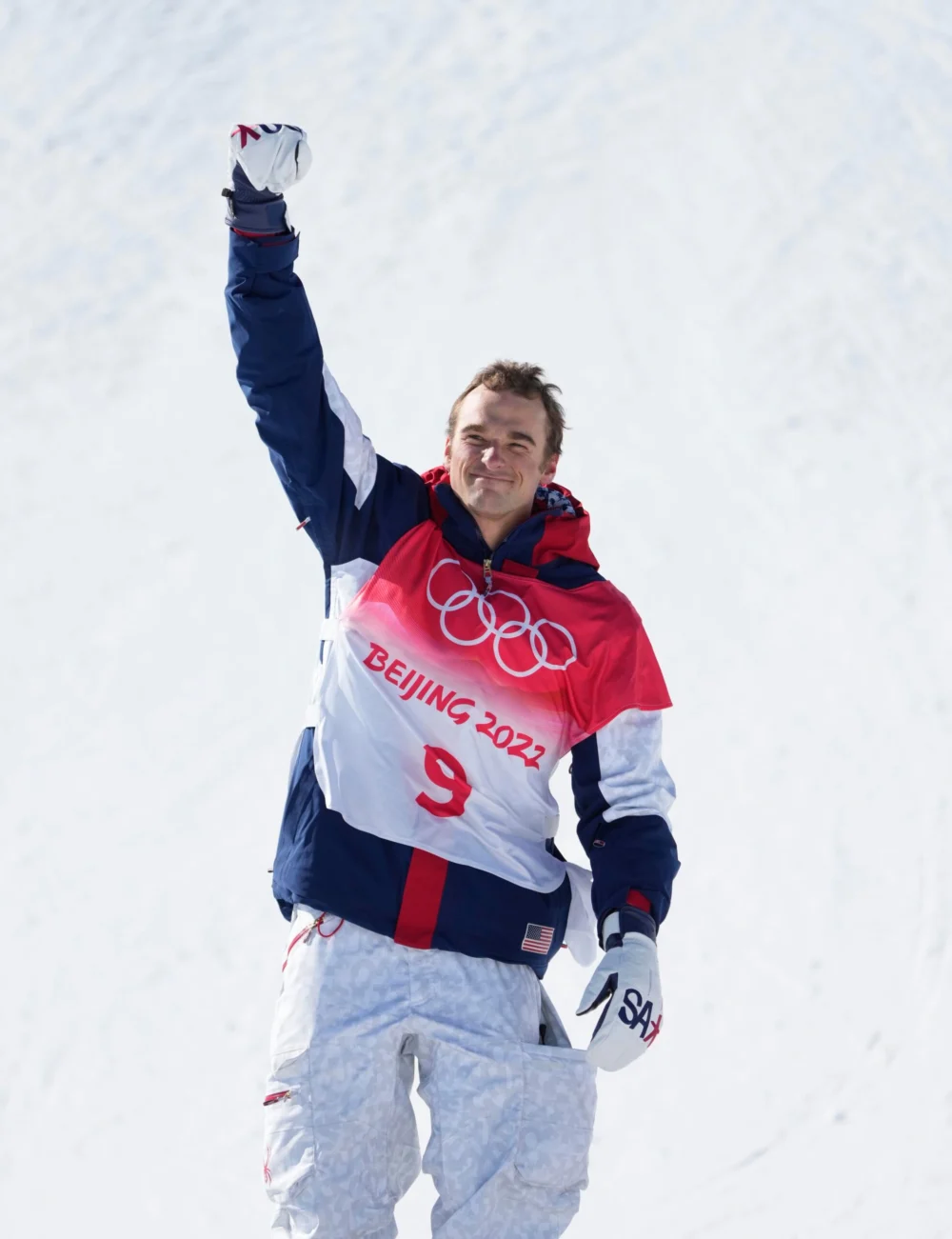
"With half of all Olympians expected to experience mental health symptoms, the focus has shifted from mere podium finishes to the holistic preservation of the human being behind the athlete."
As the 2026 Winter Olympics in Milano Cortina approach, the United States Olympic & Paralympic Committee (USOPC) is confronting a stark statistical reality: the majority of its elite competitors will struggle with mental health concerns at some point during the Games. This admission marks a significant departure from the "stiff upper lip" culture that historically dominated international sports, signaling a new era where psychological resilience is treated with the same clinical rigor as physical conditioning.
The Sobering Math of Elite Competition
The lead-up to any Olympic cycle is typically defined by qualifying times, medal projections, and physical health reports. However, for the Milano Cortina Games, the most discussed data point is increasingly a psychological one. According to Dr. Jonathan Finnoff, the Chief Medical Officer of the USOPC, the internal projections for athlete well-being are sobering. Speaking at the Team USA Media Summit in New York, Finnoff revealed that roughly 50 percent of U.S. Olympians and 60 percent of U.S. Paralympians are expected to report symptoms of mental health concerns during the competition cycle.
These figures are not merely estimates but are based on historical data and the increasing willingness of athletes to self-report. With the U.S. Winter Olympic team comprising 232 athletes—and the Paralympic roster set for finalization in early March—the scale of the challenge is immense. The statistics suggest that for every athlete standing on a podium, another may be struggling with anxiety, depression, or the crushing weight of expectation.
A Legacy of Scrutiny and the Phelps Factor
The USOPC’s current proactive stance is, in many ways, a response to years of intense criticism from its most high-profile alumni. For decades, the organization was viewed as a "medal factory," prioritizing podium results over the long-term health of its participants. This perception reached a boiling point with the 2020 release of the documentary The Weight of Gold, narrated by Michael Phelps.
Phelps, the most decorated Olympian in history, has been a vocal critic of the USOPC’s historical lack of support. "I can honestly say, looking back on my career, I don’t think anybody really cared to help us," Phelps stated, highlighting the "post-Olympic depression" that often follows the conclusion of the Games. His advocacy, alongside the findings of the 2019 Borders Commission report, served as a catalyst for institutional change. The commission, created in the wake of the Larry Nassar scandal to reform USOPC governance, concluded that mental health care was not just a luxury but a fundamental necessity that required immediate expansion.
The Simone Biles Paradigm Shift
While Phelps laid the groundwork for the conversation, the 2021 Tokyo Olympics provided the definitive turning point. When Simone Biles, arguably the greatest gymnast of all time, withdrew from the team final due to "the twisties"—a dangerous mental block where an athlete loses their sense of space in the air—it sent shockwaves through the sporting world.
Biles’ decision to prioritize her safety and mental well-being over a potential gold medal shattered the long-standing myth of the "invincible" athlete. This moment was followed by tennis star Naomi Osaka’s withdrawal from the French Open and sprinter Noah Lyles’ candid discussions about his use of antidepressants. These high-profile instances forced the USOPC to accelerate its reform efforts. In its 2021 Impact Report, the USOPC acknowledged that Biles’ actions created a "powerful paradigm shift," moving the conversation from "why is this happening?" to "how do we fix this?"
From Performance to Holistic Health
The USOPC’s response has been both structural and financial. Between the Tokyo 2021 and Paris 2024 Games, the organization nearly tripled its staff of licensed psychologists, growing from six to fifteen. For the 2026 cycle, that number has reached 16 dually certified providers—professionals trained in both mental performance (how to win) and mental health (how to stay well).

Jessica Bartley, the USOPC’s senior director of psychological services, notes that this dual certification is critical. In the past, "mental performance" coaches focused almost exclusively on focus, visualization, and competitive edge. Today, the approach is more integrated. During the 2024 Paris Olympics, Team USA athletes participated in over 1,200 mental health sessions. While many of these sessions focused on performance, a significant portion addressed "life issues," ranging from the grief of losing a loved one to the trauma of a miscarriage.
This expansion has been supported by private philanthropy, including a $1.5 million donation from the Rieschel Family Foundation. This funding has allowed the USOPC to build a network of over 500 psychological services professionals available for virtual consultations, ensuring that athletes have access to care regardless of where they are training in the world.
The Existential Vacuum: Nick Goepper’s Perspective
For the athletes themselves, the availability of these resources is a matter of survival. Nick Goepper, a freestyle skier preparing for his third Winter Olympics in 2026, has become one of the leading voices for mental health in winter sports. Goepper’s journey has included stints in rehab for substance abuse and battles with suicidal ideation.
Goepper describes the "existential questions" that arise after the Olympic flame is extinguished. "I kind of found myself in a place of aimlessness," Goepper said, reflecting on his experiences after the 2014 and 2018 Games. "What’s my purpose, what am I doing? You’re living in this tiny vacuum after you do the coolest thing you’re ever going to do in your life."
His terminology—the "mental hell" that follows the Olympic high—captures the unique psychological profile of the elite athlete. For most of their lives, their identity is tied to a four-year cycle and a few seconds of performance. When that ends, the resulting vacuum can be catastrophic without a support system. Goepper credits the USOPC’s evolution over the last decade with providing a safety net that simply didn’t exist when he first entered the professional circuit.
Balancing Medals and Morality
Despite the progress, a fundamental tension remains. The USOPC’s corporate partners—global giants like Coca-Cola, Samsung, and Visa—invest tens of millions of dollars with the expectation of seeing Team USA atop the medal table. The organization’s primary mandate is still to produce winning results.
However, the USOPC is increasingly betting on the idea that a mentally healthy athlete is a more sustainable, and ultimately more successful, competitor. The goal is to move athletes from "good to great" by removing the psychological barriers that hinder performance. By addressing "life issues" alongside "performance issues," the USOPC is attempting to create a more resilient roster of athletes who can withstand the unique pressures of the Milano Cortina Games.
Looking Toward Milano Cortina 2026
As the 2026 Winter Games approach, the USOPC’s "robust program" will face its next major test. The environment of a Winter Olympics—often characterized by extreme cold, isolation in mountain villages, and high-risk sports like downhill skiing and snowboarding—presents a unique set of stressors compared to the Summer Games.
The USOPC’s strategy for 2026 is built on three pillars: early assessment, continuous support, and post-Games transition. By screening athletes for mental health concerns long before they arrive in Italy, the committee hopes to provide early intervention. During the Games, the presence of dually certified staff on the ground ensures that help is available in real-time. Finally, the focus on the "post-Olympic vacuum" aims to prevent the aimlessness described by Goepper and Phelps.
The shift in the USOPC’s culture reflects a broader societal change in how we view high-pressure professions. Whether the 2026 Games result in a record medal haul for Team USA remains to be seen, but the metric for success is clearly expanding. For the first time in Olympic history, the health of the mind is being treated with the same urgency as the health of the body. As Nick Goepper aptly summarized, the mission is no longer just about reaching the podium; it is about ensuring that athletes don’t find themselves in "mental hell" once they step off it.
