
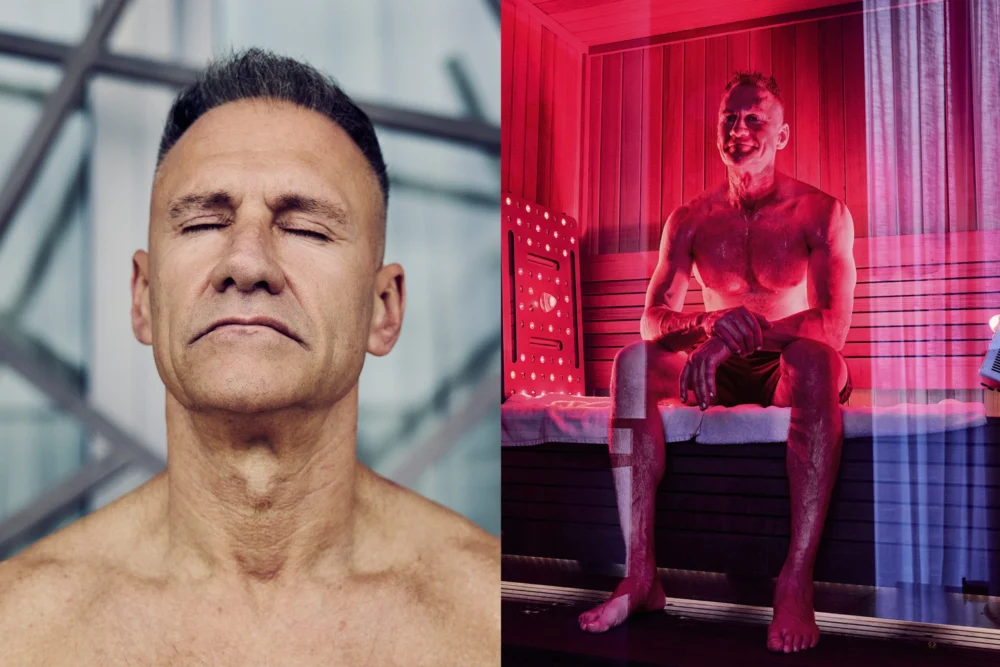
“Gary Brecka has successfully bridged the gap between elite biohacking and mainstream health anxiety, positioning himself as a singular authority for an era defined by a deep-seated distrust of institutional medicine and a desperate search for individual vitality.”

In an age where the American healthcare system often feels like an impenetrable fortress of digital queues and delayed responses, Gary Brecka has emerged as the face of a radical alternative. By combining high-tech longevity science with a charismatic message of personal sovereignty, Brecka has built a wellness ecosystem that appeals to everyone from professional athletes to those struggling with the mundane indignities of chronic illness. His rise reflects a broader cultural shift: a move away from traditional clinical pathways and toward a "bio-optimized" lifestyle where the individual—not the doctor—is the ultimate authority over their own biology.

For many, the journey into the world of Gary Brecka begins at a point of physical or systemic frustration. The modern American medical experience is often defined by its friction. Patients frequently find themselves navigating a labyrinth of insurance-mandated apps, waiting days for a response from a specialist via MyChart, and receiving little more than a prescription for symptoms rather than a strategy for health. It is in this void of care that Brecka’s "Ultimate Human" philosophy takes root. While a traditional gastroenterologist might be unavailable during a weekend emergency, Brecka’s content is omnipresent, offering a 24/7 stream of "hacks," protocols, and promises of transformation.

Brecka, 55, is not a medical doctor, a fact his critics are quick to highlight. He holds degrees in biology and human biology, and his professional background is rooted in the life insurance industry, where he spent two decades as a mortality researcher. His job was to predict, with startling accuracy, when people would die based on their medical records. This "death-tech" background serves as the foundation of his current "life-tech" empire. If he could predict the end of a life, he reasons, he can certainly reverse-engineer the path to its peak.

The scale of Brecka’s influence is staggering. Across his personal and branded channels, he commands a following of over 5.4 million people. His Ultimate Human podcast consistently sits at the top of the Apple Health & Fitness charts, and his social media content garners upwards of 200 million views monthly. This digital reach has translated into a client list that reads like a Hollywood red carpet: Mark Wahlberg, David Beckham, the Kardashians, and Stephen A. Smith. Most notably, UFC President Dana White credits Brecka with a total life transformation, claiming the biohacker helped him shed weight and resolve life-threatening sleep apnea in just 12 weeks.

Walking into Brecka’s Miami residence is like stepping into a sanctuary of the future. The apartment, a palace of stone floors and beige tones, is less a home and more a laboratory for human optimization. Every corner is outfitted with tools designed to combat what Brecka calls the "toxins" of the modern world. There are hydrogen-pumping machines for the bathwater, red-light therapy beds, and a $250,000 hyperbaric chamber—a vessel the size of a small submarine—where Brecka often performs dumbbell exercises in an oxygen-rich environment.

Brecka’s philosophy is built on the metaphor of "cleaning the tank." He argues that when a fish gets sick, we don’t just treat the fish; we clean the water it lives in. For humans, this means addressing the environmental stressors that he believes are "hijacking" our hormones and inflaming our guts. His "don’t" list is extensive: seed oils, refined sugars, PFAS in tap water, chemical sunscreens, and thickening agents in nut milks. In their place, he advocates for raw dairy, pasture-raised meats, fermented foods, and a suite of "Ultimate Human" branded products, ranging from $1,999 organic mattresses to specialized amino acid supplements.

However, this high-tech lifestyle comes with a price tag and a time commitment that remains out of reach for the average American. The daily routine Brecka practices—sauna sessions, cold plunges, red-light therapy, and breathwork—requires hours of dedicated time and thousands of dollars in equipment. Brecka acknowledges this disparity, speaking of plans to open "affordable health spas" in major cities, though such projects remain in the conceptual phase. For now, the primary way the public interacts with his brand is through his $97-a-month VIP memberships and his supplement lines.

Brecka’s rapid ascent has not been without controversy. His business history is marked by a high-profile legal battle with financial influencer Grant Cardone. The two co-founded 10X Health System before a bitter falling out led to mutual lawsuits involving allegations of inflated earnings and defamation. While those legal disputes were settled in 2024, Brecka continues to face intense scrutiny from the scientific community.

Critics like Dr. Layne Norton, a nutrition researcher and prominent "debunker" of wellness influencers, argue that Brecka’s messaging is a mix of sound advice and hyperbolic pseudoscience. Norton and other experts take particular issue with Brecka’s claims regarding "toxins" and "detoxification." The scientific consensus remains that humans with functioning livers and kidneys do not require external "detox" protocols.

One of the most cited examples of Brecka’s controversial claims involves folic acid. In viral podcast appearances, Brecka has claimed that a common gene mutation prevents 44 percent of the population from processing folic acid, leading to an epidemic of anxiety, ADHD, and mood disorders. While the MTHFR gene mutation is a real biological phenomenon, the Centers for Disease Control and Prevention (CDC) maintains that folic acid remains safe and necessary for the general population. Critics argue that by focusing on these highly technical, "micro-poison" narratives, influencers like Brecka distract from the "big levers" of health: consistent sleep, basic exercise, and a balanced diet.

Brecka, for his part, views himself as a disruptor of "groupthink" in the medical establishment. He argues that the prevalence of chronic disease in the United States is proof that the current system is failing. This sentiment has aligned him with the "Make America Healthy Again" (MAHA) movement, led by Robert F. Kennedy Jr. Brecka has positioned himself as an advisor within this sphere, advocating for policies that would clean up the food supply, eliminate certain additives, and reintroduce physical education into schools. For Brecka, the goal is a legacy that transcends social media followers—a fundamental shift in national health policy.

The allure of Gary Brecka lies in his ability to provide something that modern medicine often lacks: a sense of agency. In a world where people feel increasingly powerless over their environment and their health, Brecka offers a roadmap. He names the enemies—the seed oils, the chemicals, the negligent systems—and provides a toolkit to fight back. Whether he is a "genius guru" or a "huckster" depends largely on one’s perspective of the wellness industry, but his impact is undeniable.

As the sun sets over the Miami skyline, Brecka remains a man in constant motion, recording ad reads for his coaching services and filming "takedowns" of grocery store products. He is welcoming, high-energy, and a walking advertisement for his own protocols. He doesn’t just sell supplements; he sells the image of a 55-year-old man who looks and feels decades younger. In a country that is statistically sicker, more tired, and more stressed than ever before, that image is the most powerful product on the market. Whether his "Ultimate Human" system can truly scale to the masses remains to be seen, but for now, Gary Brecka is the undisputed king of the biohacking frontier, promising a way out of the "tank" for anyone willing to buy in.
