
"The pursuit of a longer life becomes self-defeating when the obsessive monitoring of biological data replaces the actual experience of living, turning the quest for health into a psychological cage."
As global interest in biohacking and life-extension technologies surges, mental health professionals are identifying a new form of compulsive behavior: longevity fixation syndrome. This condition, characterized by an anxiety-driven obsession with biological metrics and an existential fear of mortality, is increasingly affecting individuals who attempt to "optimize" every second of their existence, often at the expense of their current well-being and social connections.

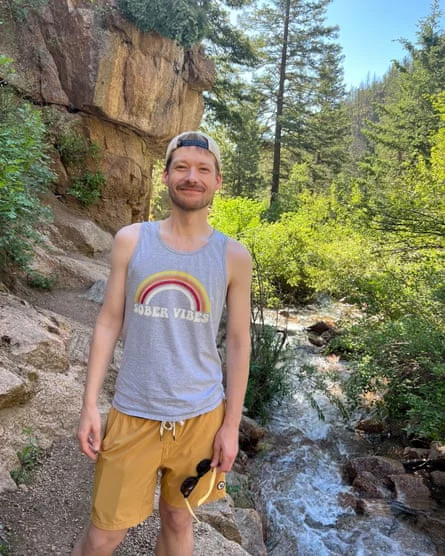
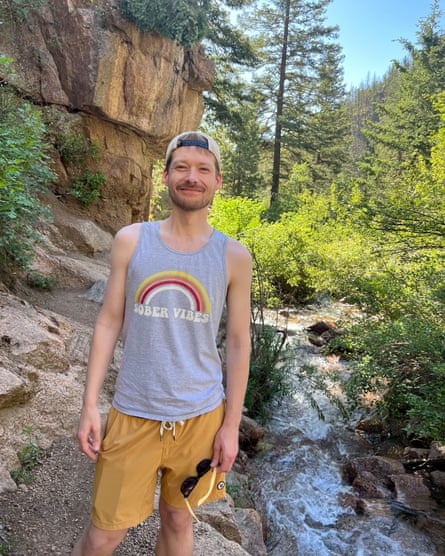
For Jason Wood, a 40-year-old from Grand Rapids, Michigan, the breaking point was not a major health crisis or a failed medical test. It was a piece of pitta bread. Having painstakingly researched a restaurant weeks in advance to ensure it met his rigorous dietary standards, Wood found himself spiraling when he was served hummus instead of the vegetable crudités he had preordered. In that moment, the immense pressure he had placed on himself to control every variable of his life collapsed. "I just snapped," he recalls. "I hit rock bottom… I felt like I couldn’t do it anymore, like I had been crushed by all this pressure I put on myself."
Wood’s experience is a textbook case of what experts are beginning to call longevity fixation syndrome. Before his breakdown, his life was governed by an uncompromising set of rules: he monitored his glucose levels multiple times a day, tracked his heart rate, blood pressure, body fat, and sleep cycles with religious fervor, and exercised twice a day, every day. His diet shifted between raw, organic, and unprocessed foods, with every calorie accounted for. He spent upwards of $10,000 on vitamin IV drips, oxygen treatments, and bi-annual blood tests checking dozens of biomarkers. He lived not for the present, but for the hope of a distant, indefinite future.
This phenomenon is no longer confined to the fringes of Silicon Valley or the ultra-wealthy. While high-profile figures like Bryan Johnson—the 48-year-old venture capitalist who famously spends millions annually to reverse his biological age and wears "Don’t Die" T-shirts—act as the movement’s poster boys, the "longevity" industry has moved into the affluent mainstream. In 2023, the global market for complementary and alternative medicine for anti-aging and longevity was valued at $63.6 billion; it is projected to balloon to nearly $248 billion by 2030.
This explosion in market value is mirrored by a rise in "longevity clinics" offering everything from peptide injections to stem cell therapy and blood filtration. Celebrities like Orlando Bloom and Jennifer Aniston have publicly shared their use of microplastic filtering and peptide treatments, further normalizing the idea that the human body is a machine to be hacked and upgraded. However, for many, this quest for optimization leads directly to a new form of "orthorexia"—an eating disorder centered on a fixation with "clean" or "correct" eating, but expanded to include every biological function.
Jan Gerber, CEO of the Swiss mental health clinic Paracelsus Recovery, coined the term "longevity fixation syndrome" after seeing a significant rise in patients presenting with these compulsive behaviors. Gerber notes that while the desire to live longer is natural, the current cultural climate has weaponized the fear of death. "This talk around longevity plays right into insecurities and fears, and makes us want to hand over our money," Wood says, reflecting on his own journey.
The psychological roots of this fixation are often deeply personal. In Wood’s case, the obsession was triggered by the premature loss of both parents to cancer—his father when he was 11 and his mother when he was 19. His lifestyle was an attempt to control the uncontrollable, a shield against the existential dread of a similar fate. Dr. Sarah Boss, clinical director of the Balance Rehab Clinic, which operates across Europe, observes that many of her clients suffer from "attachment trauma" or a profound fear of death that was exacerbated by the Covid-19 pandemic. "All of a sudden, people felt threatened," Boss explains. "I think that started something in a lot of people, unconsciously."

The pandemic acted as a catalyst, shifting the public’s relationship with health from a passive state to a hyper-vigilant one. Lina Mookerjee, a senior accredited psychotherapist in the UK, estimates that as many as 75% of her clients now show symptoms of longevity fixation. These individuals are typically professional, university-educated people in their 30s to 50s who have "lost trust in their own judgment" and instead rely entirely on wearable devices and data. Mookerjee identifies this as "superhero syndrome"—an attempt to override human vulnerability through technology and discipline.
The irony of the longevity movement is that the stress of maintaining such a lifestyle may actually be counterproductive. Research published in the Proceedings of the National Academy of Sciences (PNAS) last year suggests that the biological limits of human life may be more rigid than the biohackers claim. After analyzing data from 23 high-income countries, the study found that no generation born after 1939 is expected to reach an average age of 100. While individual "super-agers" exist, the promise of universal immortality remains, for now, a marketing myth rather than a scientific reality.
Furthermore, the mental health fallout is tangible. Mark, a 26-year-old from the Netherlands, found himself suffering from debilitating panic attacks after five years of "optimizing" his health. He would deliberate for weeks over a single beer or a slice of cake, followed by a week of intense guilt. He checked his blood pressure daily, convinced that any fluctuation was a sign of impending death. "My social life did suffer," he admits. It was only through therapy that he learned to accept that "physical health is important, but mental health is important, too."

Treatment for longevity fixation syndrome often involves a process of "de-tracking." Clinicians like Dr. Boss encourage patients to reconnect with their bodies instinctively rather than through digital metrics. This includes engaging in physical activities like yoga or sports for pleasure rather than performance, and undergoing talking therapy to address the underlying fear of mortality. "The key is to regulate them again, to connect them to their own nervous system," Boss says.
For Wood, recovery meant walking away from the apps and the strict routines that had become his "security blanket." He now serves as the director of community engagement for the National Association of Anorexia Nervosa and Associated Disorders (ANAD) in the U.S., using his experience to help others recognize the signs of health-related obsessions. He warns that the digital environment makes recovery difficult, as social media algorithms constantly feed users content from longevity influencers and biohacking proponents.
The rise of longevity fixation syndrome serves as a cautionary tale for the modern age. It highlights the fine line between proactive health management and a pathological need for control. While science continues to make strides in understanding the aging process, the pursuit of "forever" can easily cost an individual their "now." As Wood puts it, "I realised I am human, death is a part of life… it’s going to happen when it happens." In the end, the most effective "biohack" may simply be the ability to accept one’s own mortality and live a life that is defined by quality and connection rather than numbers on a screen.
