
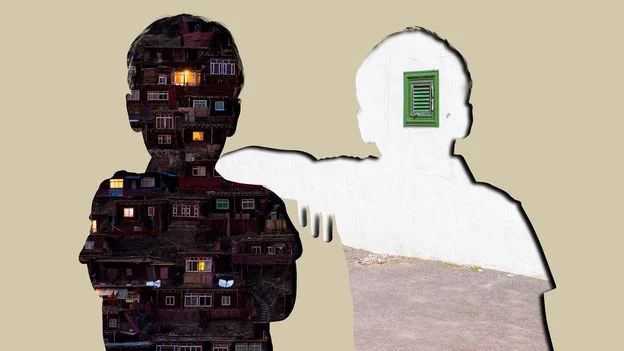
"While genetics provides the biological framework of who we are, culture acts as the master architect, shaping our neural pathways, moral compass, and very sense of self based on the world around us."
The age-old debate of nature versus nurture has long sought to determine whether our identities are hardwired in our DNA or etched into our characters by our surroundings. Recent advancements in cross-cultural psychology suggest that the answer is not a simple binary, but a complex, lifelong dialogue between our genetic predispositions and the societal structures we inhabit. By examining how different cultures prioritize individualism, collectivism, and contextual perception, researchers are revealing that the "self" is a far more malleable construct than previously believed, suggesting that if we had grown up in a different corner of the globe, we might truly be different people altogether.
The Mirror of Culture: A Personal Discovery
Consider the perspective of a child navigating two worlds. In a small village near Kolkata, India, the midday heat forces a temporary stillness. A ten-year-old child, raised in Sweden but visiting family in India, sits on the floor sharing a snack of puffed rice and mustard oil with a cousin. The conversation turns to a fundamental cultural divide: the consumption of meat. To the Swedish-raised child, eating beef and pork was a mundane reality of European life. To the Indian cousin, a passionate animal lover raised in a culture where vegetarianism is deeply rooted in spiritual and social ethics, the idea was jarring. The cousin’s follow-up question—“So do they eat dogs and cats too?”—was not an insult, but a chillingly logical extension of the logic that allows for the consumption of one four-legged mammal but not another.
This anecdote highlights a profound truth: our moral boundaries, our sense of humor, and our very logic are not inherent. They are products of the environment that nurtures us. For decades, scientists and philosophers have asked: If you were transplanted at birth to a different continent, would your dreams, hobbies, and aspirations remain the same? Would the core "you" still exist?
The Genetic Baseline: Understanding the 50% Rule
To answer these questions, we must first look at the biological hardware. Every human being possesses a unique genetic code. However, as Ziada Ayorech, a psychiatric geneticist at the University of Oslo, points out, DNA is not a static blueprint for destiny. Ayorech’s own life—moving from Uganda to Canada, then to the UK, and finally to Norway—serves as a testament to the influence of geography on perspective.
In the field of behavioral genetics, the gold standard for separating nature from nurture is the twin study. By comparing identical twins (who share 100% of their DNA) with non-identical twins (who share roughly 50%), researchers can isolate environmental factors. A massive meta-analysis published in 2015, which reviewed 50 years of research involving 14 million twins and 17,000 different traits, reached a startlingly consistent conclusion: genetics accounts for, on average, only about 50% of the variance in human traits. This includes everything from political leanings and educational attainment to the risk of developing psychiatric conditions. The remaining 50% is the "nurture" component—the cultural and environmental context that determines which genetic seeds take root and which lie dormant.
The Neuroplasticity of Culture
Ching-Yu Huang, a cross-cultural psychologist at National Taiwan University, takes this further by arguing that culture is "absolutely crucial" to the physical development of the brain. The brain is a plastic organ; it forms neural pathways based on repeated experiences and social reinforcement. According to Huang, a person born with a specific genetic profile would possess a physically different brain if raised in Taipei versus Stockholm.
This concept challenges the 20th-century psychological assumption that human behavior is universal. For decades, psychological theories were built almost exclusively on studies conducted in Western, Educated, Industrialized, Rich, and Democratic (WEIRD) societies. It was assumed that a study on social behavior in Chicago would yield the same results in Tokyo. Cross-cultural psychology has dismantled this notion, proving that the very way we perceive the "self" varies wildly across borders.
Individualism vs. Collectivism: The Definition of Self
One of the most significant cultural divides identified by researchers like Vivian Vignoles of the University of Sussex is the spectrum between individualism and collectivism. In Western cultures, particularly in North America and Western Europe, identity is often viewed through the lens of individual traits. People define themselves as "smart," "funny," or "ambitious." The self is seen as an independent entity that exists apart from others.
In contrast, in many East Asian and South Asian cultures, the self is defined by social roles and relationships. One is not merely an individual, but a daughter, a student, or a member of a specific community. This "collectivistic" worldview prioritizes social harmony over individual expression. This isn’t just a social preference; it affects how people score on personality tests. A 2022 study involving 22 countries found that cultures emphasizing self-discipline—such as those in China, India, and Germany—consistently scored higher in measures of dutifulness and organization. Meanwhile, more egalitarian and individualistic cultures, such as those in Canada, Norway, and the Philippines, showed higher levels of "openness to experience" and "agreeableness."
Monumentalism and the Malleable Self
Another fascinating distinction is how different cultures view the stability of the human ego. Western cultures tend to lean toward "monumentalism," a view that the self is a stable, unchanging monument. This leads to a high value being placed on "being true to oneself" and maintaining consistency in behavior regardless of the situation.
Conversely, "flexible" cultures, common in East Asia, view the self as malleable and context-dependent. In these societies, changing one’s behavior to suit a specific social situation is not seen as being "fake" or "hypocritical," but as a sign of maturity and social intelligence. This suggests that our very concept of "integrity" is a culturally dictated value.
How We See the World: Context and Attribution
Culture even influences our basic sensory perception. In a famous study, participants were shown underwater scenes and asked to describe what they saw. American participants tended to focus on the biggest, brightest fish—the "focal objects." Japanese participants, however, were far more likely to describe the environment—the color of the water, the plants, and the relationship between the fish and their surroundings.
This "holistic" versus "analytic" thinking extends to how we judge other people’s behavior. In Western psychology, there is a phenomenon known as the "Fundamental Attribution Error," where people tend to overemphasize personality traits and underemphasize situational factors when judging others. For example, if a person is seen acting nervously in a dentist’s waiting room, a Western observer is more likely to conclude that the person is an "anxious type." In many non-Western cultures, observers are more likely to recognize that the anxiety is a rational response to the specific context of dental surgery.
The Unfinished Map of the Human Identity
While the evidence for cultural influence is overwhelming, experts like Vivian Vignoles urge a degree of caution. It is notoriously difficult to disentangle the threads of personality, culture, socioeconomic status, and individual experience. Human identity is not a static destination but a moving target, influenced by the global flow of information and the increasing blending of cultures.
However, the emerging field of cross-cultural psychology provides a powerful reminder of our shared humanity and our striking differences. It suggests that our identities are not cages built by our DNA, but gardens shaped by the soil in which we were planted. Understanding that our morals, perceptions, and even our brain structures are products of our environment does not diminish our sense of self; rather, it offers a more profound appreciation for the diverse ways in which the human experience can unfold. We are not just products of our genes, but living reflections of the world around us.
