
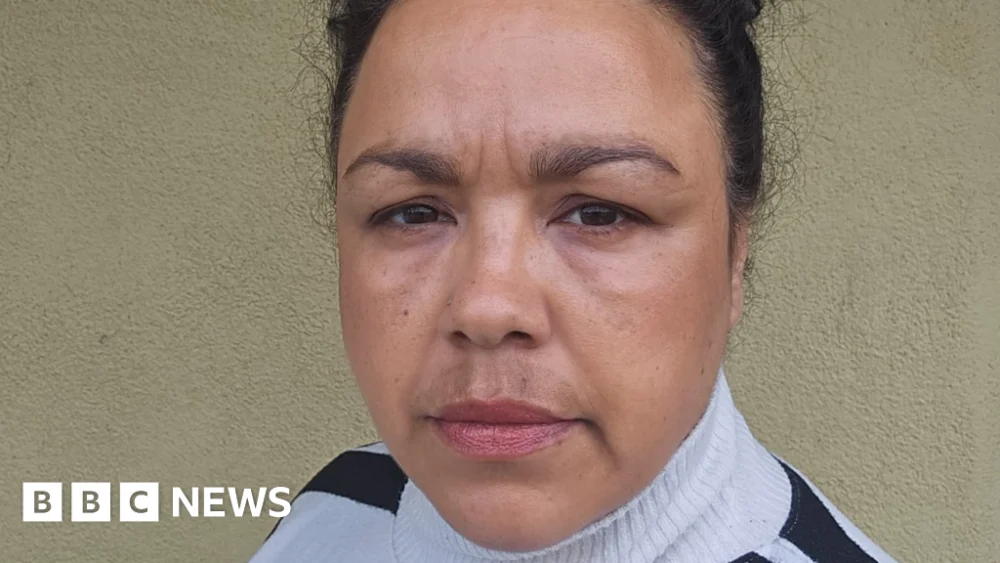
"I want to share my story to give others the courage to come forward and not suffer in silence. What happened to me has happened to other women as well; I can’t bear the thought of others sitting at home, so uncomfortable, so in pain."
This powerful plea from Kerry Watson, a mother of three from Kinmel Bay, Conwy, encapsulates the devastating human cost of the vaginal mesh scandal. Her decade-long ordeal, characterized by "constant, disabling pain" and a reliance on 120 pills weekly, sheds light on the profound physical and psychological trauma inflicted by a medical device once hailed as a solution but which became a source of unimaginable suffering for many women. Her fight for justice and her determination to break the silence surrounding this deeply personal struggle highlight the critical need for systemic accountability and empathetic patient care.
Kerry Watson’s life was irrevocably altered in 2014 following an operation to treat a prolapsed bladder, an intervention that saw a synthetic vaginal mesh implant inserted into her body. What was intended to provide relief instead plunged her into a relentless cycle of agony, necessitating a walking stick for mobility and a staggering regimen of over 100 pain-relief tablets every week. Her experience is not isolated; she is one of 25 women who have received compensation in connection with operations performed by a single surgeon in north Wales, revealing a localized yet significant pattern of medical malpractice and patient harm.
The Betsi Cadwaladr University Health Board (BCUHB), responsible for NHS services in north Wales, has formally apologized to Kerry. Their admission acknowledges a critical failing: Kerry was not adequately informed of the inherent risks, potential side effects, or available alternative treatments prior to undergoing the mesh surgery. This lack of informed consent, a cornerstone of ethical medical practice, underscores a systemic breakdown in patient communication and care.
For Kerry, the pain was immediate and unrelenting. "It felt like I had a needle through my back, and it was coming out my front, and I couldn’t twist past it," she recounted, describing the excruciating sensation that began the moment she awoke from surgery and steadily worsened over the years. This constant physical torment had a profound impact on her mental well-being, leading to what she describes as "brain fog," chronic fatigue, and a deep sense of incapacitation. "You can’t function as a woman – and that’s every day for 10 years," she lamented, illustrating the all-encompassing nature of her suffering.
As a mother to three boys, Kerry grappled with immense guilt and a feeling of inadequacy. The debilitating pain stripped her of the ability to participate in everyday activities with her children, from simply standing to watch them play football to performing basic maternal duties. "After 10 years, I couldn’t walk, I couldn’t drive, I couldn’t do jobs that a mum would do for her children," she shared, revealing the extent to which her condition had eroded her quality of life and her capacity for familial engagement. This emotional toll culminated in moments of profound despair, where she admitted to not wanting "to be here at all," highlighting the severe mental health crisis that can accompany chronic, intractable pain.
Understanding Vaginal Mesh: A Controversial Medical Device
Vaginal mesh, also known as pelvic mesh or tape, is a surgical implant made from a synthetic, net-like plastic material. Its primary purpose is to provide structural support to pelvic organs, most commonly used in procedures to treat pelvic organ prolapse (when organs like the bladder or uterus descend from their normal position) and stress urinary incontinence (involuntary leakage of urine during physical activity). The mesh is surgically inserted to reinforce weakened tissues, aiming to restore anatomical support and improve symptoms.
However, for a significant number of women worldwide, this seemingly straightforward solution has led to devastating and often irreversible harm. The reported side effects are wide-ranging and debilitating, including chronic infection, persistent pelvic pain, difficulty urinating, painful sexual intercourse (dyspareunia), and even worsening incontinence. These complications arise when the mesh erodes, contracts, or migrates, causing nerve damage, inflammation, and tissue perforation. The material itself, often polypropylene, can trigger foreign body reactions within the delicate pelvic tissues, leading to chronic inflammation and scarring.
The scale of patient safety concerns led the NHS in England to announce a pause in the use of vaginal mesh for stress urinary incontinence in 2018, followed by a similar pause for pelvic organ prolapse surgery. This decision reflected growing evidence and powerful patient advocacy highlighting the severe and life-altering complications experienced by thousands of women. While some limited use continues under strict conditions and for specific cases, the broad application of mesh has been drastically curtailed, acknowledging the profound risks previously underestimated or inadequately communicated.
The Path to Partial Relief and Continued Advocacy
In June 2024, after a decade of relentless pain, Kerry underwent an operation to partially remove the mesh. While the procedure brought some improvement, her pain has not entirely vanished, and she awaits further surgery to address the remaining issues. This ongoing medical journey underscores the complexity and often incomplete nature of treating mesh-related complications, with many women requiring multiple, highly specialized operations.
Kerry’s decision to speak out stems from a profound sense of empathy and a desire to prevent others from enduring similar silent suffering. She recognized a common pattern among women to "try and hide everything," often leading to social isolation and a sense of being defined by their pain. "I was defined by the pain, by the way I felt – it consumed me," she reflected, articulating the insidious nature of chronic illness. Her courage in sharing her story is a direct challenge to this culture of silence, aiming to empower other women to seek help and demand accountability. Her voice has become a beacon of hope for those who feel alone in their struggle, fostering a sense of community and shared experience.
Accountability and Systemic Learnings
The specific allegations in Kerry Watson’s case, and those of the 24 other women, point directly to the practices of consultant Derek Klazinga, who retired in 2016. These women assert that they were not adequately informed of the risks involved before undergoing operations under his care. When contacted by BBC Wales, Mr. Klazinga did not respond directly to questions regarding Kerry’s consent process or the explanation of alternative treatments.

However, in a prior statement to S4C’s Y Byd Ar Bedwar, Mr. Klazinga expressed "sincerest sympathy that these ladies have had to endure such physical and psychological pain caused by, what we now know to be, defective medical products used in their treatments." He maintained that prior to his retirement, he "always practised with the patient at the centre of my care, while abiding by the first principle of medicine: ‘first, do no harm’." While his statement acknowledges the suffering and the issue of "defective medical products," it does not directly address the allegations concerning the specific informed consent process or the availability of alternatives.
Dr. Clara Day, Executive Medical Director of Betsi Cadwaladr University Health Board, offered a comprehensive apology on behalf of the health board, acknowledging the "stress and pain this has caused to a small proportion of women in our region who underwent those procedures." She confirmed awareness of "historic claims in relation to one clinician who left the health board in 2016." Dr. Day’s statement is significant as it publicly admits that "via the legal system, we have acknowledged physical harm to some patients who underwent procedures and we have found record keeping and consent had not been completed to the required standard in a number of cases." This admission is crucial, as it identifies specific procedural failings – inadequate record-keeping and consent processes – as contributing factors to the harm suffered by patients.
Furthermore, Dr. Day emphasized that "Every claim has resulted in learning for us, which has been scrutinised by experts outside of our Health Board." This commitment to learning is vital for preventing future recurrences of similar issues. Such learning typically involves a thorough review of clinical practices, a re-evaluation of consent protocols to ensure they are robust and truly informed, and enhanced training for medical staff on communicating risks and alternatives effectively. The involvement of external experts lends credibility to the review process, suggesting a serious effort to implement best practices across the health board.
A Wider Context of Patient Safety
Kerry Watson’s story, while deeply personal, resonates with a much broader narrative of patient safety concerns surrounding medical devices. The vaginal mesh controversy is part of a global movement advocating for greater scrutiny of medical device approval processes, more rigorous post-market surveillance, and stronger patient protections. It highlights the critical importance of shared decision-making, where patients are fully empowered with comprehensive information about risks, benefits, and alternatives before consenting to any procedure.
Her courage in coming forward not only seeks justice for herself and other affected women in north Wales but also contributes to a wider public health dialogue. It reinforces the message that patient voices are indispensable in driving medical reform and ensuring that the principle of "first, do no harm" remains paramount in healthcare delivery. The compensation and apologies are vital acknowledgements of suffering, but the lasting legacy of these women’s stories will be the systemic changes they inspire, ensuring that no more individuals are left to battle such agony in silence.
