
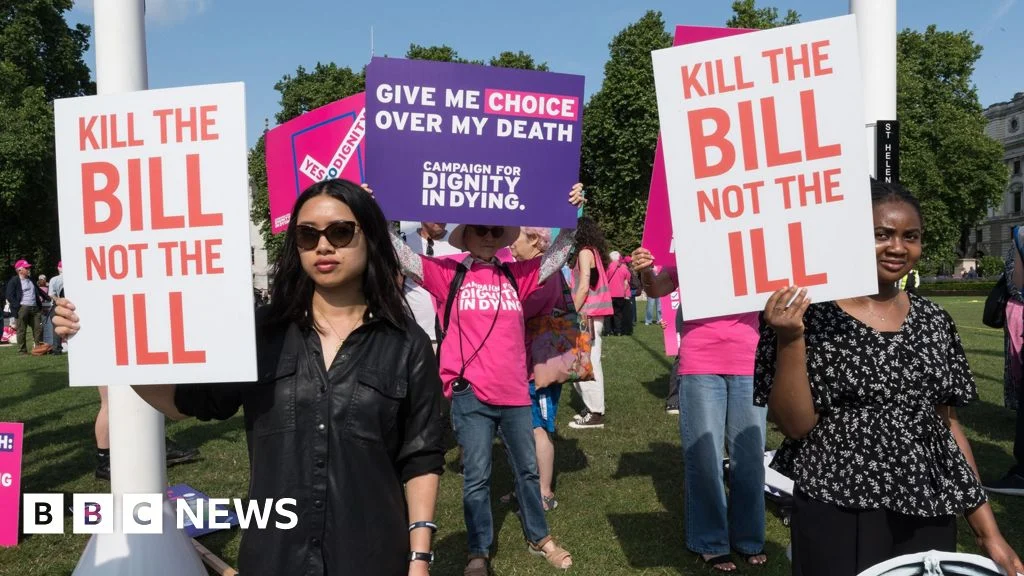
"The legislative journey for assisted dying in England and Wales has hit a significant roadblock, not on its merits, but due to procedural delays in the House of Lords. This setback, despite overwhelming Commons support, underscores the deep divisions and fierce debate surrounding end-of-life choices, though proponents are resolute in their commitment to see the bill return to Parliament."
A landmark bill seeking to legalise assisted dying for terminally ill adults in England and Wales has run out of time to pass into law, a full seventeen months after it received strong backing from the House of Commons. The proposed legislation, which aimed to allow individuals with a prognosis of six months or less to seek medical assistance to end their lives under strict safeguards, ultimately stalled in the House of Lords amidst accusations of deliberate delaying tactics by opponents. This procedural defeat, however, has only intensified the resolve of its supporters, who are already planning its reintroduction in the upcoming parliamentary session, set to commence on 13 May.
The journey of the Assisted Dying Bill, introduced as a Private Members’ Bill by Labour MP Kim Leadbeater, has been closely watched by both advocates for greater end-of-life autonomy and those concerned about the protection of vulnerable individuals. After a robust debate and a clear vote of approval in the House of Commons, the bill moved to the House of Lords, traditionally a revising chamber tasked with scrutinising legislation. Here, its progress ground to a halt during the committee stage, a critical phase where bills are examined line-by-line and amendments are considered. This particular bill faced an unprecedented volume of proposed changes, with over 1,200 amendments tabled—a figure believed to be a record for a Private Members’ Bill.
Proponents of the bill argue that this deluge of amendments was not merely an exercise in rigorous scrutiny but a calculated strategy to obstruct the bill’s passage. The committee stage ultimately concluded after 14 days of debate without clearing all its scheduled stages, effectively killing the bill for the current parliamentary session due to time constraints. This outcome has sparked considerable frustration among those who believe the will of the elected House of Commons was thwarted by the unelected peers of the Lords.
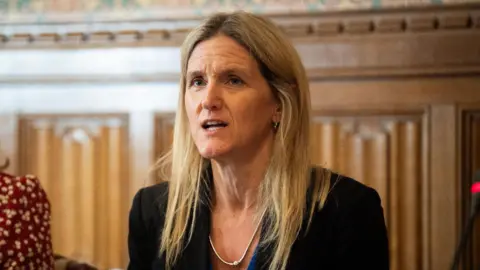
Speaking at a press conference following the bill’s demise, Kim Leadbeater expressed a profound "sense of sadness and sorrow" but remained defiant. She lambasted the procedural manoeuvres in the Lords, stating unequivocally, "This isn’t what democracy looks like." Leadbeater highlighted the significant public and parliamentary appetite for the legislation, asserting her confidence that the bill would return. She revealed that numerous MPs are prepared to champion an identical bill in the next session, contingent on their success in the Private Members’ Bill ballot, a mechanism that allocates debating time for backbench-initiated legislation. Insiders suggest that over 100 MPs are already lined up to support such a move, with another 100 potentially persuadable.
A key strategy for future attempts, Leadbeater indicated, might involve the rare invocation of the Parliament Acts. This constitutional power allows the House of Commons to bypass the Lords’ obstruction if an identical bill passes the Commons for a second time in a subsequent session. While rarely used, such a move would underscore the profound frustration with the Lords’ role in this debate and potentially force the legislation into law without their explicit approval. The Parliament Acts, last used in 2004 for the Hunting Act, signify a serious constitutional measure, reflecting the high stakes involved in the assisted dying debate.
The opposition to the bill in the House of Lords was spearheaded by peers who voiced deep ethical and practical concerns. Baroness Grey-Thompson, an independent crossbench peer and an 11-time Paralympic gold medallist, was a prominent critic. She argued that the bill, as drafted, contained "tonnes of holes" and lacked sufficient safeguards, despite the clear message from the Commons to improve it. While acknowledging the suffering of terminally ill individuals, she stressed the importance of protecting those who "feel they have no choice," often due to societal pressures or inadequate support. Baroness Grey-Thompson revealed that her stance was heavily influenced by thousands of emails from disabled people, expressing gratitude for her efforts in "protecting our rights and looking out for us." This sentiment highlights a core tension in the debate: the right to choose for some versus the potential for coercion and devaluation of life for others.
Former Conservative minister Baroness Coffey, another peer who tabled numerous amendments, reinforced these concerns. She explained that her amendments were designed to scrutinise the practical application of the bill’s safeguards, questioning their real-world efficacy. "I do fear that many peers and many MPs are putting choice for some, ahead of concern on coercion for others," she stated, encapsulating the apprehension that a legal framework for assisted dying could inadvertently place pressure on vulnerable individuals to choose death. Similarly, Baroness Campbell of Surbiton, a former commissioner at the Equality and Human Rights Commission (EHRC), articulated that the bill "frightens" disabled people, emphasizing that their concerns about insufficient safeguards were "real and repeated," and that seeking to strengthen these protections was a "duty," not obstruction.
The human element of this debate was powerfully underscored by the personal testimonies of individuals directly impacted by the existing laws. Sophie Blake, living with stage four secondary breast cancer, joined Kim Leadbeater at the press conference. She spoke of the "hope" that had been ignited when MPs initially backed the bill, a hope now "taken away by an unelected and unaccountable group of individuals." Her words resonated with the frustration of many who feel their fundamental right to choose how they face their final days is being denied by parliamentary procedure. Rebecca Wilcox, daughter of renowned broadcaster Esther Rantzen, who herself has lung cancer, echoed this sentiment. While optimistic that the bill would eventually pass, she voiced profound sadness and anger that her mother might not live to see the change, declaring, "I’m a bit furious about that." These personal stories bring a poignant immediacy to the abstract parliamentary discussions, illustrating the profound real-world consequences of legislative delays.
Within the House of Lords itself, the procedural stalling led to significant internal criticism. Lord Falconer, who had gallantly led the bill through the Lords, expressed his "despondency" on the final day of debate. He lamented that the bill had failed not "on its merits" but due to "procedural wrangling," a clear indictment of the tactics employed by opponents. Other peers joined in this criticism. Crossbench peer Lord Pannick asserted that the Lords’ "failure" to even reach a vote on the bill constituted "a stain on the reputation of this House," suggesting a dereliction of its scrutinising duty. Conservative Lord Baker went further, branding the situation a "constitutional farrago," highlighting the perceived breakdown of proper parliamentary process.
The debate over assisted dying is not unique to England and Wales. Countries like Canada, Belgium, the Netherlands, Luxembourg, and several US states have already legalised various forms of medically assisted dying, often with strict criteria mirroring those proposed in the stalled UK bill. These international precedents demonstrate that frameworks can be established, but they also highlight the ongoing ethical complexities and the continuous need for robust safeguards. Public opinion polls in the UK have consistently shown significant support for assisted dying, adding another layer of democratic tension to the parliamentary gridlock.
As Parliament prepares for its next session, the stage is set for a renewed battle over assisted dying. The determination of proponents, coupled with the potential for invoking the Parliament Acts, signals that this issue is far from settled. The deep-seated ethical, moral, and practical concerns raised by opponents ensure that any future legislative attempt will face intense scrutiny. However, the emotional weight of personal testimonies and the persistent advocacy for compassionate end-of-life choices mean that the conversation around assisted dying will continue to be a defining feature of the UK’s social and political landscape.
