
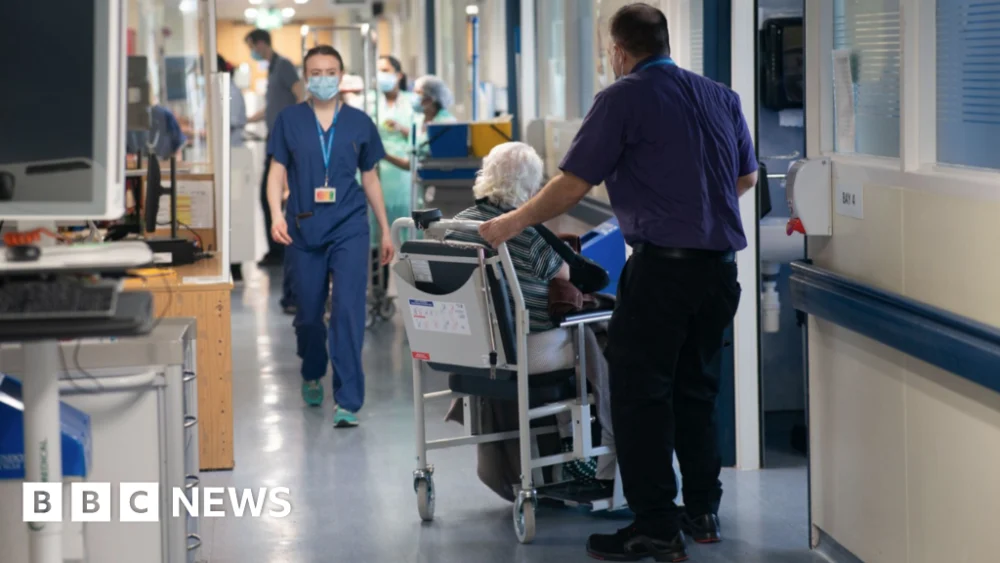
"The escalating practice of ‘corridor care’ in North West England has reached a critical juncture, with over 52,000 patients enduring waits exceeding 24 hours in A&E departments last year, underscoring a systemic failure that medical bodies condemn as a ‘national emergency’ and ‘national shame’ due to its profound impact on patient dignity and safety."
A groundbreaking investigation by the BBC has exposed the dire reality facing tens of thousands of patients across North West England, revealing that more than 52,000 individuals were subjected to "corridor care" for over 24 hours in Accident and Emergency departments in 2025. This disturbing practice, where patients are left on trolleys or chairs in hospital corridors due to a critical shortage of available ward beds, highlights an NHS under immense and unsustainable pressure, stretching beyond the traditional "winter pressures" narrative into a year-round crisis with severe implications for patient well-being and healthcare staff morale.
The scale of the crisis, unveiled through Freedom of Information requests to acute hospital trusts across the region, paints a stark picture of a healthcare system struggling to cope with burgeoning demand and deep-seated structural issues. For these patients, the A&E corridor becomes a grim waiting room, an undignified limbo between urgent medical need and the inpatient care they desperately require. The Royal College of Nursing (RCN) has vehemently labelled the situation a "national emergency," imploring the government to take immediate and decisive action to cease a practice that not only compromises patient care but also inflicts significant emotional and professional distress upon healthcare professionals.
For years, the measure of prolonged waits in A&E has often been presented through the lens of those enduring over 12 hours from the "decision to admit" until a bed is found on a ward. This metric, while concerning, inherently understates the true extent of patient suffering, as the clock only begins once a clinician has formally determined the need for admission, potentially many hours after a patient first arrives at A&E seeking help. The BBC investigation has peeled back this layer, revealing a "darker truth" hidden within the aggregated statistics.
Eight years ago, a 12-hour wait for admission was considered an anomaly, a rare occurrence typically indicative of an isolated issue within a specific trust. In December 2018, for instance, only 101 patients in the North West faced such waits, representing a mere 0.2% of all admissions from A&E, with most attributed to a single mental health trust. Fast forward to December 2025, and this figure had catastrophically ballooned to 10,658 patients – nearly 18% of those admitted from A&E. This exponential surge alone signals a system on the brink, but the FOI data uncovers an even more alarming reality: within these 12-hour-plus waits lie countless individuals enduring waits of one, two, or even three days.
The comprehensive data for 2025 across North West England is staggering: 52,015 patients waited over 24 hours after a decision to admit before securing a ward bed. A significant subset of these, 6,893 individuals, suffered even longer, waiting more than 48 hours. This prolonged confinement in an unsuitable environment is not merely an inconvenience; it represents a profound failure of care, exposing vulnerable patients to increased risks of infection, falls, deterioration of their condition, and psychological distress.
While these extreme waits are frequently attributed to "winter pressures," the investigation robustly debunks this simplification. The data unequivocally shows that the crisis is not seasonal. A substantial 12,458 patients waited over 24 hours, and 1,342 waited over 48 hours, during the warmer months between May and August of 2025. This evidence underscores that the problem is deeply systemic, driven by chronic under-resourcing, insufficient bed capacity, and a fractured social care system, rather than just episodic spikes in demand.
The human cost of corridor care extends far beyond the patients themselves, profoundly impacting the dedicated medical staff who are forced to deliver care under these impossible conditions. Simon Browes, the North West regional director for the Royal College of Nursing, vividly describes the emotional toll on nurses: "We’re hearing from members who are going to work, feeling anxious and upset. We’ve had members saying they’re sitting in their car crying before they go into work. It’s because they can’t do the job they want to do and they’re faced with this distressing, relentless situation."
The normalization of corridor care is a particularly troubling development. In many hospitals, staff are now explicitly assigned to these improvised "corridor wards," transforming what should be an emergency overflow into a routine mode of operation. While patients receive monitoring and treatment, the fundamental lack of appropriate facilities, privacy, and dignity inherent in a busy corridor setting severely hinders recovery. Families recounting their experiences have repeatedly highlighted instances of patients in severe discomfort, unable to access toilets promptly, with one particularly distressing account of a patient soiling themselves while waiting. The erosion of dignity is a recurring and heartbreaking theme among those affected.
Both the Royal College of Emergency Medicine (RCEM) and the Royal College of Nursing (RCN) have issued powerful condemnations of this practice. The RCEM has labelled the countrywide situation a "national shame," while the RCN maintains it is a "national emergency," both demanding an immediate cessation of corridor care. Simon Browes warns of dire consequences: "We’re going to see people dying who should not die. We’re going to see people leaving the profession because they can’t work under those conditions any more." The long-term implications for the NHS workforce are already evident, with a significant drop in nursing degree applications—over 30% compared to five years ago—and unprecedented attrition rates from nursing programmes.
The reasons behind this alarming surge in corridor care are multifaceted and complex, extending beyond the immediate control of individual hospitals. A primary driver is the ongoing crisis in social care provision. A significant number of older, more frail patients, having completed their acute hospital treatment, remain "stranded" in hospital beds for days or even weeks. This "delayed discharge" or "bed blocking" occurs because suitable care packages – whether at home, in residential care, or rehabilitation facilities – are simply unavailable. This creates a severe bottleneck, preventing new admissions from A&E and forcing patients into corridors.

Compounding this issue is the struggle in community health provision. Despite successive government initiatives over many years to shift healthcare away from hospital settings and into community-based care, the demand for inpatient beds continues to rise. Simultaneously, the total number of hospital beds across the NHS is significantly lower than it was two decades ago, creating a critical mismatch between capacity and need. Dr. Michael Gregory, regional medical director for NHS England in the North West, acknowledges these pressures, stating that A&E departments have been experiencing "rising demand for a number of years" and that the NHS is currently facing its "busiest winter on record." He attributes this to an "ageing population and people often have multiple, complex health conditions, which means our hospitals are seeing increasing numbers of acutely unwell patients who need to be admitted."
The investigation also revealed significant variations in performance across trusts. Hospitals such as Whiston, Royal Blackburn, Royal Preston, and Arrowe Park were identified as particularly struggling with extended waits, indicating localised pressures or management challenges that exacerbate the broader systemic issues. In contrast, the three Manchester hospitals, alongside Fairfield General in Bury and Furness General in Barrow, recorded comparatively fewer long waits, suggesting that while the problem is widespread, effective local strategies or different demographic pressures can influence outcomes.
The cumulative effect of these interwoven challenges—the social care crisis, insufficient community health infrastructure, an ageing population with complex needs, and a dwindling bed count—has created a situation where the prospect of needing emergency care fills many with dread. Health Secretary Wes Streeting’s recent pledge to end corridor care by the end of the current parliament in 2029, while offering a distant promise, has been met with calls for more immediate action from healthcare leaders. Simon Browes’ stark warning about the current and accelerating decline in nursing workforce figures underscores that the crisis is not a future threat but a present reality demanding urgent intervention.
NHS England maintains that "providing care in corridors is not what we want for our patients, and we are working hard to reduce the use of corridor care and tackle long waits." Their strategy includes "providing more care in people’s homes to help them avoid hospital admissions or get home from hospital sooner, freeing up beds for those who need them." However, the stark figures from the BBC investigation serve as a powerful testament to the chasm between current realities and aspirations. The crisis of corridor care is not merely an operational challenge; it is a profound ethical dilemma that undermines the very principles of patient-centred care and places immense strain on the dedicated professionals who form the backbone of the National Health Service. The findings demand a comprehensive, immediate, and sustained response to protect both patients and the future of healthcare in the UK.
