
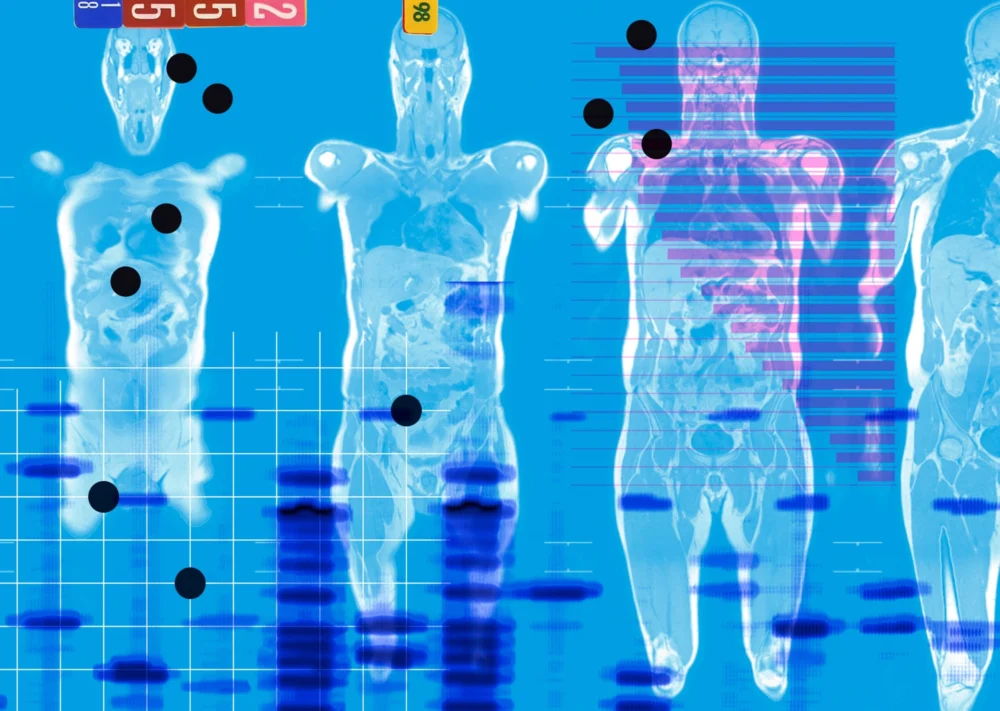
"The transition from reactive ‘sick care’ to proactive ‘well care’ offers a powerful sense of agency in the face of mortality, yet it remains a complex landscape where the promise of early detection must be weighed against the risks of overdiagnosis and the limitations of current medical intervention."
In an era defined by rapid biotechnological advancement and a shifting distrust in traditional healthcare systems, a new market of elective, high-tech diagnostic tools has emerged, promising to detect life-threatening illnesses long before symptoms appear. Driven by celebrity endorsements and a growing "biohacking" culture, these services—ranging from AI-powered full-body MRIs to multi-cancer early detection blood tests—represent a significant shift in how individuals manage their health. However, as these technologies move from the fringes of Silicon Valley into the mainstream, they bring to the fore a critical debate among medical experts regarding the clinical utility, psychological impact, and economic accessibility of preemptive screening.

The Catalyst of Mortality
For many, the journey into elective diagnostics begins with a personal tragedy. Mickey Rapkin, a journalist and screenwriter, found himself at the center of this medical zeitgeist following the sudden illness and death of his brother, Jon. In February 2024, Jon, a 51-year-old former Division I athlete, began experiencing blurred vision. What was initially suspected to be a routine retina issue was revealed by an MRI to be a tumor growing on his brain stem. Due to its location, surgery and biopsy were impossible; despite chemotherapy, radiation, and clinical trials, Jon’s condition deteriorated rapidly. He passed away eighteen months later.
The experience of watching a healthy, vibrant sibling succumb to a "silent killer" often shatters the illusion of invulnerability that characterizes middle age. For Rapkin, and many like him, the trauma of loss transformed into a paralyzing anxiety about his own health. This "mortality creep" is a driving force behind the rise of companies like Prenuvo and Grail, which market themselves not just as medical providers, but as purveyors of "peace of mind."
The Full-Body Scan: Status Symbol or Lifesaver?
Prenuvo, founded in 2018, has become the most visible player in the elective imaging space. The company offers a comprehensive, hour-long MRI scan designed to detect over 500 conditions, including early-stage cancers, aneurysms, and fatty liver disease. The service gained massive cultural traction in 2023 when celebrities like Kim Kardashian touted the scans as "life-saving" to their millions of followers.

The cost of this technology is substantial. A torso scan starts at $1,000, while an AI-powered full-body scan reaches $2,500. For those seeking the "enhanced" tier, which includes extensive blood work and brain health assessments, the price tag can climb to $4,500. Despite the cost, Prenuvo has expanded to 26 locations globally, often situated in affluent hubs like Pasadena, California—where the clinic resides in the same complex as the high-end grocer Erewhon, further cementing the link between luxury wellness and diagnostic technology.
Andrew Lacy, Prenuvo’s CEO, frames the company as a necessary disruption of a broken system. Having spent years in the high-pressure world of entrepreneurship, Lacy argues that the current healthcare model is designed to treat the sick rather than keep people healthy. By utilizing monthly software updates and AI diagnostics, Prenuvo aims to catch "stage one" issues that traditional physicals might miss.
The Multi-Cancer Early Detection (MCED) Revolution
Parallel to the rise of elective imaging is the development of Multi-Cancer Early Detection (MCED) blood tests. The leader in this field, Grail, introduced the Galleri test in 2021. For approximately $949, the test uses DNA sequencing technology to look for signals shed by cancer cells in the bloodstream. Grail claims the test can screen for more than 50 types of cancer, many of which—such as pancreatic and liver cancer—have no standard screening protocols and are typically caught only in advanced stages.

The science is compelling. In the "Pathfinder 2" study, which involved 35,000 participants, the Galleri test reportedly increased cancer detection sevenfold when combined with traditional screenings. Crucially, 70% of the cancers found were in stages I, II, or III, meaning they were potentially curable. For individuals like Roger Royse, a Silicon Valley lawyer, the test was a literal lifesaver. Royse, who had been dismissed by his primary care doctor despite stomach pains, took the Galleri test on a whim. It returned a signal for pancreatic cancer; follow-up imaging confirmed a stage IIB mass. Royse is now in remission, a rarity for a disease that is usually a death sentence.
The Case Against "Overdiagnosis"
Despite these success stories, the medical establishment remains cautious. Dr. Ernest Hawk of the MD Anderson Cancer Center and Dr. Larry Norton of Memorial Sloan Kettering represent a vocal contingent of experts who worry about "overdiagnosis" and the "voyages" of anxiety that elective testing can trigger.
The primary concern is that these scans often find "incidentalomas"—tiny nodules or abnormalities that are biologically insignificant but lead to invasive, expensive, and potentially dangerous follow-up procedures. A 2012 study in The New England Journal of Medicine highlighted this risk in prostate cancer, showing that aggressive intervention for localized tumors often led to complications like incontinence and impotence without necessarily improving survival rates compared to a "wait-and-see" approach.

Dr. Norton uses the metaphor of a forest fire to explain the dilemma. While the technology is becoming excellent at "sniffing smoke," it cannot always tell if that smoke will lead to a catastrophic fire or if it is a small, self-containing ember. If an intervention for an early-stage cancer is no more effective than an intervention at a slightly later stage, the patient has gained nothing but months or years of additional anxiety. Furthermore, the Galleri test has faced criticism for a high rate of false negatives; some studies suggest it may miss up to 60% of cancers that emerge within a year of the test.
The Democratization of Data
The debate over elective screening is unfolding against a backdrop of shifting trust in public health institutions. With figures like Robert F. Kennedy Jr. gaining influence over health policy, there is an increasing emphasis on individual responsibility and "medical freedom." For those who can afford it, this means bypassing the traditional insurance-based gatekeepers to access their own biological data.
This trend has birthed a wider ecosystem of "longevity" startups. Function Health, backed by Andreessen Horowitz, tests for over 100 biomarkers typically ignored in standard blood panels. Neko Health, co-founded by Spotify’s Daniel Ek, is bringing similar full-body scanning technology to the European and U.S. markets. Even retail giants are entering the space; Whole Foods co-founder John Mackey’s "Love.Life" centers offer holistic wellness memberships that include longevity screenings for upwards of $11,000 a year.

The Psychological Cost
For Mickey Rapkin, the journey through the diagnostic gauntlet ended with a sigh of relief. His Galleri test showed "no cancer signal detected," and his Prenuvo scan revealed a clean bill of health, save for a minor muscle asymmetry. However, the experience highlighted a glaring gap in the traditional medical model: the value of time and compassion. Rapkin noted that his review session with the Prenuvo radiologist lasted longer than any conversation he’d had with his primary care doctor in a decade.
Yet, even the most advanced technology has its limits. When Rapkin asked if these tests could have saved his brother, the answers were sobering. A blood test likely wouldn’t have crossed the blood-brain barrier to detect a brain stem glioma, and while an MRI might have caught the tumor sooner, its location made any intervention "fucking awful," as one doctor candidly put it.
The ultimate takeaway for consumers is that while data is a powerful tool, it is not a cure for the human condition. Control, in many ways, remains an illusion. However, for those living in the shadow of grief or the uncertainty of middle age, the ability to "know" offers a form of psychological armor. As the field of elective diagnostics continues to evolve, the challenge for the medical community will be to integrate these tools in a way that maximizes their life-saving potential while minimizing the harm of unnecessary medicalization. For the individual, the choice remains a deeply personal calculation of risk, cost, and the pursuit of a few more years with the people they love.
