
"Far from a mere cognitive ‘fog,’ pregnancy profoundly remodels the maternal brain, enhancing neural networks critical for empathy and bonding, suggesting women become neurobiologically specialized for motherhood."
For generations, the term ‘baby brain’ has colloquially dismissed a pregnant woman’s forgetfulness or perceived diminished capacity, often with a hint of condescension. However, groundbreaking new research challenges this simplistic notion, revealing that pregnancy initiates a significant and beneficial structural transformation within the brain. This extensive study indicates that rather than a decline, these neurological changes are an adaptive ‘rewiring’ process, honing the brain for the intricate demands of infant care and fostering a deeper connection between mother and child.

For decades, the concept of "baby brain" has been a pervasive cultural cliché, often used to humorously or dismissively explain why expectant and new mothers might feel forgetful or less sharp. This anecdotal observation, however, has long lacked robust scientific underpinning and often contributed to the infantilization of pregnant women. Now, a landmark study, the largest of its kind to date, is fundamentally reshaping our understanding of the maternal brain, revealing a profound and adaptive structural impact that prepares women for the intricate journey of motherhood.
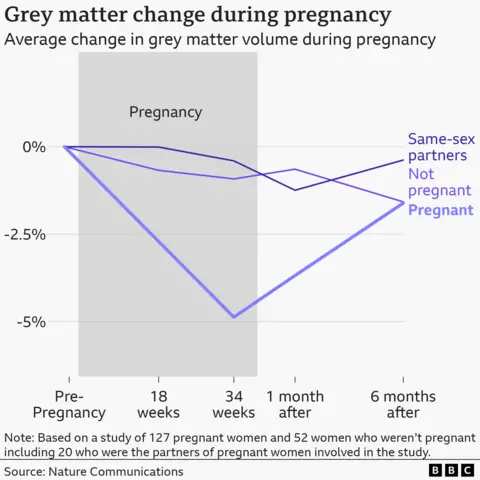
The "Be Mother" project, conducted by a team of scientists in Spain and gaining exclusive access from the BBC, offers compelling evidence that pregnancy isn’t just a physical transformation but a neurological one. At the heart of their findings is the observation that grey matter – the nerve-rich tissue in the brain responsible for processing information, emotions, and empathy – undergoes significant changes. Specifically, the study indicates an average decrease of nearly 5% in grey matter volume during pregnancy. This might initially sound alarming, but researchers emphasize that these changes are not a cause for concern; rather, they represent an evolutionary adaptation that enhances a mother’s capacity to care for her newborn.
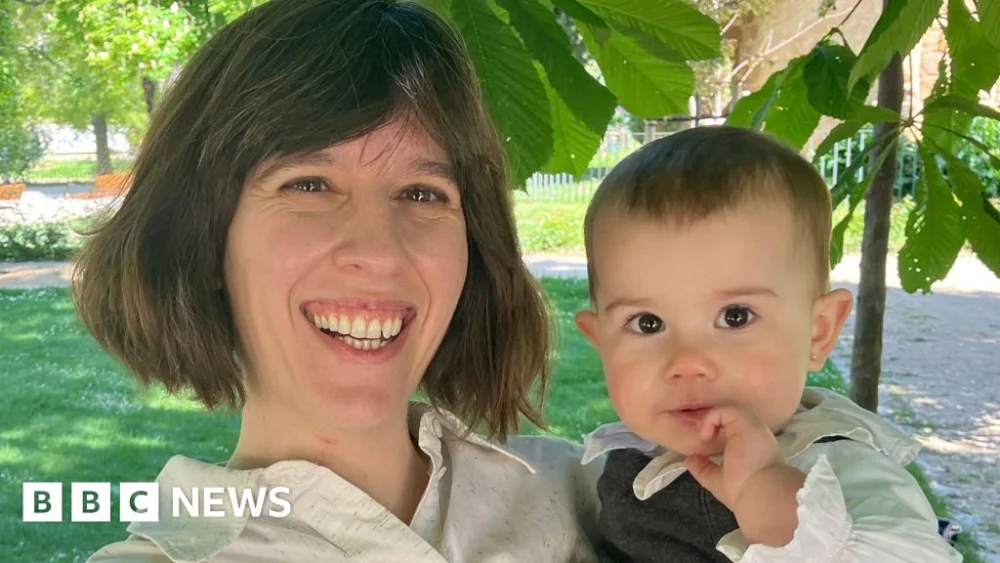
One of the dozens of women who participated in the study, Tania Esparza, a new mother, articulated a sentiment shared by many, expressing relief and validation from the findings. "I’m tired of pregnant women being infantilised," Esparza stated, underscoring the common societal misperceptions. "Rather than becoming dumber, we are becoming more specialised for the job." Her powerful assertion encapsulates the core insight of the research: the brain is not deteriorating but optimizing for a new, highly specialized role.

The methodology of the "Be Mother" project was rigorous and comprehensive. Researchers scanned the brains of 127 pregnant women using MRI technology at multiple stages: before conception (for some), during pregnancy, and after childbirth. These scans were then compared to those from a control group of 52 women who had never been pregnant, including 20 partners of pregnant women involved in the research. This multifaceted comparison was crucial for distinguishing changes directly attributable to the biological process of pregnancy from those that might arise simply from the experience of becoming a parent. The longitudinal nature of the study, tracking individuals over time, provided an unprecedented window into the dynamic shifts occurring in the maternal brain.
A particularly compelling correlation emerged from the data: the greater the structural changes observed in a woman’s brain, the more likely she was to report a stronger bond and better relationship with her baby. This suggests a direct link between these neural adaptations and the development of maternal instincts and caregiving behaviors. Prof. Susana Carmona, co-lead of the study at the Gregorio Marañón Health Research Institute in Madrid, articulates this elegantly, stating, "We find in biology, as in life, sometimes less is more." She elaborates on the concept of the brain "rewiring" or "remodelling" its architecture to "prime it for motherhood," likening it to "pruning a tree" where certain branches are cut to promote more efficient growth. This analogy highlights that the reduction in grey matter isn’t a loss of capacity but a refinement, streamlining neural pathways to enhance specific functions vital for maternal care.
Indeed, the human body undergoes myriad transformations during pregnancy. The heart can increase in size, lung capacity can expand, and metabolic demands shift dramatically. Given these profound physiological adjustments, it stands to reason that the brain, the body’s central command system, would also adapt to support the monumental task of gestation and early motherhood. As Professor Carmona points out, the focus should not solely be on potential memory deficits, but on the "whole set of new skills" that new mothers acquire. This pivotal period in women’s lives warrants far more extensive neurological research than it has historically received.

The study, published in the esteemed journal Nature Communications, meticulously tracked the grey matter volume over time. While the pregnant women experienced an average decrease of nearly 5% by 34 weeks of gestation, this volume partially, though not fully, recovered by six months postpartum. In contrast, the non-pregnant control group exhibited only minor, expected fluctuations in grey matter over the same period. This distinct pattern in pregnant women underscores a unique, biologically driven process.
One of the most striking findings was the pronounced and persistent changes observed in the Default Mode Network (DMN) – a network of brain regions involved in self-perception, social cognition, empathy, and altruism. Alterations in this network are particularly significant, as they could directly underpin a mother’s heightened ability to understand her infant’s needs, interpret non-verbal cues, and form a deep emotional connection. This neural reorganization could be the very foundation of what we recognize as "maternal instinct," enabling a mother to prioritize her baby’s well-being and respond with remarkable sensitivity.
The mechanisms driving these transformations likely involve a complex interplay of factors, including the pruning of less-used nerve networks and changes to blood vessels and cells that support neurons. Professor Carmona draws parallels to adolescent brain development, where a similar pattern of grey matter thinning and "refining or pruning" of nerve networks occurs as the brain matures. This suggests that pregnancy might trigger a period of intense neuroplasticity akin to other critical developmental stages. Furthermore, decades of animal research have already demonstrated profound brain alterations in various mammals during pregnancy, with studies in mice showing that pregnancy hormones can "turn on" specific nerve cells crucial for parenting behavior, without which they might neglect their offspring.

Intriguingly, the "Be Mother" team also investigated the role of hormones in humans. By collecting urine and saliva samples from participants, they discovered that rising estrogen levels in some women correlated closely with the observed reduction in grey matter. This suggests that the dramatic hormonal shifts of pregnancy act as powerful neuro-modulators, orchestrating these structural changes and initiating the brain’s specialized adaptation for motherhood. Much more research is needed, however, to build a detailed neurological map of the pregnant brain and chart its transformations through the transition to motherhood. Such a map could have profound implications, not only for understanding typical pregnancy but also for addressing challenges like postpartum depression and difficulties in maternal bonding. The study, funded by the European Research Council, lays a vital groundwork for these future investigations.
Professor Liz Chrastil from the University of California echoes the importance of Carmona’s work, highlighting its potential to "help with attachment between caregivers and infants, and to find better ways to provide support and recovery for new moms." Understanding the neurobiological underpinnings of maternal adaptation can lead to more empathetic and evidence-based care strategies.
While the "Be Mother" study did not directly investigate the subjective experience of memory problems often associated with "baby brain," Carmona’s earlier, smaller study in 2016 found no significant objective change in memory function among 25 pregnant women, although evidence from other studies remains mixed. Professor Carmona acknowledges that many women do report feeling more forgetful, and she is careful not to diminish these varied experiences. She attributes these perceived cognitive challenges not to a decline in brain capacity, but to the immense physiological demands of pregnancy and early motherhood. "Pregnancy places a huge metabolic load on your body," she explains, leading to "less energy and less sleep and feel less alert and forgetful."
Ana Mudrinic, a new mother residing in London, vividly described her own experiences of forgetfulness during pregnancy: "I wanted to send an email to my boss and in that moment, I simply couldn’t remember her name." Yet, she also shared a profound positive shift in her cognitive landscape. She found herself more resilient at work, noting, "I don’t get emotionally impacted by stress as I used to before, because all of a sudden, some things are not as important as they used to be." Her experience illustrates a shift in cognitive priorities rather than a deficit. "I might forget to do things that aren’t related to [my baby], but I’ve learnt to prioritise her," she stated, perfectly aligning with the study’s interpretation of a brain optimizing for its new primary function.
Back in Spain, Tania Esparza revealed that Professor Carmona’s earlier work in this field had profoundly influenced her decision to have a child. "I was excited by the idea that I could meet a new, different version of myself," she confessed, embracing the concept of personal evolution through motherhood. Her reflection serves as a powerful call to action: "It is time to rethink how we are treating mothers. They are undergoing tremendous transformation, and we need to approach them as someone who is coming outside of a cocoon and becoming something different." This groundbreaking research not only debunks a long-held myth but also elevates the understanding of motherhood to a remarkable process of neurobiological specialization, deserving of recognition, respect, and comprehensive support.
