

"When the pursuit of a longer life becomes a prison of data and rituals, we sacrifice the very quality of the years we are trying to save, trading presence for the illusion of permanence."
As the global anti-ageing market swells toward a projected quarter-trillion dollars, a new psychological phenomenon is emerging: Longevity Fixation Syndrome. This condition, characterized by an anxiety-driven, compulsive obsession with extending one’s lifespan through extreme biohacking, rigid dieting, and constant biomarker monitoring, is increasingly filling the halls of high-end rehabilitation clinics. While the biological promise of "age reversal" remains a subject of scientific debate, the mental health fallout is becoming undeniable, revealing a modern struggle to reconcile human mortality with the technological ability to track—and attempt to control—every pulse of the human body.
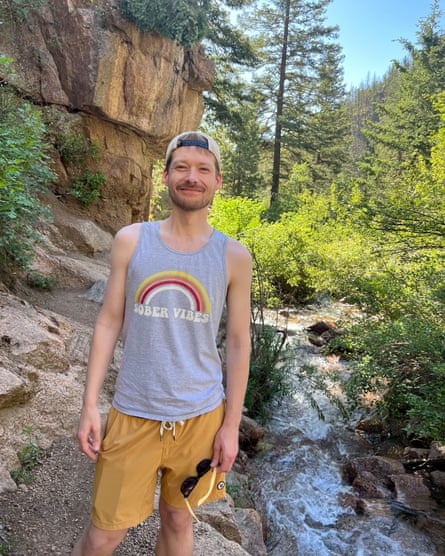
For Jason Wood, the breaking point was not a health crisis, but a side order of pitta bread. The 40-year-old had spent weeks researching a restaurant for a trip with his husband, preordering vegetable crudités to fit his exacting nutritional standards. When the waiter brought pitta and hummus instead, the thin veneer of control Wood had spent years constructing finally shattered. He recalls "snapping" in the middle of the restaurant, overcome by shaking and tears. The pressure of maintaining a "perfect" life to ensure a longer one had become an unbearable weight.

Wood’s experience is the quintessential case study for what experts are calling Longevity Fixation Syndrome. At the height of his obsession, Wood lived a life dictated by numbers. He woke at 4 a.m. to exercise, monitored his glucose levels multiple times a day, and tracked every bodily function from heart rate to blood pressure and sleep cycles. His diet shifted between raw, organic, and unprocessed foods, with every calorie painstakingly logged. He spent an estimated $10,000 on wellness interventions, including bi-monthly IV vitamin cocktails and oxygen treatments, alongside comprehensive blood panels every six months to monitor 20 different biomarkers.
The motivation behind this grueling regimen was a profound fear of death. Wood, who lost both parents to cancer by the age of 19, was attempting to control the uncontrollable. "There was just this fixation with living for as long as I possibly could," he explains. "This talk around longevity plays right into insecurities and fears, and makes us want to hand over our money."
The term "Longevity Fixation Syndrome" was recently coined by Jan Gerber, CEO of the Swiss mental health clinic Paracelsus Recovery. Gerber and other clinicians have noted a significant uptick in patients presenting with these symptoms, which share deep roots with orthorexia—an eating disorder defined by an obsession with "clean" or "pure" foods. However, longevity fixation is broader, encompassing not just diet but exercise, sleep, supplementation, and expensive "biohacks" intended to manipulate biology.
This obsession is being fueled by a massive and aggressive global industry. In 2023, the market for complementary and alternative medicine focused on anti-ageing was valued at $63.6 billion. By 2030, it is expected to reach $247.9 billion. What was once the domain of niche research labs and Silicon Valley startups has moved into the mainstream. Longevity clinics are proliferating across the UK, Europe, and the US, offering services ranging from peptide injections to gene manipulation theories.
The culture is further amplified by "uber-rich tech bros" and high-profile influencers. Figures like Bryan Johnson, the 48-year-old venture capitalist, have become the poster children for this movement. Johnson, who famously adheres to a regimen called "Project Blueprint," has experimented with everything from youthful plasma transfusions to wearing a T-shirt that simply reads "Don’t Die." While Johnson’s goal is to achieve "immortality by 2039," the psychological reality for many who follow in these footsteps is not liberation from death, but an enslavement to the metrics of living.
Celebrity endorsements also play a role. Jennifer Aniston has spoken about peptide injections for skin rejuvenation, and Orlando Bloom has reportedly experimented with filtering microplastics from his blood. While these individuals have the resources to manage such protocols, the "affluent mainstream" is now attempting to replicate these results with wearable devices and endless supplements, often without medical necessity.
The psychological toll is not limited to the middle-aged. In the Netherlands, 26-year-old Mark (a pseudonym) found himself trapped in a cycle of "health optimization" driven by panic attacks and a fear of death. He would spend weeks deliberating over a single beer or a slice of cake, followed by a week of intense guilt. He checked his blood pressure daily, convinced that any fluctuation was a harbinger of sudden death. "My social life did suffer," he admits. For Mark, recovery required a radical shift: learning to accept that the "danger" his brain detected was a false alarm and that mental health is as vital to "health-span" as physical metrics.
Clinicians at the Balance Rehab Clinic, which operates in London and Switzerland, estimate that nearly half of their clients now present with traits of longevity fixation. Dr. Sarah Boss, the clinic’s clinical director, notes that many clients arrive for treatment with their own portable infrared saunas, ice baths, and hyperbaric oxygen chambers. They treat these medical-grade devices as casual accessories, similar to golf clubs or bicycles.

"They are trying to measure everything, day and night," Boss says. She describes patients taking upwards of 15 supplements a day—ranging from CoQ10 to metformin, a diabetes drug popularized in longevity circles for its purported anti-ageing properties. Often, these patients are suffering from "attachment trauma" or a deep-seated existential fear that was exacerbated by the Covid-19 pandemic. The pandemic served as a global reminder of human vulnerability, sparking a "step-change" in health hypervigilance.
Lina Mookerjee, a psychotherapist with the British Association for Counselling and Psychotherapy, believes the issue is even more pervasive, suggesting that up to 75% of her professional, university-educated clients show symptoms of this fixation. She identifies a "superhero syndrome" in those trying to override illness or loss through sheer willpower and data. "Once they recognize ‘the driver for me is coming from a deep insecurity,’ something starts to change," Mookerjee explains.
The irony of the longevity movement is that the very stress of trying to live forever may be counterproductive. Research published in the Proceedings of the National Academy of Sciences found that, despite all technological advances, no generation born after 1939 is currently expected to reach an average age of 100 in high-income countries. The biological ceiling remains stubborn, even as the psychological ceiling for health anxiety is shattered.
Recovery for those caught in this cycle often involves "digital detoxing" from health apps and a return to intuitive living. At clinics like Balance, patients are encouraged to trade their Oura Rings and glucose monitors for activities like yoga and breathwork—done for enjoyment rather than data points. The goal is to regulate the nervous system and reconnect the individual with their body’s natural signals, rather than relying on a screen to tell them if they are rested or hungry.

For Jason Wood, who now works as a director for the National Association of Anorexia Nervosa and Associated Disorders, the path back to sanity required a terrifying surrender. He had to quit his apps and relax his routine, a process he describes as having his "security blanket" ripped away. Ultimately, it was the acceptance of mortality that set him free. "I realized I am human, death is a part of life… it’s going to happen when it happens," he says.
As the longevity industry continues to grow, mental health professionals are calling for a better understanding of the fine line between healthy habits and pathological fixation. While monitoring one’s health can be beneficial, when the goal shifts from "feeling well" to "never dying," the result is often a life that is long in years but short on joy. In a society that rewards optimization and fears ageing, the most radical biohack of all may simply be the acceptance of our own finitude.
