
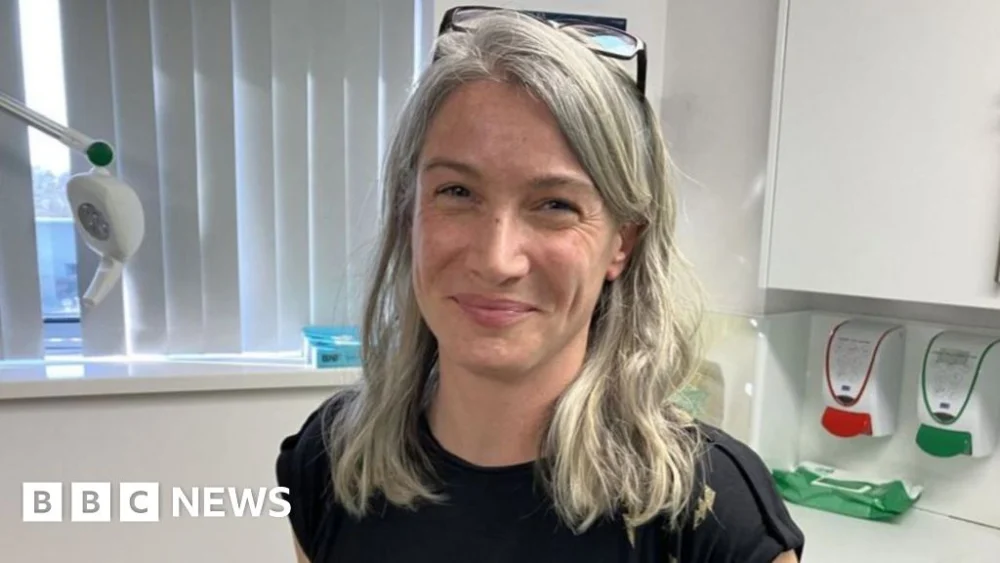
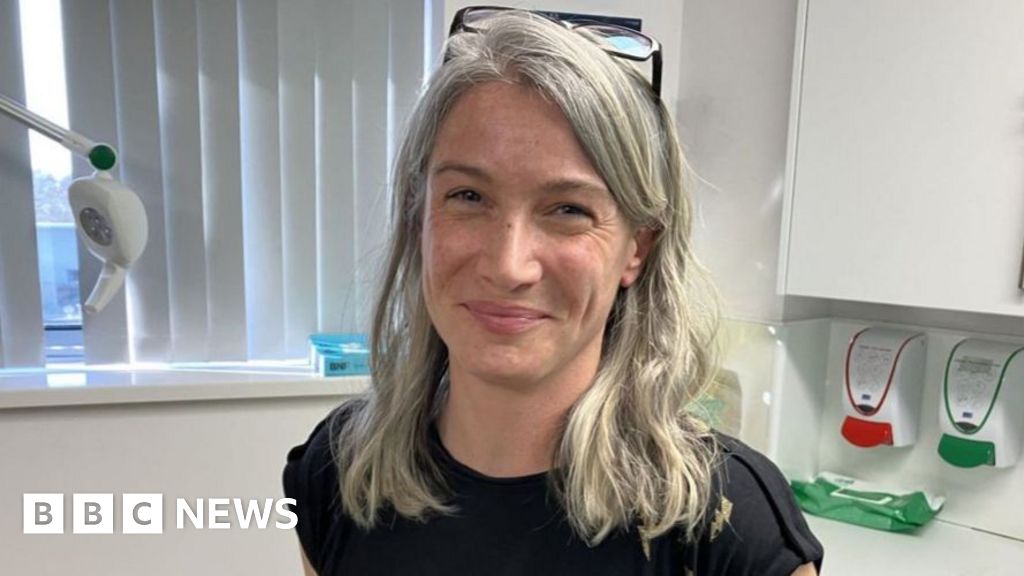
"Groundbreaking diagnostic tools, including rapid home tests for breast cancer and endometriosis, are poised to transform women’s healthcare in Wales, promising earlier detection and significantly reduced waiting times."
This quote encapsulates a pivotal moment in medical innovation emerging from Wales, where researchers are developing "game-changing" diagnostic tests. These novel approaches, spearheaded by Aberystwyth University, aim to empower individuals with accessible, non-invasive methods for detecting critical health conditions such as early-stage breast cancer and chronic conditions like endometriosis and Polycystic Ovary Syndrome (PCOS). Supported by substantial government investment, this initiative seeks to bridge the longstanding gaps in women’s health diagnostics, offering a future where early intervention is not just a medical ideal but a widespread reality.
The landscape of women’s health diagnostics is on the cusp of a significant transformation, driven by pioneering research in Wales. Scientists are actively developing innovative home-based tests designed to detect early-stage breast cancer and debilitating conditions like endometriosis and Polycystic Ovary Syndrome (PCOS). This advancement promises to dramatically reduce diagnostic waiting times, alleviate patient anxiety, and usher in an era of more accessible and proactive healthcare.
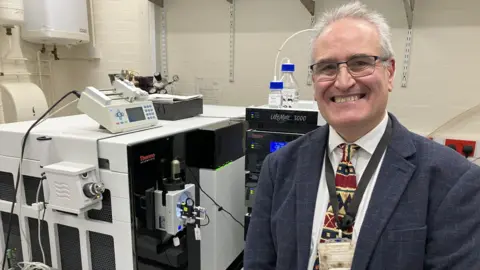
At the forefront of this research is Professor Luis Mur from Aberystwyth University, whose team has made critical discoveries enabling the detection of breast cancer through simple urine samples. Professor Mur highlights that "very important changes in urine" can accurately indicate the presence and even the stage of breast cancer. The ambition is to develop user-friendly lateral flow tests, similar to those widely used for COVID-19, that can be utilised at home or in a general practitioner’s surgery. This would represent a paradigm shift from current diagnostic pathways, which often involve complex, invasive, and time-consuming procedures.
The scientific basis for these urine tests lies in the identification of specific biomarkers – molecular indicators that signal disease processes within the body. As cancer cells grow and interact with the body’s metabolism, they release unique metabolic byproducts or cellular fragments into bodily fluids, including urine. Professor Mur’s team employs advanced analytical techniques, such as metabolomics, to profile these subtle chemical signatures. By identifying specific patterns or concentrations of these biomarkers, they can distinguish between healthy individuals and those with breast cancer, and even differentiate between various stages of the disease. This non-invasive approach offers immense potential, eliminating the need for more intrusive procedures like biopsies for initial screening, thereby reducing patient discomfort and the associated risks.
Current projections indicate that a prototype kit for breast cancer detection could be ready within the next year. However, the rigorous validation process required to ensure clinical reliability is extensive. Professor Mur estimates a further three to five years will be needed for comprehensive testing to guarantee the accuracy and robustness of these devices. The target for accuracy is a formidable 90% or greater, a benchmark crucial for any diagnostic tool intended for widespread clinical use. Achieving such a high level of precision is paramount to minimise false positives, which can lead to unnecessary anxiety and further investigations, and false negatives, which could delay critical treatment.
Building on the success of the breast cancer research, Professor Mur’s team is applying the same innovative methodology to address the diagnostic challenges of endometriosis and PCOS. These conditions are notoriously difficult to diagnose, with many women enduring years of symptoms before receiving a definitive diagnosis. Endometriosis, for instance, can take an average of 7-10 years to diagnose, a delay that profoundly impacts patients’ physical and mental well-being, as well as their fertility. Current diagnostic methods often rely on invasive surgical procedures like laparoscopy, which carries inherent risks and contributes to lengthy waiting lists. A simple, accurate home-based urine test could revolutionise this process, significantly shortening the diagnostic journey and enabling earlier intervention and management of symptoms. The ability to detect specific biomarkers in urine related to the inflammatory and hormonal imbalances characteristic of endometriosis and PCOS would be a monumental step forward, offering a non-invasive, accessible, and potentially rapid diagnostic solution.
This groundbreaking research is a cornerstone of the Welsh government’s broader commitment to improving women’s health. The projects have received significant financial backing from a £75 million investment dedicated to women’s health research, part of the comprehensive 10-year Women’s Health Plan, which was formally published in December 2024. This substantial funding underscores the Welsh government’s recognition of the historical underrepresentation and underfunding of women’s health issues, aiming to close the pervasive gender health gap.
Dr. Helen Munro, the clinical lead for women’s health in Wales, highlights a critical objective of the Women’s Health Research Centre: to accelerate the translation of research findings into practical clinical applications. She points out that, traditionally, there is often a protracted delay – sometimes up to 17 years – between scientific discovery and its integration into routine medical practice. The Welsh initiative is designed to drastically shorten this gap by fostering close collaboration between academic institutions and health boards. This integrated approach ensures that cutting-edge research, such as the diagnostic tests being developed at Aberystwyth, can more swiftly benefit patients across Wales.
Beyond diagnostic innovation, the 10-year Women’s Health Plan outlines ambitious goals for establishing dedicated women’s health hubs across all health boards in Wales. By the end of the current month, each health board is mandated to have at least one such hub operational, serving specific community needs. While Dr. Munro acknowledges that "each will look different," these hubs are united by a common mission to deliver enhanced, holistic care focused on three priority areas: menopause care, contraception, and pelvic health. These areas were identified due to significant gaps in current provision and the profound impact they have on women’s quality of life. The flexibility in their design allows each health board to tailor services to the unique demographic and geographical needs of its population, ensuring that care is relevant and accessible.
A prime example of this decentralised approach can be seen in west and mid Wales, where the Hywel Dda health board has strategically divided its expansive region into seven distinct GP clusters. Each cluster is equipped with a dedicated women’s health service, bringing specialist care directly into local communities. This model involves the comprehensive training and upskilling of local general practitioners to provide advanced menopause and contraceptive care. These trained GPs can accept referrals from other surgeries within their cluster, effectively creating localised centres of expertise.
Dana Scott, who leads the women’s health plan for Hywel Dda, articulates the primary goal of this initiative: "We’re aiming to see a reduction in referrals into secondary care, with women referred into the hub in a timelier fashion." This shift not only alleviates the burden on overstretched hospital services but also ensures that women receive prompt attention for conditions that might otherwise involve lengthy waits.
Dr. Lauren Thomas, a sexual health doctor actively involved in training GPs in more remote areas of the Hywel Dda patch, further elaborates on the practical benefits. She has been instrumental in equipping GPs with the skills to perform procedures such as fitting coils and contraceptive implants, traditionally requiring hospital referral. Moreover, the plan includes making ultrasound biopsies available in each county, dramatically improving access to crucial diagnostic tools for conditions like abnormal uterine bleeding or persistent pelvic pain.
Dr. Thomas shares a common frustration experienced by many GPs: "As a GP I see women wait months and months and months to see gynae [specialists] because obviously the secondary care service has to prioritise suspected cancer cases." This often leaves women suffering from chronic pelvic pain or suspected endometriosis in prolonged limbo, awaiting discussions, investigations, and treatments that could, and now will, be delivered in a community-based clinic. This model promises to bring specialist gynaecological care closer to home, reducing travel time and improving convenience for patients, particularly those in rural or underserved areas.
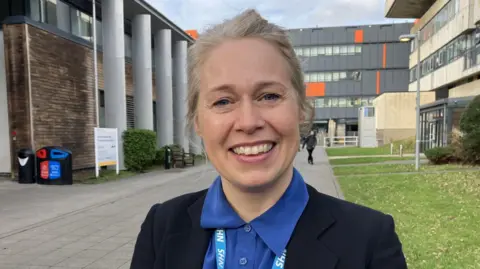
Sarah Murphy MS, the minister with responsibility for women’s health in Wales, acknowledges the varying starting points of different health boards but affirms the collective commitment to closing existing gaps. "They’re trying to fill in the gaps, breaking down the barriers for each of those locations and communities," she states. The Welsh government’s strategy includes a robust evaluation framework, ensuring that successful practices identified within one health board can be disseminated and adopted across the entire nation, fostering a continuous cycle of improvement and innovation.
The implications of these advancements are profound. The development of accurate, accessible home diagnostic tests for conditions as critical as breast cancer, endometriosis, and PCOS represents a monumental leap forward in preventative and early-intervention healthcare. Combined with the strategic rollout of women’s health hubs and the upskilling of primary care professionals, Wales is setting a global precedent for a more equitable, efficient, and patient-centred approach to women’s health. This integrated strategy promises not only to improve individual patient outcomes but also to reshape the broader healthcare landscape, making health monitoring more proactive and less daunting for millions of women.
