
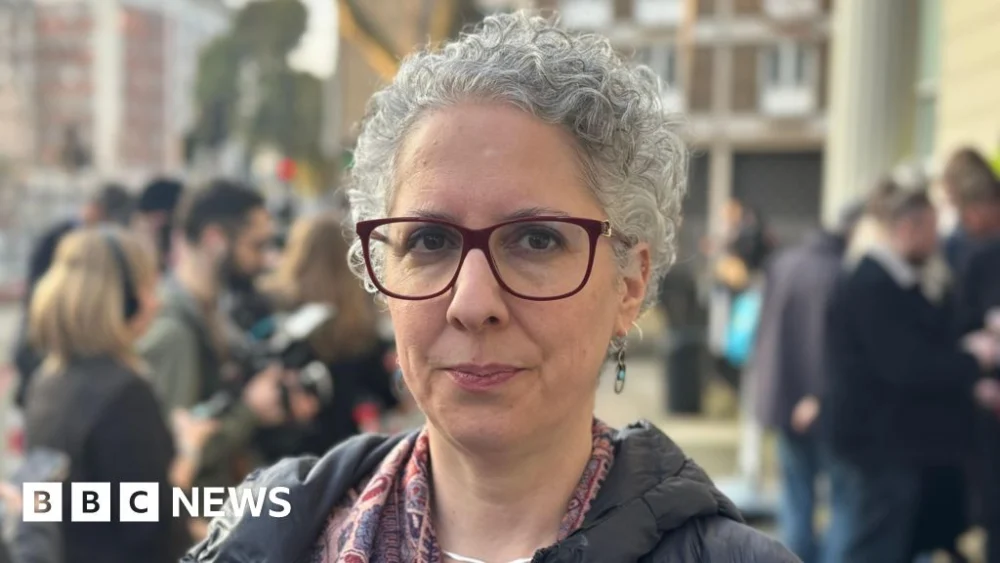
"The human cost of the pandemic, etched in the testimonies of bereaved families, stands as a stark reminder of the isolation and profound grief inflicted by Covid-19, underscoring the urgent need for systemic change and preparedness for future crises."
The UK Covid-19 Inquiry has drawn its extensive public hearings to a close, culminating in poignant testimonies from families who lost loved ones, often in harrowing isolation. These emotional accounts, like Rivka Gottlieb’s enduring "haunted" feeling over her father’s solitary death, serve as a powerful testament to the devastating personal impact of the pandemic and reinforce the inquiry’s critical mission: to meticulously examine the nation’s response and extract vital lessons for the future. As the inquiry transitions from gathering evidence to formulating its comprehensive reports, the narratives of profound loss and systemic challenges loom large, shaping the urgent calls for improved pandemic preparedness and compassionate public policy.
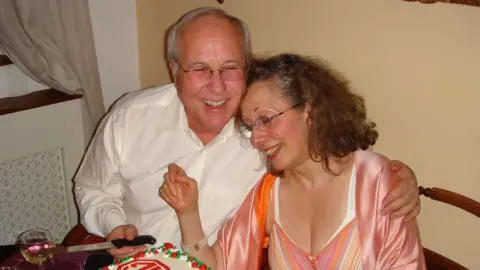
The final days of the UK Covid-19 Inquiry’s public hearings were marked by a deeply emotional focus on the human toll of the pandemic, as bereaved relatives shared their harrowing experiences of loss and isolation. Rivka Gottlieb’s testimony, recounting the solitary death of her father, Michael, a vibrant 73-year-old golf shop worker and synagogue teacher, resonated profoundly. Her anguish stems from the fact that her father, admitted to the Royal Free hospital in north London with Covid symptoms just as the first national lockdown commenced in March 2020, was never seen by his family again. The stark reality of the early pandemic, where families were barred from hospital visits, meant that Michael’s decline, from initial oxygen therapy to eventual ventilation, was communicated remotely, culminating in a final, heartbreaking WhatsApp message before he was placed on life support.
The rapid deterioration of Michael’s health, and the subsequent decision to withdraw life support, left Rivka and her family grappling with an agonizing sense of helplessness and a profound lack of closure. The "dark and terrifying time," characterized by anxious waits for hospital updates and the constant dread of the phone ringing, highlighted the communication breakdowns and emotional distance imposed by the crisis. While her mother, Milli, fortunately recovered and was discharged after a week, she continues to suffer from debilitating long-term effects, including persistent breathlessness, cognitive impairment, and chronic stomach pains, underscoring the enduring health consequences of Covid-19 for survivors.
The story of Michael Gottlieb is but one among many presented to the inquiry. Over the past week, more than eight hours of emotional testimony from bereaved relatives brought to the forefront the collective trauma experienced by thousands across the UK. Since its public hearings began in June 2023, the inquiry has gathered oral evidence from 381 witnesses across London, Edinburgh, Cardiff, and Belfast. This extensive process has also involved the review of an astonishing 600,000 documents, ranging from private WhatsApp chats to official government records, providing an unprecedented insight into the decision-making processes and lived experiences during the pandemic. Witnesses have included not only prime ministers, senior government officials, and leading scientists, but also individuals directly impacted by the crisis, such as hospital porters, cleaners, care workers, and frontline nurses, whose perspectives offer a crucial ground-level understanding of the challenges faced.
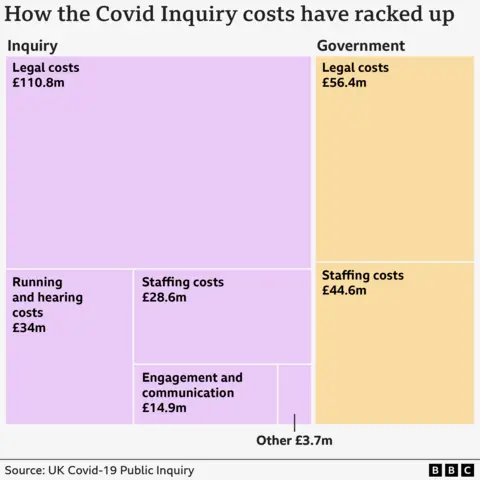
The sheer scale and comprehensive nature of the inquiry have inevitably come with a substantial financial cost, making it one of the most expensive public inquiries in UK history. As of December 2025, the total expenditure by the inquiry itself had reached £204 million, allocated across legal costs (£110.8m), running costs (£34m), staffing (£28.6m), and engagement and communication (£14.9m). In addition, the government has incurred its own significant expenses, totaling £111 million for its legal representation and staffing during the inquiry process. This considerable financial outlay has drawn criticism from some quarters, notably from former Prime Minister Boris Johnson, who initiated the inquiry but later questioned its value, suggesting it had not brought "a single new or interesting fact into the public domain." Similarly, organisations like the TaxPayers’ Alliance have publicly branded it a "waste of money."
However, Baroness Hallett, the chair of the inquiry, robustly defended its necessity and value on the final day of hearings. She expressed her hope that the forthcoming series of reports would "prove the value of this inquiry and justify the costs," reiterating her belief that despite the time and financial commitment, "it has been worth it." This sentiment is strongly echoed by groups like Covid-19 Bereaved Families for Justice UK, which represents approximately 7,000 members. While acknowledging the need for public inquiries to become more efficient and less adversarial, the group views the work as vital and has described the interim reports published so far as "damning." They remain committed to advocating for the government to fully implement the recommendations that will emerge from the inquiry’s comprehensive findings.
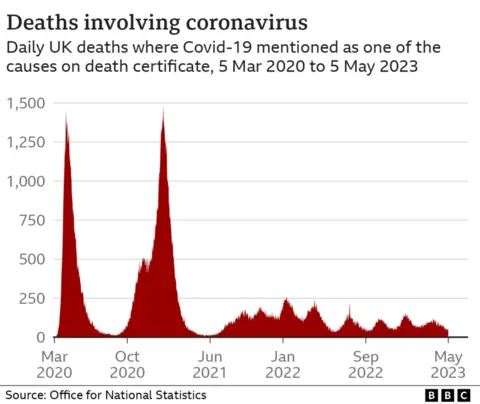
The inquiry’s final set of hearings this winter delved into the broader societal impact of the pandemic, examining the extensive closures of sporting, cultural, and religious facilities, the specific challenges faced by vulnerable groups, and the pervasive mental health crisis that affected the wider population. With over 227,000 people in the UK having died with Covid-19 as a cause on their death certificate between March 2020 and May 2023 – the period until the World Health Organization declared an end to the global health emergency – the scale of human loss is immense. Of these, 42 relatives were chosen to give evidence since June 2023, with 12 specifically selected for the final two days of hearings, ensuring that the personal stories of grief and suffering remained central to the concluding proceedings.
A recurring theme in the testimonies was the profound impact of social distancing rules, which "torn apart" families by preventing them from being with their loved ones during their final moments. Glen Grundle from Coleraine, Northern Ireland, articulated this raw pain, stating, "My mum left in an ambulance and I never saw her again. The doors shut and that was it. I have no closure and no peace over it." His mother, Milda, 73, died in April 2020, leaving a void exacerbated by the inability to say goodbye.
Families also spoke of immense difficulties in accessing timely and accurate information from care homes and hospitals, often feeling shut out from understanding their relatives’ true conditions or having their questions adequately addressed. Furthermore, the restrictions placed on funerals presented significant emotional and spiritual challenges. Limits on mourner numbers and stringent social distancing protocols meant that traditional rituals of comfort and communal grieving were severely curtailed. Rivka Gottlieb vividly recalled the profoundly alienating experience of her father Michael’s funeral in April 2020, where only nine people, including the rabbi, were permitted to attend, while others watched memorial prayers via video link. The inability to hug her mother or participate in the Jewish ritual of throwing earth to cover the coffin left an indelible mark. "I remember how unreal it all felt, and that we were still in a state of shock," she reflected. "My mother was completely isolated, and the impact of her grief has been profound, complex and far-reaching."
Beyond the funeral itself, the isolation continued. Families from Northern Ireland and Scotland highlighted the absence of traditional wakes, while others, like Sharon Boswell, whose husband George died from Covid in February 2021 aged 52, spoke of returning to an unbearable emptiness. "I remember sitting on the sofa, the TV was on, but no one was home with me," she recounted. "And I thought: I’m sitting here by myself, I’ve just had a funeral for my husband. I felt very isolated, I felt alone, I felt unhappy, just everything you possibly could feel." These accounts paint a vivid picture of disenfranchised grief, where the normal, essential processes of mourning were disrupted, leading to prolonged and complicated bereavement.
The Covid inquiry, under Baroness Hallett’s leadership, was structured into 10 distinct modules, designed to systematically examine various facets of the pandemic response, from political decision-making and the scientific advice underpinning it, to the rollout of vaccines and the specific impact on children’s education and well-being. While the public hearings have concluded, the arduous task of consolidating the vast amount of evidence and formulating comprehensive findings and actionable recommendations for ministers continues. To date, two initial reports have been published, focusing on pandemic planning and the major political decisions made during the crisis. The remaining eight sets of findings are anticipated to be delivered by summer 2027, marking a protracted process aimed at ensuring thoroughness and accuracy.
The calls for accountability and learning are not confined to the UK-wide inquiry. In Scotland, a separate public inquiry into the pandemic has been actively taking evidence, with its first findings expected to be published later this year, reflecting the devolved nature of health policy. Similarly, bereaved families in Wales continue to press for an independent inquiry into the Welsh government’s handling of the pandemic, a demand now supported by opposition parties in the Senedd, underscoring the widespread desire for scrutiny and lessons learned across all constituent nations of the UK.
As the inquiry closed its evidence-gathering phase, Katherine Poole delivered the very last testimony. Her father, John, 62, who suffered from schizophrenia, was admitted to a mental health hospital in early March 2020. With visitors banned due to the spreading virus, the family’s contact was severed. When John became severely unwell later that month and was transferred to a general hospital with critically low oxygen levels, he died four days later from Covid-19. Her father’s final words to her – "You won’t leave me, will you?" – haunt Katherine to this day. "That will stay with me forever because, ultimately, I did leave him. Not through my own choice, but through what happened." After 238 days and over 1,000 hours of hearings, her poignant story marked the end of the evidence phase. Baroness Hallett, pausing briefly after confirming Katherine was indeed the "very last witness," then declared, "Very well… and that completes the evidence."
The inquiry now enters a new, critical phase, where the myriad voices, data points, and documents will be meticulously synthesised. The ultimate aim is not merely to recount past events but to provide a robust, evidence-based roadmap for future pandemic preparedness, ensuring that the lessons learned from the profound human cost of Covid-19 translate into tangible improvements in policy, public health infrastructure, and compassionate crisis response. As Rivka Gottlieb poignantly articulated, "Six years on and people have forgotten what happened… But there will be crises in the future and I’m worried that the lessons of the pandemic will just not be learnt." The inquiry’s true value will be measured by its ability to prevent such forgetting and to safeguard against similar devastation in the face of future threats.
