
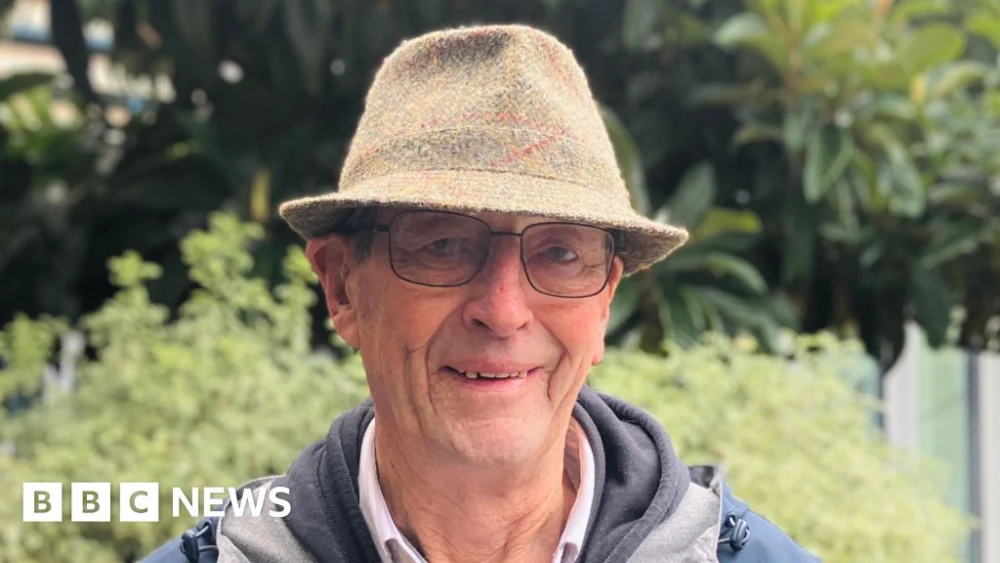
"This pioneering trial offers ‘realistic hope’ for patients battling mesothelioma, an aggressive cancer with no cure, by aiming not just to extend lives but to profoundly improve their quality of life. The precision of proton beam therapy represents a potential paradigm shift in treating this devastating disease, which has disproportionately affected communities linked to industrial heritage."
A groundbreaking clinical trial leveraging advanced proton beam therapy is offering a beacon of "realistic hope" to patients diagnosed with mesothelioma, a notoriously aggressive cancer primarily triggered by exposure to asbestos. Currently, no cure exists for mesothelioma, making effective treatment strategies focused on improving both longevity and quality of life critically important. Dr. Crispin Hiley, leading the trial from University College London Hospitals (UCLH) in collaboration with University College London, emphasized that the objective extends beyond merely prolonging life, aiming for a significant enhancement in patient well-being. This development holds particular resonance in regions like the North East of England, which bears a heavy legacy of the disease due to its historical industrial backbone, notably shipbuilding and manufacturing.

Mesothelioma stands as one of the most formidable cancers to treat, claiming approximately 2,700 new diagnoses annually across the United Kingdom. Its principal cause is the inhalation of microscopic asbestos fibres, which, after a latency period that can span decades, trigger malignant changes in the lining of the lungs (pleural mesothelioma), abdomen (peritoneal mesothelioma), or heart. The insidious nature of asbestos exposure means that symptoms often do not manifest until the disease is advanced, making early detection and effective intervention exceptionally challenging.
Traditional radiotherapy, a common cancer treatment, poses significant risks for mesothelioma patients due to the cancer’s proximity to vital organs such as the heart, lungs, and spinal cord. Standard photon-based radiotherapy delivers radiation that can inadvertently damage surrounding healthy tissues and organs as it passes through the body, limiting the dose that can be safely administered to the tumour. This inherent limitation often renders conventional radiotherapy an unsafe or suboptimal option for many mesothelioma cases, leaving patients with fewer viable treatment pathways.
The advent of proton beam therapy offers a revolutionary alternative. Unlike X-rays, protons deposit the majority of their energy at a precisely controlled depth, known as the Bragg peak, before stopping. This unique physical property allows clinicians to deliver high-dose radiation directly to the tumour while dramatically sparing adjacent healthy tissues and critical organs. For mesothelioma, where tumours often wrap around delicate structures, this precision is transformative. Dr. Hiley articulated the ambitious aspiration for the trial: to potentially elevate two-year survival rates from approximately 30% to a more optimistic 50%. If successful, this innovative approach could fundamentally reshape the therapeutic landscape for mesothelioma patients across the UK, offering a new standard of care where none previously existed.
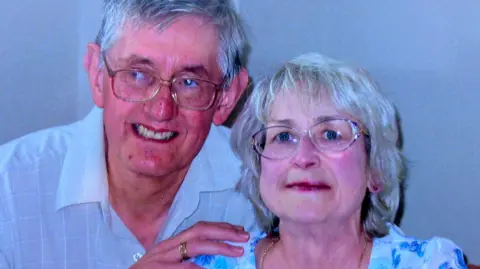
The human cost of mesothelioma is starkly illustrated by the experiences of individuals like Ray Turnbull from Washington. Ray has endured the unimaginable tragedy of losing four family members to the disease, including his beloved wife, Jean, who succumbed in 2009 at the age of 62. Jean’s exposure to asbestos occurred innocuously during her childhood, simply by walking past "white cliffs of Dover"-like heaps of the material near her home. Ray’s mother died at 72 in 1979, and his brother and uncle also fell victim to mesothelioma. All three had worked at the now-infamous Turner & Newall factory in Washington, a facility notorious for manufacturing products heavily laden with asbestos. Ray’s profound personal loss has driven him to become a tireless advocate, supporting countless others affected by the disease and witnessing another 20 acquaintances succumb to its relentless progression.
The North East of England stands as a tragic testament to the long-term health consequences of industrialisation. Dr. Helen Turnbull, a consultant clinical oncologist at the Northern Centre for Cancer Care at Newcastle’s Freeman Hospital, confirmed that the region records the highest death rates from mesothelioma in the UK, a direct legacy of its once-thriving shipbuilding and heavy manufacturing industries. Asbestos, once hailed as a "wonder product" for its unparalleled properties in fireproofing, insulation, and structural reinforcement, was extensively used in these sectors. However, the microscopic fibres, when inhaled, would embed themselves in the lung lining, initiating a silent, decades-long process that culminates in aggressive cancer. The perilous nature of asbestos became undeniable, leading to a complete ban on its use in building materials in the UK by 1999.
Ray Turnbull poignantly reflected on the region’s industrial past: "Seeing the newly-built ships sail down the Tyne was a proud time, but there was a cost, and we are finding out the costs." His vivid anecdotes underscore the pervasive nature of asbestos exposure in these communities. He recalled apprentices engaging in "snowball" fights with asbestos fibres, a grim illustration of the ignorance surrounding its deadly potential. Furthermore, he highlighted the devastating secondary exposure, recounting two women who died from mesothelioma, likely having inhaled asbestos particles while simply washing their husbands’ work clothes. These stories paint a stark picture of a proud industrial heritage intertwined with a tragic health crisis, where the invisible enemy claimed lives indiscriminately, often years after the initial exposure. More than 70,000 individuals have died from mesothelioma across Britain since the 1980s, with over 5,000 of these devastating deaths recorded in the North East alone.

The ongoing proton beam therapy trial represents a monumental collaborative effort. Approximately 50 patients from across England and Wales have already been enrolled, with the ambitious goal of recruiting up to 148 participants from 23 NHS centres. Those selected for the trial undergo a rigorous treatment regimen, receiving daily proton beam therapy sessions from Monday to Friday over a five-week period. The treatments are administered at two highly specialised facilities: UCLH in London and The Christie NHS Foundation Trust in Manchester. These state-of-the-art centres were established as part of a national NHS Proton Beam Therapy programme, approved by the Department of Health and Treasury in 2015 with a significant investment of £260 million.
One of the first patients to embark on this pioneering treatment journey is 83-year-old Peter Littlefield from Portsmouth. His diagnosis followed the onset of troubling symptoms, including breathlessness and a persistent cough. Conventional medical wisdom dictated that neither chemotherapy nor standard radiotherapy was suitable for Peter, primarily because the tumour’s proximity to his heart made photon radiation too risky. For Peter, being accepted onto the trial was "really unbelievable," offering a lifeline he hadn’t anticipated. The prospect of living longer and cherishing more time with his family means "everything" to him. Peter’s poignant reflection, "Life is the most precious thing, you can’t buy it," encapsulates the profound hope this trial offers to those facing a terminal diagnosis.
The infrastructure supporting this advanced therapy is truly remarkable. Dr. Hiley described the London centre as immense, featuring a vast cyclotron buried five stories underground. This powerful particle accelerator operates 24 hours a day, generating the proton beams necessary for treatment. "It’s a phenomenal piece of infrastructure," he stated, highlighting the scale of investment and technological sophistication required for this cutting-edge medical intervention. While various trials are ongoing, the use of proton beam therapy within the NHS has primarily been reserved for complex cancers situated near vital organs, particularly brain tumours and in younger patients, where the precision offered by protons is paramount to minimize developmental damage. To date, the national NHS programme has successfully provided care for over 5,000 patients, underscoring its growing importance in specialist cancer treatment.
Beyond the clinical realm, the trial has garnered strong support from leading health charities. Dr. Samantha Walker, Director of Research at Asthma + Lung UK, lauded the research as "vital" for addressing this "devastating condition." Similarly, Liz Darlison, Chief Executive at Mesothelioma UK, underscored the critical need for such research, pointing out the sobering fact that the UK "shamefully has the highest incidence of mesothelioma in the world." For individuals like Ray Turnbull, whose family has been irrevocably altered by the condition, these trials represent more than just scientific advancement; they offer a tangible sense of "realistic hope." This hope is not just for an extended life, but for a future where the devastating legacy of industrial asbestos exposure can finally be mitigated, offering peace and improved quality of life to those afflicted by this relentless disease.
