
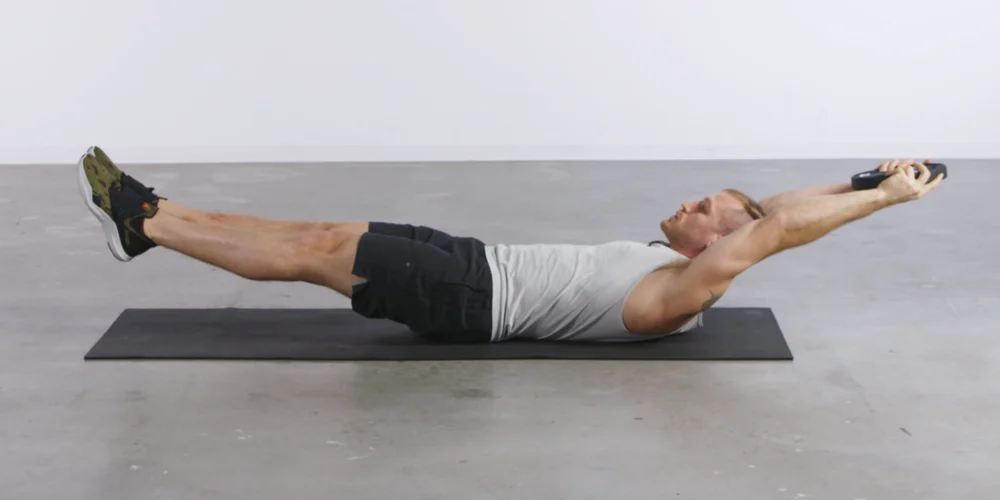
"True core strength is defined not by how well you can move your trunk, but by how effectively you can resist movement to protect the spine and transfer power across the kinetic chain."
While the fitness industry often prioritizes high-repetition exercises like situps and crunches, these movements frequently overlook the core’s primary functional role: stabilization. The hollow hold serves as a corrective and foundational isometric exercise that shifts the focus from simple trunk flexion to "core bracing," a skill essential for heavy lifting, athletic performance, and long-term spinal health. By mastering the subtleties of this gymnastic-inspired movement, athletes can transition from superficial abdominal training to building a resilient, integrated midsection that supports the entire body.
The Misconception of Core Training
For decades, the standard metric for abdominal strength was the ability to perform endless repetitions of situps. However, modern kinesiology suggests that this approach is often counterproductive. Repetitive trunk flexion can lead to excessive strain on the lumbar spine and over-reliance on the hip flexors, often leaving the deeper stabilizing muscles—like the transverse abdominis—underdeveloped. When form breaks down during high-rep sets, the "burn" felt in the stomach is often a sign of muscle fatigue leading to compensation, rather than effective strengthening.
To build a truly functional core, one must look toward the world of gymnastics. Gymnasts rely on the "hollow body" position as the baseline for nearly every movement, from handstands to pull-ups. This position requires the core to act as a bridge, locking the ribcage and pelvis together to create a rigid, unyielding torso. This is where the hollow hold comes into play. It is a deceptively simple isometric hold that forces the trainee to maintain maximum tension, teaching the body how to brace effectively against gravity.
The Mechanics of the Hollow Hold
According to Ebenezer Samuel, C.S.C.S., fitness director at Men’s Health, and senior editor Brett Williams, NASM-CPT, the effectiveness of the hollow hold lies in its subtleties. If performed incorrectly, it is merely an uncomfortable way to lie on the floor; if performed correctly, it is one of the most challenging and rewarding exercises in a fitness repertoire.
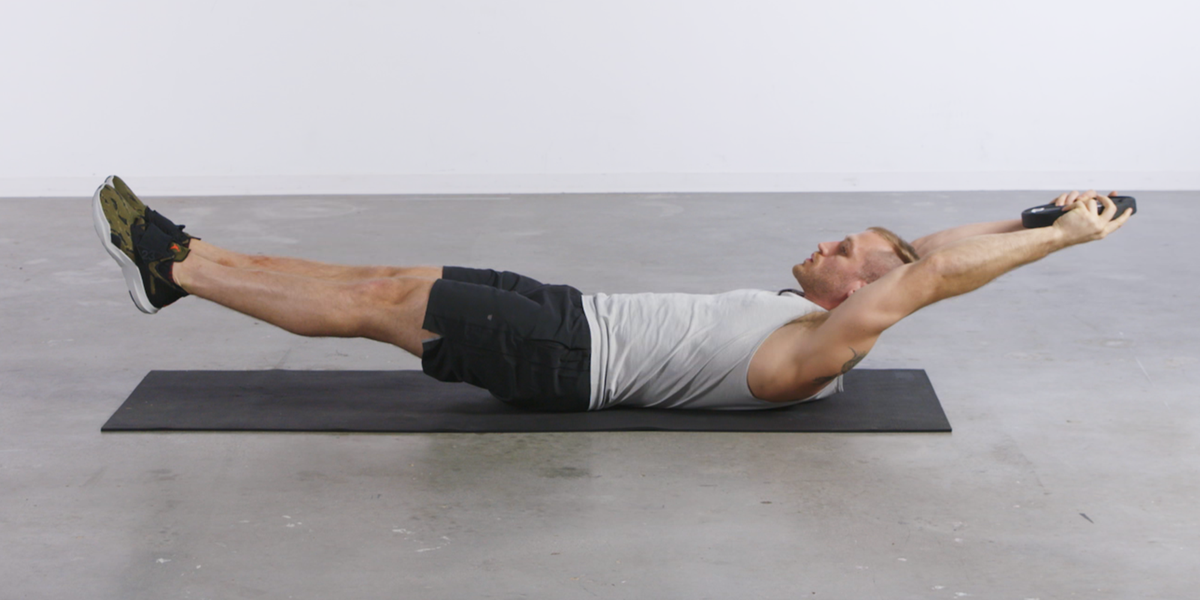
1. The Lower Back: The Anchor Point
The most critical element of the hollow body is the relationship between the lumbar spine and the floor. In a resting state, the human spine has a natural inward curve (lordosis) at the lower back. To perform a hollow hold, you must aggressively eliminate this gap by tilting the pelvis posteriorly and pressing the lower back into the ground.
As Samuel notes, this is achieved through intense abdominal contraction. By driving the spine into the floor, you create a stable base that prevents the lower back from taking on the load of the extended levers (the arms and legs). If at any point the lower back arches away from the floor, the core has "leaked" tension, and the exercise loses its primary benefit.
2. The Upper Body: Creating the Lever
A common mistake is simply lifting the head or arms off the ground. To truly engage the core, the focus must be on the shoulder blades. Elevating the scapulae—even by just a few millimeters—creates an upper-body lever that is directly connected to the abdominal wall. This elevation requires the rectus abdominis (the "six-pack" muscles) to work in tandem with the deeper stabilizers to keep the ribcage tucked down toward the hips.
3. Cervical Alignment: The Neutral Neck
In an effort to maintain the hold, many individuals instinctively tuck their chin to their chest. Samuel warns against this for two reasons. First, it places the neck in a non-neutral position, increasing the risk of strain. Second, tucking the chin actually makes the exercise easier by shifting the center of mass, thereby reducing the torque on the core. By keeping the chin in a neutral position and gazing upward, the trainee ensures that the weight of the head acts as an additional challenge to the abdominal muscles.
The Anatomy of Strength: Muscles Targeted
The hollow hold is a comprehensive "whole-core" movement. While many exercises target specific segments of the abdomen, the hollow hold requires a synergistic contraction of several muscle groups:
- Transverse Abdominis (TVA): The deepest layer of the abdominal wall, the TVA acts as a natural corset, providing intra-abdominal pressure and spinal stability.
- Rectus Abdominis: Responsible for the "hollow" shape and maintaining the connection between the ribs and the pelvis.
- Obliques (Internal and External): These muscles assist in stabilizing the trunk and preventing lateral or rotational movement.
- Lower Back Muscles (Erector Spinae): While the abs are the primary movers, the muscles of the lower back must work isometrically to maintain the integrity of the posterior chain.
Scaling and Progression
The full hollow hold, with arms extended overhead and legs hovering just inches above the floor, represents a significant "long lever" challenge. For beginners, the weight of the limbs may be too much for the core to handle without the lower back arching.
To scale the movement, one can shorten the levers. This is often referred to as the "dead bug" variation. By bending the knees to a 90-degree angle and reaching the arms toward the ceiling or knees, the demand on the core is reduced, allowing the trainee to focus exclusively on pressing the lower back into the ground. As strength improves, the legs can be gradually straightened and lowered, and the arms moved further overhead.
Advanced Variations for Elite Stability
Once the basic hold can be maintained with perfect form for 60 seconds, athletes can introduce dynamic and weighted variations to further challenge their stability:
- Weighted Hollow Hold: Holding a light dumbbell or weight plate overhead increases the resistance on the upper lever, demanding even greater tension from the upper abdominals.
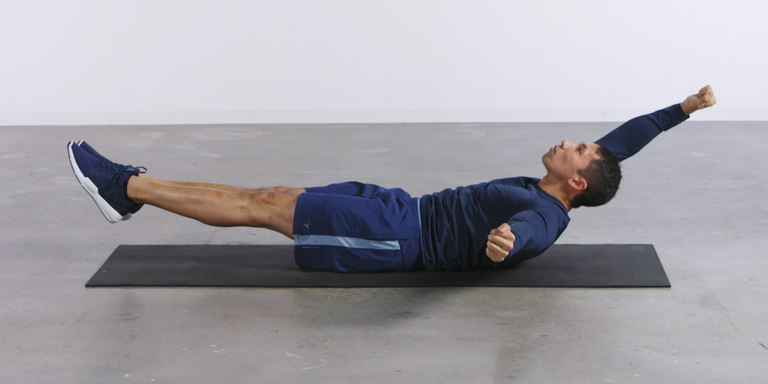
- Uneven Hollow Hold: By extending one arm overhead and the other out to the side (forming an L-shape), the athlete introduces an anti-rotation challenge. The core must work to prevent the torso from tilting toward the side of the extended arm.
- Hollow Body Rock: This adds a dynamic element. While maintaining the rigid "banana" shape of the hollow hold, the athlete rocks forward and back. This requires the core to maintain constant tension while the center of mass shifts.
- Gator Roll: Perhaps the most difficult variation, the gator roll involves rolling from the hollow hold onto the stomach (into a "superman" hold) and back again without letting the hands or feet touch the ground. This trains the body to maintain core integrity through 360 degrees of rotation.
Integration into Training Programs
The hollow hold is a versatile tool that can be integrated into various parts of a workout. As a "primer" or warm-up, it activates the nervous system and readies the core for heavy compound lifts like squats, deadlifts, or overhead presses. When the core is "awake" and bracing properly, the risk of spinal injury during heavy lifting is significantly reduced.
Samuel recommends working toward three to four rounds of 45-second to one-minute holds. However, he emphasizes that quality always supersedes quantity. In an isometric hold, the moment the lower back leaves the floor or the shoulder blades drop, the set is effectively over. The goal is "perfect tension," not just surviving the clock.
By moving away from the high-repetition, low-tension mindset of traditional ab workouts and embracing the disciplined, structural approach of the hollow hold, fitness enthusiasts can develop the functional strength necessary for both athletic excellence and daily physical resilience.
