
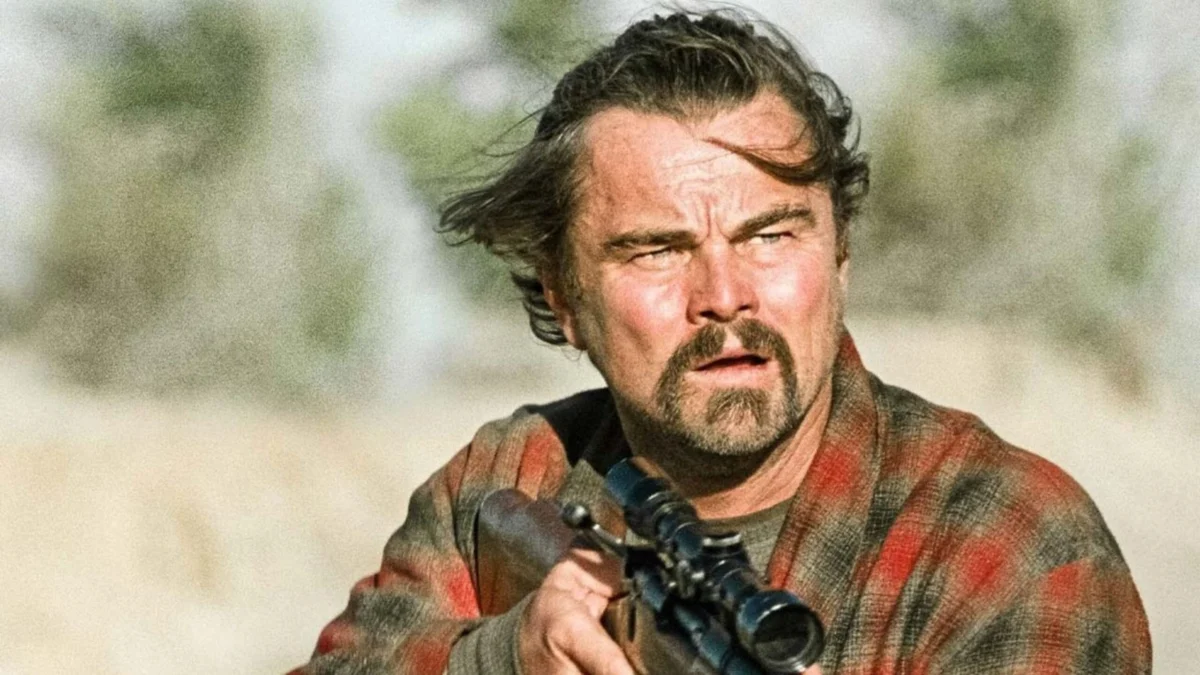
"Through a visceral fusion of Jonny Greenwood’s relentless score and Leonardo DiCaprio’s frantic performance, Paul Thomas Anderson captures the raw, kinetic anxiety of a father unmoored in a landscape of looming systemic shadows."
One Battle After Another represents a significant milestone in Paul Thomas Anderson’s storied filmography, blending the eccentricities of his later character studies with the high-stakes emotional resonance of a contemporary thriller. By placing a flawed, substance-reliant protagonist against a backdrop of political corruption and personal reckoning, the film explores the fragile nature of protection and the weight of a radical past in an increasingly volatile modern world.

For over three decades, Paul Thomas Anderson has established himself as a "maestro" of American cinema, a filmmaker capable of pivoting from the sprawling ensemble energy of Magnolia to the claustrophobic, oil-soaked intensity of There Will Be Blood. In his latest venture, One Battle After Another, Anderson tackles a narrative that is as much a frantic chase as it is a soulful meditation on the transition from revolutionary youth to the messy realities of middle-aged parenthood. The film centers on Bob Ferguson, portrayed by Leonardo DiCaprio in a performance that balances manic energy with a profound, underlying vulnerability. Bob is a man of contradictions: a self-proclaimed "drug and alcohol lover" who was once a radical explosives expert nicknamed "Ghetto Pat." Now, he is a father desperately trying to navigate the complexities of the present while his past literally hunts him down.
The narrative engine of the film is fueled by a particularly grueling sequence in which Bob attempts to locate his teenage daughter, Willa, played by newcomer Chase Infiniti. This segment serves as a microcosm of Anderson’s directorial genius. As Bob descends into a spiral of stress, exacerbated by his own substance use, the audience is not merely a witness to his panic but a participant in it. This immersion is achieved through a meticulous collaboration with long-time musical partner Jonny Greenwood of Radiohead. Greenwood’s score—an abstract, piano-focused motif—acts as a persistent heartbeat that refuses to cease, mirror-imaging Bob’s escalating pulse. Unlike traditional scores that might swell to signal a climax, Greenwood’s work here is relentless and atmospheric, creating an auditory landscape where the tension never finds a release valve.
As the plot unfolds, Bob and Willa are separated, each forced onto their own path of survival. While the audience is granted a reprieve by seeing Willa connect with Deandra (Regina Hall), an old friend of Bob’s who offers a semblance of safety, Bob remains in the dark. This information asymmetry heightens the stakes; we watch a father unraveling because he lacks the very assurance we possess. DiCaprio’s portrayal of Bob Ferguson draws comparisons to a unique archetype—a hybrid of Jeffrey "The Dude" Lebowski’s laid-back nihilism and the disheveled, sharp-witted cynicism of Gary Oldman’s Jackson Lamb from Slow Horses. He is a "sloppy spy," a man who has lost his edge but retained his instincts, making him an incredibly relatable, if deeply flawed, protagonist.

The primary catalyst for Bob’s distress is the emergence of Steven J. Lockjaw, played with terrifying precision by Sean Penn. Lockjaw is a figure from Bob’s radical past, but he represents something far more dangerous than a simple grudge. He is a "violent, psychopathic weirdo" whose connections bridge the gap between underground white nationalist secret societies and the highest reaches of government authority. Penn’s performance is a study in controlled instability; he delivers absurdities with a dead-eyed seriousness, punctuated by physical tics and sudden, inexplicable tears. Lockjaw is not just a villain; he is a manifestation of the unchecked power and "untapped" malice that lurks within the American infrastructure. His presence ensures that even when the film leans into humor, a sense of dread remains just beneath the surface.
Anderson’s ability to balance these disparate tones—the hilarious, the pathetic, and the terrifying—is what elevates One Battle After Another above standard genre fare. The introduction of Sensei Sergio, played by the formidable Benicio del Toro, injects the film with a surge of energy and "fun." The chemistry between DiCaprio and del Toro provides some of the year’s most engaging cinematic moments, offering a brief respite from the looming threat of Lockjaw. Yet, Anderson never allows the audience to get too comfortable. The weaving of these unique characters and "big ideas" is handled with the confidence of a filmmaker at the peak of his powers, ensuring that the father-daughter story remains the emotional anchor amidst the chaos of explosions and political intrigue.
The film’s complexity and technical brilliance have not gone unnoticed by the industry. One Battle After Another has garnered a staggering 13 Academy Award nominations, a feat surpassed only by the 16 nominations received by the film Sinners. Anderson himself is nominated for both Best Director and Best Adapted Screenplay, a testament to his skill in translating complex source material into a coherent, visual language. The acting categories are equally well-represented, with DiCaprio, Penn, and del Toro all receiving nods for their performances, alongside Teyana Taylor for Best Supporting Actress. These nominations reflect a consensus that the film is a high-water mark for contemporary cinema, succeeding on both a technical and an emotional level.

Beyond its artistic merits, One Battle After Another serves as a poignant commentary on the "present." By situating a former revolutionary in a world where the lines between "the state" and "the extremist" have blurred, Anderson asks difficult questions about the legacy of 20th-century radicalism. Bob Ferguson’s transition from "Ghetto Pat" to a struggling single father suggests a world where the battles have changed, but the war for one’s soul—and the safety of one’s children—remains constant. The film suggests that the "one battle after another" of the title refers not just to physical confrontations, but to the daily, exhausting effort to remain human in a dehumanizing system.
For those looking to experience this cinematic event, One Battle After Another is widely accessible across various platforms. It is currently available for streaming on HBO Max, providing subscribers with high-definition access to Anderson’s latest masterpiece. For viewers who prefer a transactional model, the film is available to rent on Amazon Prime Video and other major VOD services. Furthermore, in an era where digital ownership is increasingly tenuous, the film has been released on physical media, including a 4K UHD and Blu-ray edition. This physical release is particularly noteworthy for cinephiles, as it preserves the rich textures of Anderson’s cinematography and the intricate layers of Greenwood’s soundscape in a format that honors the director’s original vision.
In conclusion, One Battle After Another is more than a thriller; it is an experiential journey into the heart of parental anxiety. Paul Thomas Anderson has once again proven his ability to capture the zeitgeist through the lens of specific, eccentric, and deeply human characters. Through the combined talents of DiCaprio, Penn, and Greenwood, the film creates a world that is as stressful as it is captivating, leaving the audience with a profound sense of the "uniquely exciting" possibilities of modern film. Whether viewed as a political allegory or a simple story of a father finding his daughter, it stands as a towering achievement in the career of one of the world’s greatest living directors.
