
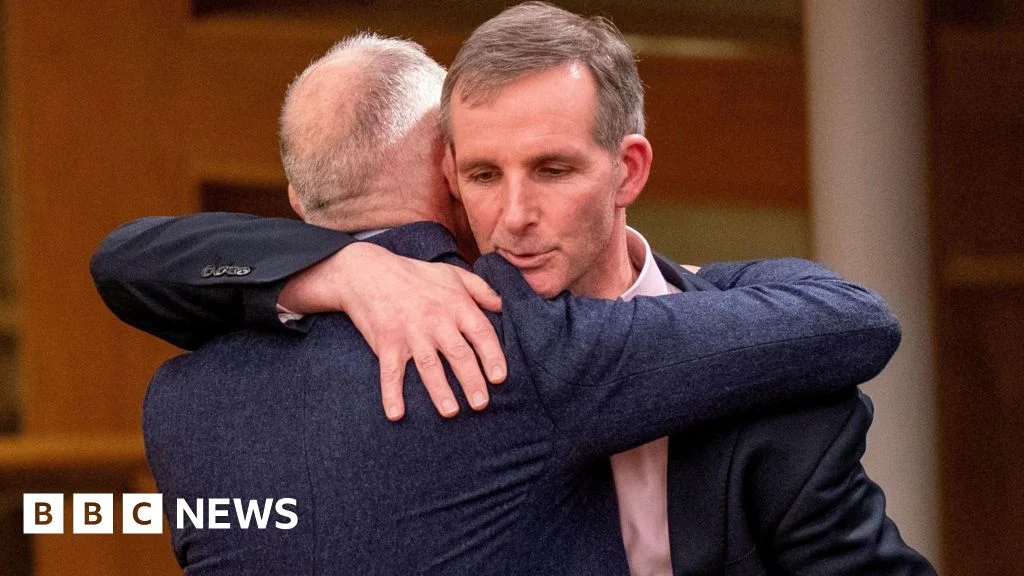
"Scotland’s Parliament has decisively voted against legalizing assisted dying, dealing a significant blow to campaigners advocating for terminally ill individuals to have the choice to end their lives. The emotionally charged debate highlighted profound ethical dilemmas, with fears of coercion and the adequacy of palliative care weighing heavily on MSPs."
After a deeply impassioned and extensive debate, the Scottish Parliament has rejected a groundbreaking bill that sought to make Scotland the first nation in the UK to permit assisted dying for terminally ill, mentally competent adults. The Liberal Democrat-led proposal, spearheaded by MSP Liam McArthur, was defeated by a margin of 69 votes to 57 in a final vote, marking a pivotal moment in the ongoing national conversation surrounding end-of-life choices. This decision, following a legislative journey that saw the bill pass its initial stage, underscores the complex ethical, moral, and practical considerations that continue to divide opinion on such sensitive legislation.
The Assisted Dying for Terminally Ill Adults (Scotland) Bill aimed to provide a legal framework for individuals facing unbearable suffering at the end of their lives to seek medical assistance to die. Under the proposed legislation, eligible adults would have been required to be terminally ill with a prognosis of less than six months to live, possess full mental capacity, and make two clear declarations affirming their wish to end their lives. Crucially, the bill included stringent safeguards, mandating independent medical assessments by two doctors to confirm eligibility and ensure the individual was acting voluntarily, free from coercion or undue influence. These measures were designed to mitigate risks and address widespread concerns, yet ultimately proved insufficient to sway a majority of MSPs.
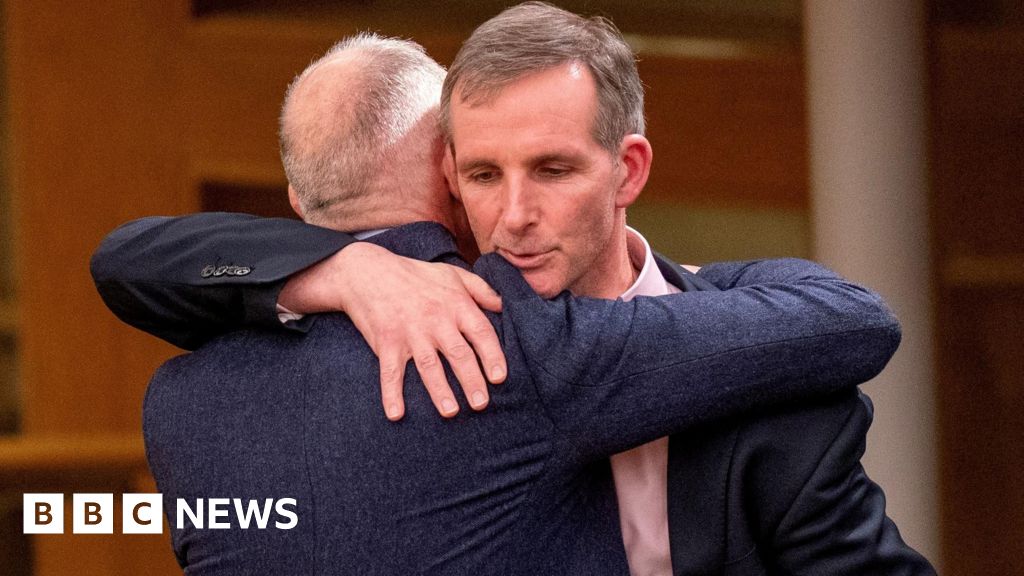
Opponents of the bill articulated a range of serious concerns, with the specter of "coercion" emerging as the most frequently cited objection during the final debate. Many MSPs voiced profound anxieties that even with robust safeguards, vulnerable individuals, including the elderly, disabled, or those facing social or financial pressures, could feel compelled to choose assisted dying. Independent MSP Jeremy Balfour, who lives with a disability, delivered a particularly poignant plea, warning that disabled people were "terrified" of such legislation. He contended that the bill would open "a Pandora’s box" of unintended consequences, arguing that "no meaningful protection" could truly guard against the subtle or overt pressures that might influence someone’s decision. His call to "consider the consequences for the most vulnerable" resonated deeply within the chamber. Similarly, Pam Duncan-Glancy, another MSP who uses a wheelchair, urged her colleagues to "choose to make it easier to live than to die," emphasizing the need to focus on enhancing life, not facilitating its end.
Beyond coercion, other critical issues were raised. Concerns were expressed regarding protections for healthcare professionals who might object to participating in assisted dying on ethical or moral grounds, and the perceived lack of sufficient oversight for doctors responsible for approving requests. A significant argument from critics centered on the imperative to prioritize and improve palliative care services across Scotland. Ruth Maguire of the SNP encapsulated this perspective, questioning the true freedom of choice if individuals lacked access to comprehensive and compassionate palliative care. She starkly recounted her personal apprehension, stating her "blood runs cold thinking about sitting in a room in hospital and having a doctor raise [assisted dying] with me as we weigh up treatment options," highlighting fears that assisted dying could become an implicit "treatment option" rather than a last resort. The cost implications of implementing the new system were also mentioned, adding another layer to the complex financial landscape of healthcare provision.
Conversely, supporters of the bill delivered equally powerful and often emotional contributions, painting a vivid picture of the suffering endured by individuals without the option of assisted dying. Liam McArthur, praised throughout the process for his measured and constructive approach, cited harrowing cases, including one man left "begging to have his life ended" due to severe pain and loss of dignity following cancer treatment. Breaking from his typically conciliatory tone, McArthur expressed his frustration, stating it was "not good enough" for MSPs to support the general principles of the bill only to oppose it at the final stage. He implored them to demonstrate "the courage of your convictions," stressing that "this is the time. This is the bill. This is the change that dying Scots desperately need us to take." He also pointed to international precedents, noting that countries and jurisdictions like Jersey, the Isle of Man, and Canada have successfully implemented similar legislation, arguing Scotland "must do better."
Former Green co-leader Lorna Slater shared a deeply personal account of her father’s "beautiful" assisted death in Canada, fighting back tears as she recounted his peaceful final moments surrounded by family. Her testimony underscored the belief that "we should all have the right to choose" how and when to die, when facing unbearable suffering. SNP MSP George Adam spoke movingly about his wife, Stacey, who lives with Multiple Sclerosis and was present in the gallery. He conveyed her desire for choice, should she ever face "unbearable suffering at the end of life." Conservative MSP and NHS GP, Sandesh Gulhane, shared a patient’s heart-wrenching plea: "you wouldn’t let a dog die like this," advocating for action to prevent people from dying "alone, scared, in agonising pain."
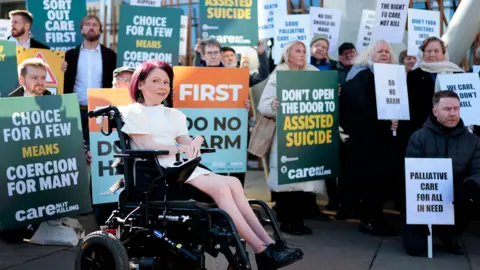
Supporters also actively countered the notion that improving palliative care and legalizing assisted dying were mutually exclusive. Liberal Democrat leader Alex Cole-Hamilton asserted that the proposed legislation would create a "powerful matrix of safety" and that it represented a compassionate choice that could coexist with excellent palliative care. They argued that for some, even the best palliative care cannot alleviate all suffering, and that personal autonomy in such circumstances should be respected.
This bill represented the third attempt to introduce assisted dying legislation in the Scottish Parliament since devolution in 1999, but it was the first to successfully navigate a Stage 1 vote on its general principles. MSPs were granted a free vote, meaning they were not bound by party lines, allowing for a truly conscience-led decision. Even First Minister John Swinney, while maintaining the government’s neutral stance, personally opposed the bill and expressed "relief" after the vote. The initial Stage 1 approval by a comfortable 14-vote margin had offered a glimmer of hope for proponents. However, the path to a final vote was always challenging, as many MSPs who supported the bill in principle did so to allow for thorough debate and scrutiny, rather than indicating a definitive endorsement of the final legislation. This dynamic ultimately proved decisive, with 12 MSPs who had backed the bill at Stage 1 ultimately voting against it at Stage 3, contributing significantly to its defeat.
The extensive debate spanned five parliamentary sessions, including a rare Friday sitting at Holyrood, underscoring the weight and complexity of the issue. The culmination of these deliberations in a decisive rejection marks a landmark moment in the Scottish Parliament’s history.
In the immediate aftermath of the vote, Liam McArthur expressed his profound disappointment, telling reporters he was "devastated" and suggesting some MSPs might come to regret their decision. He remained resolute, however, asserting that the issue was "not going away." Advocacy groups reacted with strong emotions. Ally Thompson of Dignity in Dying voiced her "huge disappointment," stating that "Tonight dying people across Scotland have been dealt a huge blow. The vote was against safety and against compassion." Conversely, Dr. Gordon Macdonald, CEO of Care Not Killing, expressed relief, reiterating his organization’s long-held view that "the bill posed serious risks to the most vulnerable in society – including disabled people and those suffering from domestic abuse."
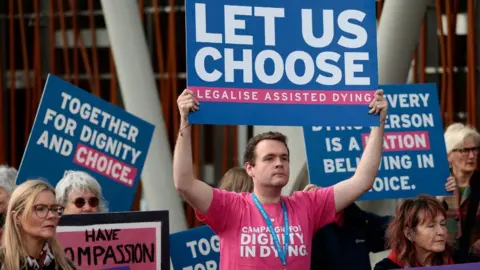
While Scotland has chosen not to proceed with assisted dying legislation at this juncture, the debate reflects a broader societal conversation across the UK and internationally. A similar bill is currently under consideration in the Westminster Parliament for England and Wales, though its passage before the end of the current parliamentary term appears unlikely. The Scottish Parliament’s decision, therefore, not only shapes end-of-life care policy within Scotland but also contributes significantly to the ongoing, deeply personal, and highly controversial discourse on assisted dying across the British Isles and beyond. The question of how society balances individual autonomy, compassion for suffering, and the protection of the vulnerable remains a profound ethical challenge that will undoubtedly continue to be revisited in legislative chambers worldwide.
