
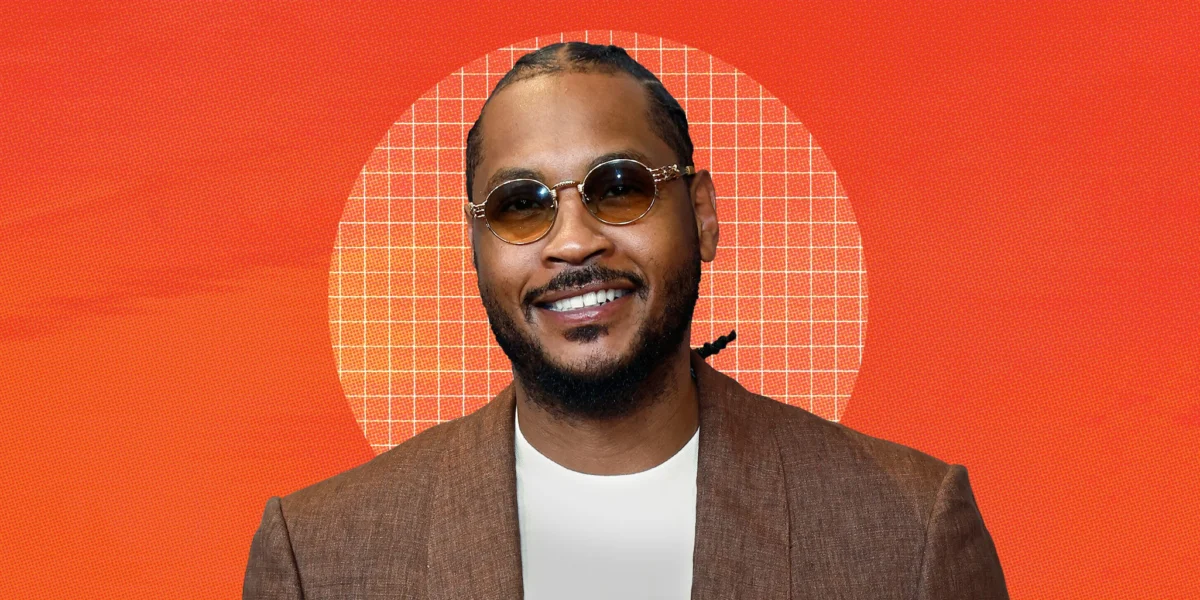
"Greatness is no longer defined solely by the hardware on the trophy shelf, but by the intentionality of training and the resilience to sustain a career through evolving sports science."
As the high-stakes environment of March Madness captures the global spotlight, the physical and psychological toll on collegiate athletes has come under renewed scrutiny. To explore the intersection of elite performance and modern sports medicine, Rich Dorment, editorial director of Men’s and Women’s Health, recently sat down with NBA legend Carmelo Anthony and Dr. Omri Ayalon, a leading sports medicine specialist from NYU Langone. Their conversation, featured on the series The Future You, bridges the gap between the "grind culture" of the early 2000s and the data-driven, recovery-focused landscape of contemporary basketball, offering a blueprint for how both professional athletes and the general public can achieve sustainable physical health.
The Syracuse Legacy: From "More is Better" to Precision Training
In 2003, Carmelo Anthony led the Syracuse Orange to a national championship as a freshman, a feat that cemented his status as a basketball prodigy. However, the training environment of two decades ago was starkly different from today’s sophisticated infrastructure. Anthony recalls a culture dominated by the philosophy that "the more you play, the better you’ll be." Training sessions were grueling, centered primarily on five-on-five scrimmages and one-on-one drills. While nutrition and recovery were acknowledged, they lacked the nuanced, individualized protocols that define the modern era.
Perhaps most revealing was Anthony’s admission of a secret he carried throughout his freshman year: a broken foot suffered during the summer leading into his time at Syracuse. "I kept it hush," Anthony revealed, noting that almost no one knew the extent of the injury at the time. This "push through the pain" mentality was a hallmark of his generation, but it came with long-term consequences. Today, Anthony’s son, Kiyan, is navigating the same Syracuse program but within a vastly different reality. The modern athlete is monitored by wearable technology, biometric sensors, and specialized recovery staff, ensuring that an injury like a broken foot would be identified and managed with surgical precision rather than hidden under a game-day wrap.
The Genetic Lottery and Controlled Risk
A central theme of the discussion with Dr. Omri Ayalon was the balance between genetic predisposition and controllable lifestyle factors in injury prevention. Dr. Ayalon emphasized that while some individuals are biologically predisposed to certain injuries—such as female athletes having a higher statistical risk for ACL tears due to anatomical and hormonal factors—genetics is not destiny.
Modern sports medicine focuses on identifying these predispositions early and implementing corrective training. For an athlete at risk for ligament issues, this might involve specific neuromuscular training to improve landing mechanics and joint stability. The goal is to move beyond reactive medicine—treating an injury after it occurs—toward a proactive model where data dictates the training volume and intensity needed to keep an athlete below their "breaking point."
The Achilles Crisis: Beyond the "Weekend Warrior"
One of the most concerning trends in modern sports is the perceived rise in Achilles tendon ruptures. Dr. Ayalon clarified that for both elite professionals and "mortal" recreational players, tendons naturally become more brittle with age. However, the rise in injuries is often linked to the "weekend warrior" phenomenon. This describes individuals who are largely sedentary during the workweek and then engage in high-intensity, explosive sports on the weekend.
To combat this, Dr. Ayalon recommends a shift toward eccentric exercises—movements where the muscle lengthens under tension, such as the lowering phase of a calf raise. These exercises strengthen the tendon’s structural integrity and its ability to absorb force. Consistency is the primary defense; the body requires a steady baseline of activity to maintain the elasticity of its connective tissues, making the sudden "all-out" effort of a weekend pickup game a high-risk endeavor for the unprepared.
Protecting the Next Generation: The Danger of Specialization
As youth sports become increasingly professionalized, Dr. Ayalon is seeing a rise in repetitive-use injuries among younger children. This is often the result of early specialization, where a child plays a single sport year-round without adequate rest or variety in movement. This repetitive stress on developing bones and joints can lead to chronic issues that shorten an athletic career before it even begins.
The advice for parents is twofold: encourage multi-sport participation to develop a broad range of motor skills and foster a culture of openness. Anthony and Ayalon agree that the "tough it out" era must end. Children should feel empowered to report discomfort without fear of losing their spot on the team. Pivoting to different forms of movement—such as swimming or cycling—allows the body to recover from sport-specific stressors while maintaining cardiovascular fitness.
The Hierarchy of Recovery
When it comes to recovery, the market is flooded with high-tech gadgets, from compression boots to cryotherapy chambers. However, Dr. Ayalon’s hierarchy of recovery begins with the fundamentals: sleep and hydration. Without these two pillars, no amount of technology can fully restore the body.
Beyond the basics, Dr. Ayalon ranks active recovery at the top of the list. Low-intensity movement, such as slow laps in a pool or easy cycling, promotes blood flow and helps flush metabolic waste from the muscles more effectively than total rest. Following active recovery, he suggests a "trial and error" approach to modalities like ice, heat, and contrast therapy. Because every athlete’s physiology is unique, what works for a Hall of Famer like Carmelo Anthony may not be the optimal solution for a recreational runner. The key is to find a routine that the individual can perform consistently.
The Technological Frontier in Orthopedics
The field of orthopedics is currently undergoing a revolution, driven by minimally invasive techniques and regenerative medicine. Dr. Ayalon expressed significant optimism regarding biologics, such as Platelet-Rich Plasma (PRP) therapy, which uses a patient’s own blood cells to accelerate the healing of injured tendons, ligaments, and joints.
Furthermore, the advent of 3D-printed splints and casts allows for a level of customization and comfort previously unimaginable, enabling athletes to maintain some level of mobility while protected. These advancements, combined with more precise surgical interventions, are the reason modern athletes are returning to the court faster and with more explosive power than those who suffered similar injuries twenty years ago.
Intentionality and the New Definition of Greatness
Reflecting on his career and the advice he gives to his son, Kiyan, Carmelo Anthony emphasizes the importance of "intentionality." In his youth, Anthony believed that spending four or five hours in the gym was a badge of honor. Today, he advocates for high-impact, efficient sessions lasting 60 to 90 minutes. "Be efficient with your workout," he advises. This approach maximizes performance while minimizing the "junk miles" that contribute to wear and tear.
This shift in training philosophy mirrors a shift in Anthony’s definition of greatness. During his 2003 championship run, greatness was defined strictly by trophies and scoring titles. Now, looking back on a storied career and watching the next generation rise, he views greatness through the lens of longevity and the ability to enjoy the journey.
True greatness, in the modern athletic context, is the result of a holistic partnership between the athlete’s ambition and the scientist’s precision. It is found in the discipline to recover, the wisdom to listen to one’s body, and the intentionality to train for the long game. As March Madness continues to showcase the pinnacle of collegiate talent, the lessons shared by Anthony and Dr. Ayalon serve as a reminder that the most valuable asset any athlete possesses is not their vertical leap, but their health.
