
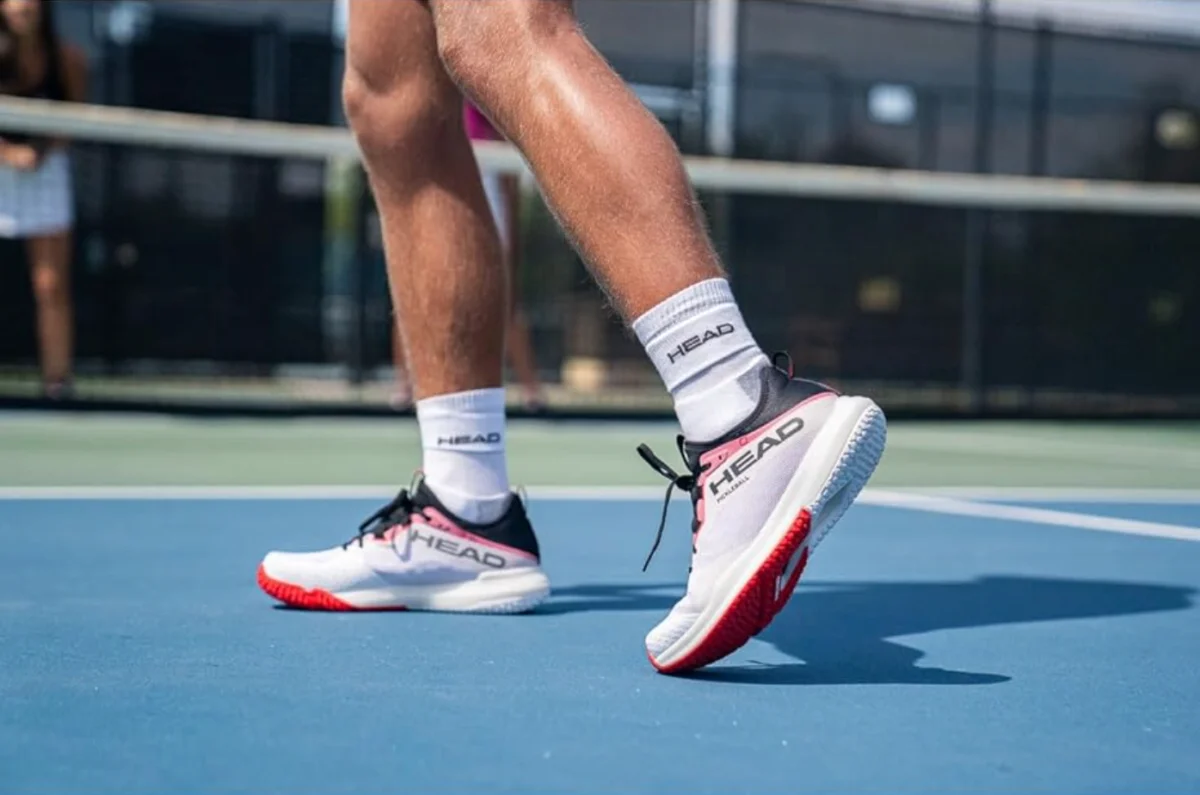
"As padel evolves from a niche pastime into a global athletic phenomenon, specialized footwear has become the essential link between player agility and court-specific safety, transcending the capabilities of traditional tennis gear."
While the visual similarities between padel and tennis often lead newcomers to believe their equipment is interchangeable, the biomechanical demands of the padel court require a highly specific engineering approach. Unlike the long, linear sprints common in tennis, padel is defined by constant lateral shifting, rapid 360-degree pivots, and explosive vertical movements within a confined, glass-walled space. Consequently, the industry’s leading athletic brands have shifted their focus toward developing outsoles and midsoles specifically tuned for the unique friction of synthetic turf, ensuring that players can maintain traction without sacrificing the joint protection necessary for high-impact play.

The Evolution of Padel-Specific Engineering
Padel originated in Mexico in 1969 and found its spiritual home in Spain and Argentina, but its recent explosion across the United States and Northern Europe has forced a revolution in gear. Central to this evolution is the court surface itself. Most modern professional and high-end recreational courts utilize "Mondo" turf—a specialized, curled monofilament grass that requires less sand than traditional synthetic courts. Because there is less loose sand to "slide" on, the risk of a shoe "sticking" to the turf and causing a ligament tear is significantly higher.
This technical shift has birthed a new generation of footwear designed to balance "grip" and "slip." Manufacturers are now prioritizing multi-directional outsole patterns, such as modified herringbones and vortex designs, which allow a player to pivot on a dime while providing enough "give" to prevent ankle rollovers.
The Top Performers in Modern Padel Footwear
To navigate this burgeoning market, players must consider weight, stability, and the specific technological innovations offered by the industry’s titans. Below is an analysis of the premier models currently defining the sport.

1. The All-Around Gold Standard: Head Motion Pro
For players who refuse to compromise on any technical front, the Head Motion Pro represents the pinnacle of padel-specific design. As the brand’s first shoe built exclusively for this sport, it was developed in direct collaboration with Mondo, the official turf provider for the World Padel Tour (WPT).
The Motion Pro is a masterclass in integration. It features a 360-degree outsole pattern that facilitates fluid movement in every direction—a necessity when chasing "bandejas" or defending off the glass. Internally, the shoe utilizes Head’s Dynafoam midsole, which provides a springy, responsive feel without the heavy bulk of traditional tennis cushioning. An anti-torsion shank is embedded within the midfoot to absorb the shock of hard landings, while the breathable mesh upper ensures thermal regulation during grueling three-set matches. Weighing in at 13.3 oz, it offers a substantial feel that translates to confidence on the court.
2. The High-Performance Investment: Wilson Bela Tour
Wilson remains a dominant force in racket sports, and the Bela Tour is the crown jewel of their padel lineup. Co-designed and rigorously tested by the legendary Fernando "Bela" Belasteguin—who held the world number one ranking for a record 16 consecutive years—this shoe is built for the elite competitor.

The standout feature of the Bela Tour is its high-density Duralast outsole, which utilizes a "Vortex" design. This pattern is specifically engineered to assist in the circular movements and rotations that are more frequent in padel than in any other racket sport. At a featherweight 10.2 oz, it is one of the lightest performance shoes on the market, offering unparalleled agility. While it carries a premium price tag of approximately $170, the investment is justified by its superior durability and the professional-grade stability it provides during high-stakes lateral transitions.
3. The Durability Specialist: Babolat Movea 2
Babolat has long leveraged a strategic partnership with Michelin to produce some of the most hard-wearing outsoles in sports. The Movea 2 is the beneficiary of this collaboration, featuring a rubber compound designed to withstand the abrasive nature of sand-dressed synthetic turf.
The Movea 2 is built for the player who prioritizes protection and longevity. It utilizes a "Strap-lock" system that physically wraps around the midfoot, ensuring the foot remains centered over the sole during aggressive cutting movements. With a slightly raised midsole and a dedicated heel protection system, it offers a "tank-like" feel that is ideal for heavier players or those prone to impact-related injuries. Although it sits on the heavier side at 14 oz and requires a brief break-in period, its "studded herringbone" traction pattern provides elite-level grip on even the slickest surfaces.

4. The Speed and Style Contender: Adidas Crazyquick
Adidas has successfully translated its "Lightstrike" cushioning technology from the basketball court to the padel court with the Crazyquick. This model is designed for the "speedster"—the player whose game relies on explosive sprints to the net and rapid defensive recovery.
The Crazyquick features a "Slingframe" support structure that acts as an exoskeleton, stabilizing the foot during the high-velocity lateral shifts that define modern padel. The unique traction pattern, which aesthetically mirrors the Adidas logo, is optimized for monofilament turf. At 11 oz, these shoes are remarkably light, yet they maintain structural integrity through the use of Adiwear technology in high-wear zones. They offer a "springy" energy return that reduces leg fatigue over long sessions.
5. The Entry-Level Benchmark: Asics Gel-Game FF
For newcomers to the sport, the Asics Gel-Game FF provides a high-quality gateway without the prohibitive cost of professional-grade models. Asics has a reputation for "out-of-the-box" comfort, and the Gel-Game FF lives up to this legacy.

Despite its budget-friendly positioning, the shoe does not skimp on essential safety features. It incorporates the brand’s signature "Trusstic" midfoot support, a resin shank that prevents the shoe from twisting awkwardly during lateral lunges. The lightweight mesh upper is reinforced with synthetic overlays and a PU stability film, ensuring that the foot remains locked in. At 11.5 oz, it is an accessible, comfortable option for recreational players who need a reliable herringbone outsole for consistent traction.
6. The Comfort Specialist: K-Swiss Speedtrac
K-Swiss has focused its engineering efforts on the "feel" of the shoe, producing the Speedtrac for players who prioritize plushness and immediate comfort. The shoe features Ortholite sockliners and a particularly airy mesh upper, making it an excellent choice for players in warmer climates like Miami or Southern Spain.
The Speedtrac utilizes a unique "webbing" sole design. Unlike the rigid grooves of a standard herringbone, this pattern allows for a more flexible interaction with the court surface, facilitating quick, soft-feeling cuts. Because it lacks the extreme rigidity of competition-focused models, it requires virtually no break-in period, allowing players to move from the box to the court with zero discomfort.

Why Tennis Shoes Fall Short
The question of whether one can play padel in tennis shoes is common, but the answer lies in the physics of the sport. Tennis shoes are often designed for hard courts, featuring outsoles that are meant to "skid" slightly to dissipate energy. On a padel court, this lack of specific traction can lead to "hydroplaning" on the sand, resulting in groin strains or ACL injuries.
Furthermore, the verticality of padel—jumping for overhead "smash" shots and quickly retreating—requires a different heel-to-toe drop and midsole density than the baseline-focused tennis shoe. Padel shoes are built with reinforced lateral "walls" to prevent the foot from sliding off the footbed during the extreme side-to-side movements required to play the ball off the glass.
Conclusion
Selecting the right padel shoe is not merely an aesthetic choice; it is a fundamental requirement for performance and injury prevention. Whether one opts for the professional-grade precision of the Wilson Bela Tour, the rugged durability of the Babolat Movea 2, or the specialized turf-integration of the Head Motion Pro, the goal remains the same: to provide a stable, responsive platform that allows the player to focus entirely on the strategic complexities of the game. As the sport continues to mature, the gap between "court shoes" and "padel shoes" will only widen, making specialized footwear the most important piece of equipment in a player’s bag.
