

"Once vibrant lives are silenced by the profound grip of severe Myalgic Encephalomyelitis (ME), revealing a critical gap in healthcare that renders thousands in Wales ‘invisible’ and desperate for recognition and specialized support."
This poignant statement encapsulates the devastating reality faced by individuals and families grappling with Myalgic Encephalomyelitis (ME), a chronic and complex multi-system condition often referred to as Chronic Fatigue Syndrome (CFS). Across Wales, thousands are battling ME, with those most severely affected finding themselves isolated and without adequate medical care, prompting urgent calls for systemic reform and greater recognition of this debilitating illness. Their stories highlight a stark disparity in healthcare provision, painting a picture of a system ill-equipped to address the profound and often misunderstood challenges posed by ME.

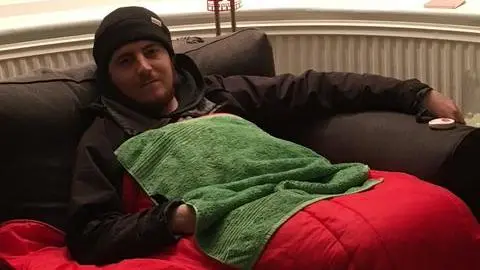
At the heart of this unfolding crisis is the profoundly moving story of Tomos Sleep, a 28-year-old whose life has been irrevocably altered by severe ME. For his parents, Myfanwy and Charlie Sleep, witnessing their once active and vibrant son now confined to bed, unable to walk or talk, is an unimaginable heartbreak. Charlie fondly remembers Tomos as an "outdoor sort of bloke," someone who relished time with friends and embraced an active lifestyle. This vivid memory stands in stark contrast to Tomos’s current existence, a testament to the brutal efficiency with which ME can strip away a person’s independence and identity.
Tomos’s journey into the depths of severe ME began subtly in 2019 with intermittent dizziness. Over the ensuing years, his condition progressively deteriorated, culminating in a diagnosis of severe ME in 2023. By this point, he was struggling significantly with basic mobility and had developed an acute intolerance to noise and light – hallmarks of the condition. His mother, Myfanwy, recalls 2023 as the year he "really went downhill," losing the ability to perform routine self-care tasks like washing and dressing. A pivotal moment came one evening when Tomos, attempting to take a bath, found himself barely able to walk downstairs; he has been bedridden ever since. At its most extreme, his parents describe Tomos as appearing "paralysed," unable to open his eyes, speak, or move, communicating only through subtle eye movements to indicate needs like an open window or a trip to the toilet. The very presence of carers, intended to provide relief, paradoxically exacerbated his symptoms due as the overstimulation proved too much for his compromised system.
Myalgic Encephalomyelitis, or ME, is far more than just "tiredness," a common and harmful misconception. As defined by the National Institute for Health and Care Excellence (NICE), it is a chronic, fluctuating, neurological condition characterized by profound and debilitating fatigue, post-exertional malaise (PEM), cognitive dysfunction ("brain fog"), unrefreshing sleep, and widespread pain. PEM, a cardinal symptom, means that even minimal physical or mental exertion can trigger a disproportionate and delayed worsening of symptoms, often lasting for days or weeks. The severity of ME exists on a spectrum, from mild, where individuals can manage some self-care but struggle with work or education, to very severe, where patients are entirely bedridden, unable to perform basic functions, and often require full-time care. While the exact causes remain elusive, research points to potential triggers such as viral infections (including Epstein-Barr virus, Ross River virus, and increasingly, SARS-CoV-2 leading to Long Covid), bacterial infections, or other significant physiological stressors. These triggers are thought to initiate a complex cascade of immunological, neurological, and metabolic dysfunctions that perpetuate the illness.
The "invisible" nature of ME is a significant barrier to effective care and public understanding. Unlike many chronic illnesses, ME often lacks outward physical signs, leading to skepticism, dismissal, and a profound sense of isolation for patients. Charlie Sleep articulates this perfectly: "Because there’s no real treatment for it at the moment, and there isn’t a group of consultants that own the disease… people with ME are invisible." This invisibility extends into the healthcare system itself, where a lack of dedicated specialists, standardized diagnostic pathways, and evidence-based treatment protocols creates a "desert" for those most severely affected.
This desperate situation is echoed by other patients across Wales. Fflur Evans, a 39-year-old mother-of-two from Bala, Gwynedd, was diagnosed with moderate ME two years ago. Previously a busy teacher, her life has been drastically curtailed. "I’m not the same person," she laments, describing herself as "stuck in this little bubble in the house." Her symptoms include constant pain, debilitating dizziness triggered by simple actions like climbing stairs, and extreme sensory sensitivities, making the sound of zips or closing cupboards unbearable. Fflur’s initial belief that ME was "just tiredness" underscores the widespread misunderstanding, even among those who eventually suffer from it. Similarly, Alwen Davies, 46, from Denbighshire, diagnosed with moderate ME in 2023, speaks of the profound emotional toll. She has had to leave her job and spends her worst days confined to bed in the dark, managing her symptoms through meticulous pacing – a technique involving carefully balancing rest and activity to avoid triggering PEM. "It’s just devastating. It sounds dramatic, but it’s life-changing," she states, likening the diagnosis to "a grieving process" for the life she once knew and the future she had envisioned.
These individual struggles collectively highlight a systemic failing that campaigners are striving to address. Rob Messenger, from Carmarthenshire, whose advocacy is driven by the fact that two of his own children were diagnosed with ME in their teens, is at the forefront of these efforts. He acknowledges the dedication of many caring professionals but stresses the critical absence of specialist expertise. "There is no specialist to turn to," he explains, highlighting a void that leaves general practitioners and patients alike without guidance. Messenger points out that while the Welsh government has allocated some funding for health boards to establish services, the lack of an overarching "all-Wales plan" has led to a fragmented "postcode lottery." For those with severe and very severe ME, he asserts, the situation is even grimmer, describing it as "pretty much a desert" for appropriate care.

Campaigners are therefore urgently calling for a coordinated national response, including the establishment of a national expert group, the appointment of an all-Wales clinical lead for ME, and significant investment in research. An expert group would be instrumental in developing national standards of care, disseminating best practices, and educating healthcare professionals who, as Dr. Binita Kane observes, "aren’t taught about this condition." A dedicated clinical lead would provide essential leadership, coordination, and advocacy, ensuring that ME patients receive equitable and evidence-based care across the country. Furthermore, Prof. David Price from Cardiff University underscores the "urgently needed" funding for research, which is crucial for uncovering the underlying pathophysiology of ME and developing effective treatments, rather than relying solely on symptom management.
There are glimmers of progress. Betsi Cadwaladr University Health Board in north Wales has expanded its Long Covid service to include ME patients, leveraging funding from the Welsh government’s Adferiad programme. This initiative is a positive step, ensuring that people with varying severities of ME can now receive "individualised support," according to consultant physiotherapist Claire Jones. The Welsh government proudly notes that Wales is the first UK nation to extend its Long Covid services to encompass other infection-associated long-term conditions. However, Dr. Kane cautions that services remain "patchy" across Wales and the wider UK. She emphasizes the paramount importance of early intervention and appropriate support, particularly thorough pacing strategies, to prevent the devastating deterioration seen in cases like Tomos’s. "If we do the right thing early in the illness, and support people with the right level of pacing, you can prevent that deterioration in a lot of cases," she argues.
While the Welsh government acknowledges that "more needs to be done, particularly for people with more severe illness," and states that proposals for an all-Wales specialist, an expert group, and national standards are being "actively considered," the urgency of the situation demands more than consideration. For families like the Sleeps, every day without comprehensive, specialized care is a day lost to a silent, debilitating illness. The profound human cost of ME, coupled with the socio-economic burden of lost productivity and increased care needs, necessitates a robust and immediate governmental commitment. The experiences of Tomos, Fflur, and Alwen serve as powerful reminders that ME is not merely a personal struggle, but a significant public health challenge requiring systemic solutions, compassionate care, and unwavering investment in research to finally bring this "invisible" illness into the light.
