
"The queues for NHS dentists are not merely a symptom of high demand; they are a stark reflection of a healthcare system where access to fundamental oral care has become a desperate lottery, challenging the very principles of universal access envisioned by the National Health Service."
This poignant observation encapsulates the escalating crisis gripping NHS dentistry, where millions across the United Kingdom are finding it increasingly difficult to secure routine or emergency dental treatment. From dawn queues outside new practices to years-long waits for appointments, the struggle to access affordable dental care has become a defining issue, prompting critical questions about the future viability of NHS dentistry and its foundational promise of comprehensive care for all.
The scene in Bristol in 2024 was a powerful testament to this desperation. Residents, like local artist Carol Sherman, resorted to extraordinary measures, arriving at 5 AM with chairs and blankets, just to be among the first to register at a new dental practice. Her testimony – "I was that desperate… So many people round here can’t get a dentist, so it’s been an absolute lifesaver" – echoes the sentiment across numerous communities. Three times in two years, hundreds of Bristolians have endured hours-long queues, a clear indicator of systemic failure. This isn’t an isolated incident; similar scenes are playing out in towns and cities across both England and Wales, highlighting a national healthcare challenge that demands urgent and effective solutions.
As the government prepares to implement reforms designed to ease access to NHS dental treatment, experts remain cautiously pessimistic. Mark Dayan, an analyst at the Nuffield Trust, a prominent health think tank, warns, "Without fundamental change, NHS dentistry will remain a service that has gone for good in many parts of the country. At this stage, it’s just unhelpful to pretend there is still some kind of comprehensive system in place." The looming question is whether these upcoming reforms, heralded by the government as the most significant in two decades, will be enough to rescue a system that has demonstrably failed millions of patients.
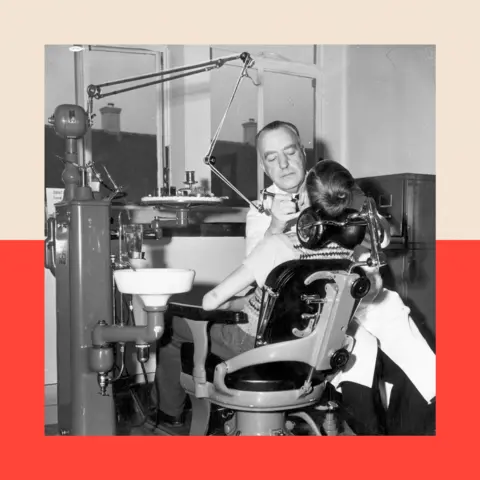
The roots of the current crisis can be traced back to the very inception of the National Health Service. When Aneurin Bevan founded the NHS in 1948, dental care was initially free, mirroring hospitals and GP services. However, the nation’s oral health, ravaged by the aftermath of World War Two, presented a demand far greater than anticipated. To contain spiralling costs, routine charges for NHS dental work, along with fees for prescriptions and glasses, were swiftly introduced. This decision, famously prompting Bevan’s resignation in protest from his post as Minister of Labour, fundamentally differentiated dentistry from almost every other aspect of the health service. Today, while certain groups like children receive free treatment, adult patients in England face charges ranging from approximately £27 for a basic check-up to £75 for a set of fillings, and up to £327 for more complex procedures like bridges or dentures. Yet, these costs become irrelevant if patients cannot secure an NHS appointment in the first place.

The personal toll of this access barrier is profound. Jean Ann Green, 66, moved to Beccles in Suffolk in 2021, only to find herself in a dental desert. Her teeth, compromised by cancer treatment and osteoporosis, required urgent attention, yet she faced a harrowing four-year struggle. "Over the last four years, I must have phoned every dentist in Suffolk and not a single one is taking on new NHS patients," she recounted. Plagued by pain from six lost fillings, her only long-term option appears to be private treatment, potentially costing thousands – a sum she cannot afford. Her desperate wish that "your nerve dies so the pain goes away" underscores the agony and despair felt by countless individuals. "Because of my postcode, I can’t have the treatment on the NHS that I desperately need, and that’s just immoral," she asserts, highlighting the growing postcode lottery in dental care.
The dramatic shift towards private dentistry is a central factor in the NHS crisis. The UK’s approximately 12,000 high street dental practices have the autonomy to decide whether to pursue NHS contracts, operate solely privately, or, most commonly, manage a hybrid model. This balance has swung significantly. In 1990, private dental care constituted a mere 14% of the market. By 2010, this figure had risen to 42%, and in 2024, it reached a record 69%, according to consultants LaingBuisson. This surge in private provision directly correlates with a decline in NHS access.
Healthwatch England, the patient watchdog, reports that dentistry consistently generates more complaints than any other health service area. Rebecca Curtayne, its acting head of policy, describes the situation as "a constant source of frustration, anxiety and distress." Polling by the watchdog indicates a worsening trend post-pandemic, with 32% of people utilizing private dentistry last year, a sharp increase from 22% in 2023. Official data further illustrates the crisis: over the past decade, the number of routine NHS examinations in England has fallen by 6%, while more complex procedures, such as root canals, have plummeted by 49%. An anonymous dentist from the east of England highlights the financial disincentives: "I have lots of colleagues who just won’t touch [NHS] root canals now, it’s a complicated procedure and such hard work… It’s ridiculously remunerated so you can end up spending so much time on it and lose money." This often leaves patients with a stark choice: an NHS extraction or a private, costly root canal to save the tooth.
At the core of this systemic breakdown is the much-maligned NHS dentist contract, widely described as "ridiculous and discredited" by the British Dental Association (BDA), the leading trade union for dentists. Introduced in England and Wales in 2006, the contract does not remunerate dentists per procedure or for time spent with a patient. Instead, it assigns "Units of Dental Activity" (UDAs) based on broad treatment bands. This means a patient requiring multiple crowns, root canal work, and several fillings might generate the same UDA points as someone needing only a single crown. The BDA has consistently argued that this system is overly complex and fails to accurately reflect the true cost and effort involved in treating patients, especially those with extensive needs. Dr. Shiv Pabary, a Newcastle dentist and chair of the BDA’s general dental practice committee, states unequivocally, "The whole system is just absurd and unfit for purpose. The government wants us to take on more high-risk patients, but if we do that then we lose money, and that’s the problem." Compounding this issue, total government spending on NHS dentistry in England has declined in real terms over the past decade, even as the population has grown and aged, leading to an increased demand for more complex dental care.
In response to mounting pressure, the Labour government asserts it is injecting an additional £350m annually into NHS dentistry. This funding is purportedly generated by compelling health boards to reinvest funds recouped from underperforming contracts – a strategy also attempted by the previous government. Furthermore, the government plans to address staffing shortages by recruiting thousands more dentists from overseas and increasing dental school places in England by 50 per year. Imminent reforms, described by health minister Stephen Kinnock as the "first step towards a new era of NHS dentistry," will see tweaks to the UDA system, introducing new payments for certain complex treatments and preventative care. The most significant new proposal is a mandate for each practice to ring-fence 8% of its local NHS contract specifically for emergency care. The theoretical aim is to streamline access for unregistered patients experiencing acute issues like broken teeth, severe toothache, or bleeding, allowing them to secure a swift referral via NHS 111 rather than navigating the private market. Kinnock indicates these changes are part of a broader, long-term plan to overhaul the entire dental contract before the next election, though the precise details of this comprehensive reform remain under development.
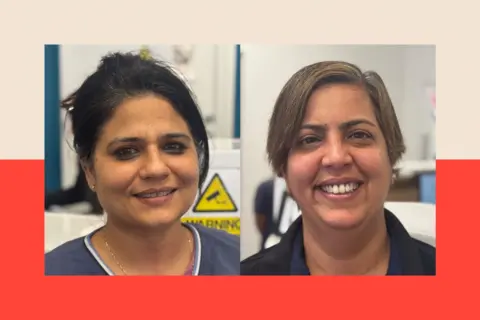
However, frontline staff remain largely unconvinced. At St Pauls dental surgery in Bristol, the very practice that saw those extraordinary queues in 2024, practice coordinator Shivani Bhandari and principal dentist Dr. Gauri Pradhan express deep skepticism. "This will just be another piecemeal fix that won’t improve anything," asserts Pradhan, who is also a qualified facial surgeon. Their primary concern is that with existing limits on the total NHS work dentists can undertake, boosting emergency appointments will inevitably diminish slots for routine and preventative care. Bhandari warns, "It could actually make things worse because the government might look at the numbers [of emergency patients] and see they have gone up, but we will only see the consequences in two or three years’ time." What these professionals desire is a simpler, more equitable system, such as those in Scotland and Northern Ireland, where dentists are paid for each individual item of care provided. Wales, meanwhile, is set to scrap the UDA system entirely from April, with patients (unless exempt) paying 50% of treatment costs and dentists receiving £150 per hour for their time – a radical departure aimed at valuing clinical time over arbitrary activity units.

The booming private sector, while offering quicker access and advanced treatments for some, is not without its own set of problems. Connor Greenlees, 33, from Sheffield, lost his NHS dentist in 2021. When he recently needed emergency treatment, he faced private quotes ranging from £250 to £350 for each infected tooth extraction. His inability to afford these prices led to uncomfortable negotiations, ultimately reducing the bill to £220. "I felt really seedy negotiating with them, but I was in so much pain, I just had no choice," he recalls. Now, he is saving to travel to Eastern Europe, where the long-term treatment he requires is reportedly a third of the cost. This trend of "dental tourism" highlights the profound cost disparities within the UK.
The rising cost and variable quality of private care have not gone unnoticed. This month, the UK competition watchdog initiated a review into private dentistry to ensure it is "working well for consumers." This move followed research revealing a staggering 30% jump in the price of some private treatments in just two years, alongside significant regional variations. Anecdotal accounts from dentists paint a concerning picture, with some alleging that patients are "lied to" about NHS availability in an "attempt to force them to go private," even when NHS appointments are available. Others describe pressure to "hard sell" private work, often by portraying NHS treatment as substandard. While these remain anecdotal, they underscore the ethical challenges in a market-driven environment. The BDA, while representing both NHS and private dentists, has denied clear evidence of widespread abuse, accusing Chancellor Rachel Reeves of initiating the investigation as a diversion from deeper funding issues.
The long-term solutions to this multifaceted crisis present a series of politically unpalatable choices. Eddie Crouch, chair of the BDA, expresses profound concern: "I do worry that we’re beyond the point that NHS dentistry can be saved. If we’ve got no money to improve the service, then we need to have a serious conversation about what sort of minimum level of dental service is available, or who will actually get NHS dental services in the future."
One obvious option is a substantial injection of public funds, potentially boosting the value of NHS contracts and establishing more NHS-run community clinics employing dentists directly. Estimates suggest this could cost around £2bn annually – a fraction of the total £196bn NHS budget in England, but still a significant sum. However, critics argue that a blanket increase might disproportionately benefit wealthier patients who could already afford private care, offering little health improvement and diverting funds from other critical NHS needs like crumbling hospitals or outdated cancer units.
Another radical proposal involves completely overhauling the funding model. Former health secretary Sir Sajid Javid, supported by the right-leaning think tank Policy Exchange, has advocated for providing all adults with an annual £150 dental voucher to offset private treatment or insurance costs. The BDA vehemently opposes this, branding it as potentially tripling the cost to the taxpayer and a sign of "barrels being scraped."
Without substantial long-term funding or fundamental structural reform, the BDA and organizations like the Nuffield Trust contend that the NHS might be compelled to drastically scale back its dental provision. This could lead to a system primarily offering a "dental A&E" for emergencies, alongside free routine care only for children and those on very low incomes. Everyone else would be expected to finance their dental care through private insurance or direct payments, mirroring models seen in countries like the US or Australia. Such a decision, however, would represent a difficult political choice and a profound departure from a core founding principle of the NHS: that healthcare services should be available to all, regardless of their ability to pay.
Ultimately, this crisis extends far beyond mere discomfort or inconvenience; it profoundly impacts public health and human dignity. Research consistently links oral health to broader well-being, influencing everything from maternal and childhood outcomes to the risk of heart disease and diabetes, and even an individual’s prospects for employment. As Carol Sherman eloquently articulated, reflecting on her own experience of losing a tooth, "The first thing you do when you greet a person is smile at them, that’s the first connection you have, so for me, it’s about being a human being with dignity and pride." The struggle for NHS dental care is, at its heart, a struggle for dignity, equity, and fundamental human well-being.
