
"Sun protection is not a seasonal accessory but a critical daily intervention; nearly 90 percent of visible facial aging is driven by chronic UV exposure that persists even on cloudy or freezing days."

While many individuals associate sunscreen exclusively with peak summer heat and beach environments, dermatological science confirms that ultraviolet (UV) radiation remains a constant threat to skin health regardless of the thermometer. The following analysis explores the physiological necessity of year-round facial protection, the structural differences between facial and body skin that necessitate specialized formulas, and the most effective products currently recommended by leading dermatologists to mitigate the risks of skin cancer and premature aging.
The Myth of Seasonal Protection
A common misconception in personal care is that the absence of heat or direct sunlight equates to an absence of UV risk. However, temperature is an unreliable indicator of radiation intensity. Ultraviolet A (UVA) rays, which are primarily responsible for skin aging and long-term DNA damage, maintain a relatively consistent intensity throughout the year. Unlike Ultraviolet B (UVB) rays, which fluctuate and cause the immediate "burn" associated with summer, UVA rays penetrate clouds and glass with ease.

Dr. Ariel Ostad, MD, a prominent dermatologist, emphasizes that UV rays are a constant presence. He notes that clouds offer deceptive protection, as they allow the majority of UV radiation to pass through to the skin. In certain environments, the risk can even escalate during the winter. For instance, in alpine conditions such as skiing, snow acts as a highly reflective surface, potentially doubling a person’s UV exposure by bouncing rays back onto the face from the ground. This cumulative exposure, often referred to as "incidental damage," occurs during brief walks to the car, sitting near windows, or running errands, eventually manifesting as deep-set wrinkles, hyperpigmentation, and a loss of skin elasticity.
The Biological Cost of Neglect
The stakes for consistent SPF application extend far beyond aesthetics. According to Dr. Matthew Knight, MD, the statistics surrounding skin cancer are sobering: one person dies of the disease every hour in the United States. The vast majority of these cases are directly linked to chronic, unprotected UV exposure. While the body has some capacity to repair DNA damage, repeated hits from UV radiation eventually overwhelm these cellular mechanisms, leading to the mutations that characterize skin cancer.

Furthermore, dermatologists estimate that between 80 and 90 percent of visible facial aging—often attributed to "getting older"—is actually the result of photoaging. UV radiation triggers the production of free radicals, which are unstable molecules that break down collagen and elastin. Without these structural proteins, the skin loses its firmness and develops the sagging and leathering commonly seen in those who have spent decades in the sun without protection. By the time visible damage appears, the underlying structural integrity of the skin has already been compromised for years.
Why Face-Specific SPF is Required
A frequent error in grooming routines is the application of standard body sunscreen to the face. While the active UV filters may be similar, the delivery systems are fundamentally different. Facial skin is significantly thinner and more sensitive than the skin on the arms or legs, and it contains a higher concentration of sebaceous (oil) glands.

Body sunscreens are engineered for efficiency and cost-effectiveness, designed to cover large surface areas like the back or torso. Consequently, they are often thicker, heavier, and formulated with occlusive ingredients that can lead to "cosmetic acne" or breakouts on the face. Dr. Ostad explains that facial sunscreens are designed to be "cosmetically elegant." This means they are formulated to be lightweight, non-greasy, and capable of layering under other products or over facial hair without leaving a visible residue.
Moreover, modern facial SPFs are often non-comedogenic, meaning they are specifically tested to ensure they do not clog pores. Dr. Marisa Garshick, MD, notes that facial formulas are also adjusted to be gentler around the eyes, reducing the likelihood of the stinging or irritation that often occurs with heavy body lotions.

The Evolution of Ingredients
The current generation of facial sunscreens functions as a hybrid of protection and treatment. Beyond just blocking rays, high-quality formulas now incorporate active skincare ingredients that support the skin’s natural barrier.
- Niacinamide: Often included to control oil production and reduce the redness associated with inflammation or rosacea.
- Antioxidants (Vitamins C and E): These work in tandem with UV filters to neutralize free radicals that manage to penetrate the initial barrier, providing a secondary layer of defense.
- Hyaluronic Acid and Glycerin: These humectants provide lightweight hydration, ensuring that the skin remains moisturized without the need for heavy, pore-clogging oils.
- Zinc Oxide and Titanium Dioxide: Often found in "mineral" or "physical" sunscreens, these provide broad-spectrum protection by reflecting UV rays away from the skin like a mirror.
Top-Tier Recommendations for Daily Use
Selecting the right product is essential for ensuring compliance; the best sunscreen is ultimately the one an individual is willing to wear every morning. Several brands have emerged as the "gold standard" among dermatologists for their reliability and skin-feel.

La Roche-Posay: The Clinical Leader
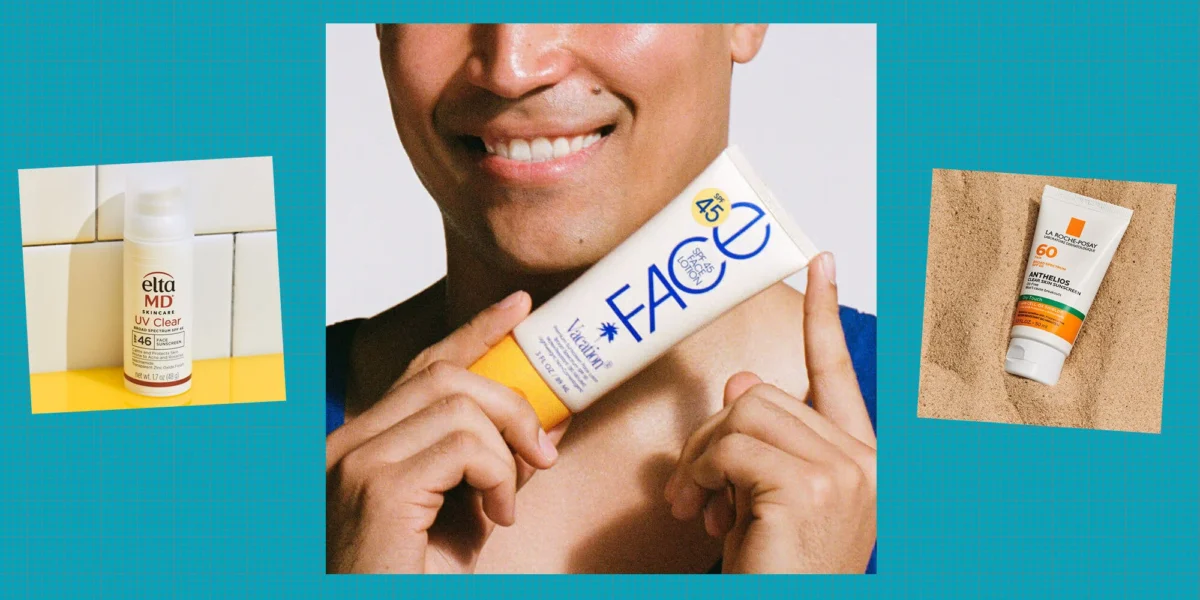
La Roche-Posay’s Anthelios line is a perennial favorite in clinical settings. Their Clear Skin Dry Touch Sunscreen SPF 60 is frequently cited as the best overall option for men. Its "dry touch" technology ensures that even in humid conditions or during physical activity, the product absorbs instantly, leaving a matte finish. For those who prefer a more modern texture, the Anthelios UV Air Serum SPF 50 utilizes Cell-Ox Shield technology. This serum-based formula is exceptionally lightweight and includes hyaluronic acid, making it an ideal choice for those who want their sun protection to double as a daily moisturizer.
EltaMD: The Dermatologist’s Choice
EltaMD has built a reputation for formulas that cater to specific skin concerns. The UV Clear SPF 46 is specifically designed for acne-prone or sensitive skin, utilizing high-purity niacinamide to calm the complexion. Recently, the brand introduced a UV Skin Recovery Red Color Correcting Green Tint, which earned a 2026 Men’s Health Grooming Award. This innovative product uses a subtle green tint to neutralize facial redness—a common issue for men with fair skin or rosacea—while providing robust SPF 50 protection.

Neutrogena: High-Quality Budget Protection
For those seeking an accessible entry point into high-end facial care, the Neutrogena Ultra Sheer Invisible Gel Face SPF 40 offers a sophisticated, fragrance-free formula for under $20. Its clear gel consistency is particularly beneficial for individuals with darker skin tones, as it eliminates the "white cast" often associated with traditional sunscreens.
Specialized and Mineral Options
For individuals who prefer mineral-based protection without the traditional thick, white residue, Spooge Ghosted SPF 30 has become a "unicorn" in the industry. It provides the benefits of a mineral screen—which is often less irritating for sensitive skin—while remaining virtually invisible upon application. For those who prioritize a soothing, beach-inspired experience, Vacation Classic Face Lotion SPF 45 incorporates aloe vera and banana extract, providing a nostalgic scent profile with modern dermatological standards.

The Long-Term Perspective
Approaching skincare with the same discipline as financial planning is the most effective way to ensure long-term health. Just as a 401(k) relies on the power of compounding interest over decades, the benefits of SPF are cumulative. A single day of application provides immediate protection, but ten years of daily application results in a fundamentally different biological outcome for the skin.
By integrating a dedicated facial SPF into a morning routine—regardless of the season, the weather, or the planned activities—individuals are making a proactive investment. This daily habit is the most scientifically proven method to prevent the DNA damage that leads to malignancy and the structural breakdown that leads to premature aging. In the quest for longevity and health, the most powerful tool available is not a complex surgical procedure, but a simple, daily application of sunscreen.
