
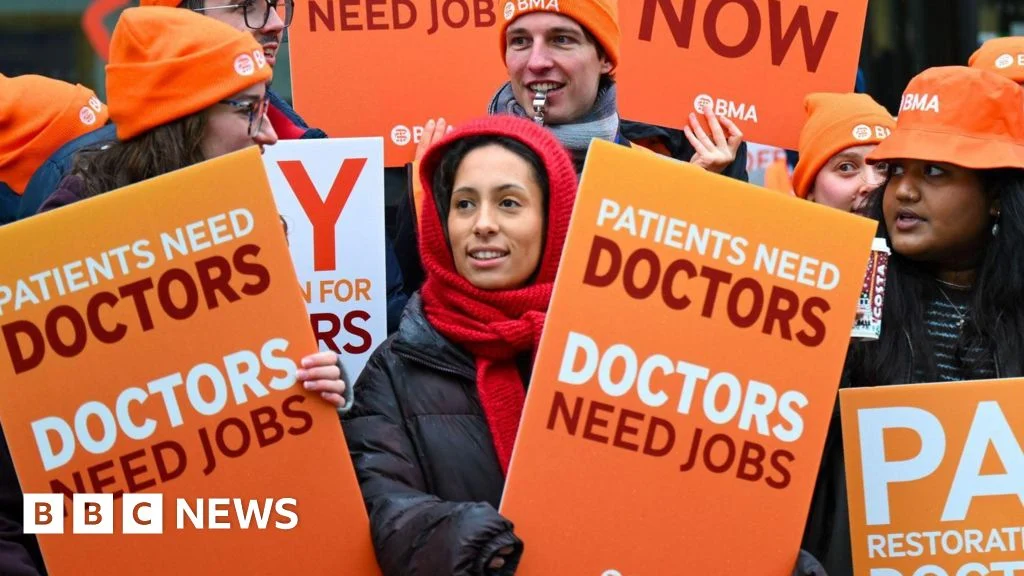
A prolonged six-day strike by resident doctors in England signals a deepening crisis in NHS industrial relations, as both the British Medical Association and the government remain entrenched in their positions over pay restoration and critical workforce shortages, threatening further disruption to patient care.
This forthcoming six-day walkout, scheduled to commence immediately after the Easter bank holiday, marks a critical escalation in the protracted dispute between the British Medical Association (BMA) and the government. Following over two months of intensive negotiations that ultimately collapsed, resident doctors are poised to undertake one of the longest periods of industrial action seen in the National Health Service in recent memory. At the heart of the impasse are fundamental disagreements over pay erosion in the face of persistent inflation and the urgent need to address systemic job shortages, issues the BMA argues are driving doctors away from the UK and imperiling the future of healthcare provision.
The BMA, representing a significant portion of the medical workforce, announced the industrial action after rejecting the government’s latest offer, which included a 3.5% pay rise for the current year. This increase, recommended by the independent pay review body, was dismissed by the BMA as a "crushing blow" that fails to adequately address years of real-terms pay cuts. Dr. Jack Fletcher, a representative for the BMA, articulated the union’s stance, stating, "We have been negotiating in good faith for weeks. We are simply not going to put an offer to doctors that risks locking in further erosion of pay at a time when doctors continue to leave the UK for other countries." This sentiment underscores the BMA’s unwavering commitment to its demand for "pay restoration," aiming to reverse what it calculates as a 20% decline in resident doctors’ pay since 2008, when adjusted for inflation.
The dispute is not merely about a single year’s pay increase but is rooted in a broader context of public sector austerity and rising living costs. For over a decade, public sector wages, including those of healthcare professionals, have largely failed to keep pace with inflation, leading to a significant erosion of purchasing power. The BMA contends that successive below-inflation pay awards have devalued the medical profession, making it less attractive and contributing to a growing exodus of talent from the NHS. This "brain drain" sees experienced doctors seeking better pay and working conditions in countries like Australia, Canada, and New Zealand, which actively recruit UK-trained medical staff. This phenomenon poses a significant long-term threat to the UK’s healthcare capacity and the quality of patient care.
Health Secretary Wes Streeting, however, expressed profound disappointment at the BMA’s decision, characterising their demands as "beyond reasonable and realistic." He asserted that the government had "pulled every available lever to put forward a generous package that would have transformed the working lives and career prospects of resident doctors." Beyond the 3.5% pay rise, the government’s offer included provisions to cover some out-of-pocket expenses, such as exam fees, and a commitment to increase the number of training posts. Furthermore, the proposal aimed to accelerate resident doctors’ progression through pay bands, with the current structure ranging from approximately £39,000 to £74,000 across five different points. The government highlights that doctors have received cumulative pay rises totalling nearly 30% over the past three years, arguing that this demonstrates a commitment to fair remuneration within the constraints of public finances.
The upcoming strike, commencing at 07:00 GMT on April 7th, immediately after the Easter bank holiday weekend, marks the 15th walkout since March 2023. This will be the joint longest period of industrial action taken by resident doctors, mirroring a six-day strike held previously in the dispute. The timing, directly following a public holiday, is strategically chosen to maximise disruption and pressure on the government, as it often means a reduced pool of staff already working, amplifying the impact of those striking. The cumulative effect of these repeated strikes has placed immense strain on the National Health Service, which is already grappling with unprecedented waiting lists and a severe post-pandemic backlog.
Resident doctors, a critical pillar of the NHS workforce, comprise nearly half of all medics within the system. Their absence on wards, in clinics, and in emergency departments inevitably leads to significant service disruption. Hospitals are forced to implement extensive contingency plans, often cancelling thousands of routine appointments and elective surgeries, prioritising only emergency and critical care. This ongoing cycle of strikes exacerbates the already formidable NHS waiting lists, which currently stand at record highs, further delaying access to vital healthcare for millions of patients. The financial cost of these strikes is also substantial, with the NHS incurring expenses from paying senior consultants to cover striking resident doctors’ shifts and from the logistical complexities of rescheduling appointments, diverting resources that could otherwise be used for patient care improvements.
A key point of contention for the BMA, beyond pay, is the critical issue of job shortages, particularly for doctors transitioning into specialist training at the start of year three. This pivotal juncture is when doctors choose their long-term career path, whether it be general practice, surgery, paediatrics, or other specialities. The union asserts that there are insufficient training posts available, leading to a bottleneck that frustrates career progression and risks talented doctors leaving the profession entirely. Last summer, the scale of this problem was starkly illustrated, with around 30,000 applicants vying for approximately 10,000 specialist training positions. While this figure includes some international applicants, it clearly highlights a significant imbalance between the number of qualified doctors and the available opportunities for career advancement within the NHS. This structural problem not only impacts individual doctors but also threatens the long-term sustainability of the NHS workforce, potentially leading to future shortages in critical medical specialities.
The wider economic landscape also casts a long shadow over these negotiations. Dr. Fletcher’s reference to global events, specifically the Iran war, driving up inflation underscores the precariousness of economic forecasts. Geopolitical tensions in major oil-producing regions can lead to spikes in energy prices, which in turn affect transport costs, manufacturing, and consumer goods, accelerating inflation. In such an environment, a 3.5% pay rise, while seemingly substantial, can quickly be negated by rising living costs, leaving doctors feeling worse off in real terms. This inflationary pressure complicates the government’s position, as any significant pay concession could be seen as fuelling further inflation, creating a challenging balancing act for public finances and potentially impacting the wider economy.
The government’s consistent position has been to adhere to the recommendations of the independent pay review body, framing this as a fair and objective mechanism for determining public sector pay. However, the BMA and other unions argue that these bodies are not truly independent, often constrained by government mandates on affordability, and do not adequately reflect the realities of the labour market or the impact of historical pay erosion. This divergence in views on the legitimacy and effectiveness of the pay review process is a fundamental obstacle to resolving the dispute. The BMA believes that true independence would allow the pay review body to recommend pay awards that genuinely address the erosion of doctors’ earnings and help retain staff.
The breakdown of talks, after what was described as intensive negotiations, signals a worrying lack of common ground. Both sides appear to believe their respective positions are not only justified but necessary for the future of the NHS. The BMA sees pay restoration and addressing job shortages as essential investments in the workforce, without which the NHS will continue to haemorrhage talent and struggle to meet patient demand. The government, conversely, views its offer as a responsible balance between supporting NHS staff and managing public finances, while also highlighting broader efforts to improve working conditions and career pathways. The protracted nature of this dispute, now extending over a year, indicates a deep-seated chasm in understanding and priorities.
As resident doctors prepare for another prolonged walkout, the implications for the already stretched NHS are severe. The cumulative effect of repeated strikes is not just felt in cancelled appointments but in the morale of the remaining staff, the increasing pressure on consultants and other healthcare professionals to cover gaps, and the growing public frustration with a seemingly intractable dispute. The path to resolution remains unclear, requiring a significant shift in approach or a renewed commitment to finding a mutually agreeable compromise that addresses both the legitimate concerns of the medical workforce and the financial realities faced by the government. Without such a breakthrough, the cycle of industrial action and its detrimental impact on patient care and the future of the NHS is set to continue, further jeopardising the resilience and capacity of one of the nation’s most vital institutions.
