
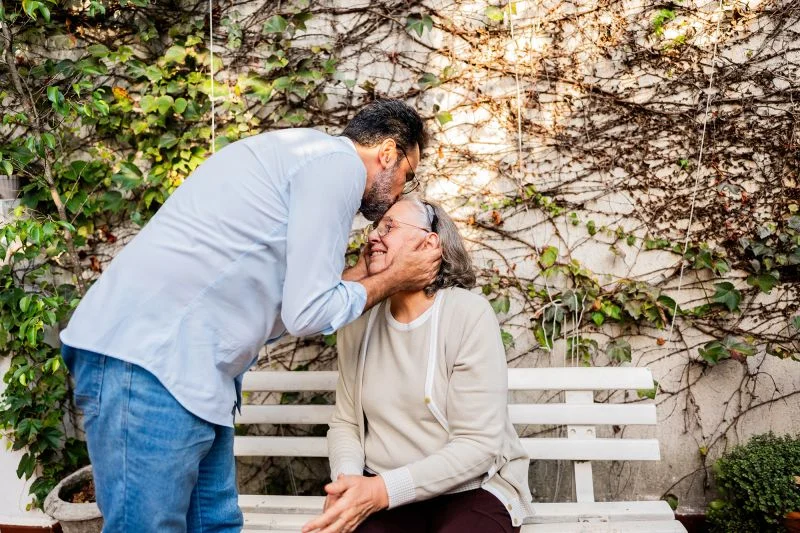
While caregiving for an aging parent is a universal challenge, women are significantly more likely to experience negative impacts on their physical and emotional health, while men are more likely to report that the experience has improved their relationships and emotional well-being.
This divergence in the caregiving experience suggests that the toll of elder care is not merely a product of the labor involved, but is deeply influenced by societal expectations, internal pressures, and the different ways genders are socialized to process emotional stress. As the American population ages and more adults find themselves in the "sandwich generation"—balancing the needs of aging parents with their own careers and children—understanding these psychological and social dynamics becomes essential for creating sustainable support systems for all family caregivers.
Caregiving for an aging parent is rarely a linear or simple journey. It is a role defined by a mountain of practicalities: managing complex medication schedules, navigating the labyrinth of the healthcare system, seeking elusive diagnoses, and ensuring the physical safety of a person who once ensured yours. It is a role defined by a profound reversal of the parent-child dynamic, one that often brings with it a cocktail of grief, financial anxiety, and time-poverty. Yet, amidst the exhaustion, many find a deep sense of purpose and a unique, "unexpected magic" in the act of caring for another human being.
However, a new report from the Pew Research Center reveals a striking disparity: men and women do not experience the rewards and burdens of caregiving in equal measure. Despite the narrowing gender gap in who provides care, the emotional and physical consequences of that care remain sharply divided along gender lines.
The Changing Demographics of Care
The prevalence of caregiving in the United States is staggering. According to the Pew report, 10% of all U.S. adults are currently providing care for a parent over the age of 65, while an additional 3% are caring for a spouse or partner in that same age bracket. The data highlights that caregiving is not distributed evenly across socioeconomic lines; lower-income adults are significantly more likely to be thrust into caregiving roles than their middle- or upper-income counterparts, often due to the high cost of professional assisted living and home health services.
While women still lead the way—28% of women identify as caregivers compared to 23% of men—the gap is shrinking. More men are stepping into roles that were once almost exclusively the domain of daughters and wives. Yet, as the participation rates converge, the subjective experience of the work remains worlds apart.
The Emotional Paradox: Why Men Report Higher Satisfaction
The most surprising finding in the Pew research is the "well-being gap." Among male caregivers, 61% report that the experience has had a positive impact on their relationship with their parents. For women, that number drops to 53%. Even more telling is the impact on personal health: 38% of women report that caregiving has harmed their physical health, compared to 26% of men. Nearly half of women (47%) say caregiving has negatively affected their emotional well-being, while only 30% of men report the same.

In fact, men are significantly more likely than women to say that caregiving has actually improved their emotional well-being (36% vs. 21%).
Kim Parker, director of social trends research at Pew, notes that these differences persist even when men and women are performing the exact same tasks. While women are statistically more likely to manage healthcare appointments, there is no significant difference in the frequency with which men and women handle "personal care" tasks—the often grueling work of bathing, dressing, and toileting. If the work is the same, why is the toll so different?
Social Conditioning and the Burden of Perfection
Experts suggest the answer lies in how we are raised to handle emotion and responsibility. Michelle Feng, a geropsychologist and chief clinical officer at Executive Mental Health, points out that women are socialized to be more attuned to emotional realities. While this allows for deep connection, it also makes women more susceptible to the "emotional contagion" of a parent’s suffering. Women are more likely to internalize the grief of witnessing a parent’s decline, whereas men may be socialized to focus more strictly on "problem-solving," which can act as a psychological buffer against the inherent sadness of the situation.
Furthermore, the "expectations gap" plays a massive role. Society generally assumes that women have an innate "instinct" for care. Because it is expected of them, women often enter the caregiving relationship with an internal pressure toward perfectionism. When a woman manages her parent’s care, it is seen as "duty." When a man does it, he is often viewed as a "hero."
Barry Jacobs, a clinical psychologist and coauthor of The AARP Caregiver Answer Book, reflects on this from personal experience. While caring for his mother and stepfather, he found himself praised by outsiders. "I was put on a pedestal, called a hero," Jacobs says. "But I wasn’t a hero… I was resentful and lost my temper. I never hear women being called heroes for caregiving."
This "hero" status grants men a degree of "grace" that women are rarely afforded. Because men are not expected to be "natural" caregivers, any effort they make is seen as an extraordinary contribution. This reduces the self-criticism that often plagues women, who may feel like a "bad daughter" if they lose their patience or make a mistake.
Caregiving as a Break from Traditional Masculinity
For many men, the shift toward caregiving also offers a respite from the traditional pressures of the professional world. American culture often socializes men to be competitive, decisive, and stoic. Caregiving, by contrast, requires receptivity, emotional responsiveness, and patience.
Journalist Brigid Schulte, director of the Better Life Lab at New America, has found that many men find the experience profoundly transformative. For men who have spent decades in competitive environments, the intimate, human-centric nature of caregiving can feel like a welcome discovery of a different part of themselves. However, Schulte notes that men still face systemic barriers, including a lack of supportive workplace policies and a lingering social stigma that caregiving is "unmanly," which can prevent them from fully engaging or seeking the help they need.

Bridging the Gap: Toward a More Sustainable Model
The gender gap in caregiver well-being is not an inevitability, but addressing it requires a shift in both individual mindsets and household dynamics.
Experts emphasize that the first step for all caregivers—and women in particular—is to practice self-compassion. "Self-criticism never improves caregiver performance," says Jacobs. "It only makes the whole ordeal difficult." He suggests a technique of "future-casting": imagining oneself five years in the future, looking back on this time. This perspective often helps caregivers see the growth and meaning in their struggle, rather than just the day-to-day exhaustion.
On a household level, the increasing involvement of men in elder care creates a vital opening for honest conversations about the division of labor. Jason Resendez, president and CEO of the National Alliance for Caregiving, argues that caregiving must be viewed not just as a "personal" or "family" matter, but as an economic and health proposition.
"That care is going to be absorbed by the household one way or another," Resendez says. If one caregiver—usually the woman—burns out, the entire family unit suffers. The stress ripples outward, affecting the caregiver’s ability to work, parent, and maintain their own health.
To mitigate these hardships, families must move toward a more equitable distribution of the "mental load" of caregiving. This means more than just splitting chores; it means sharing the emotional weight and the administrative oversight. It requires men to step into the "healthcare management" roles that women currently dominate and requires society to stop treating male caregiving as a "heroic" outlier and start treating it as a standard expectation of adulthood.
Ultimately, caregiving is one of the most human experiences one can have. By acknowledging the different ways men and women process this role, we can begin to dismantle the lopsided expectations that lead to burnout and ensure that the "magic" of caring for a loved one is accessible to everyone, regardless of gender.
