
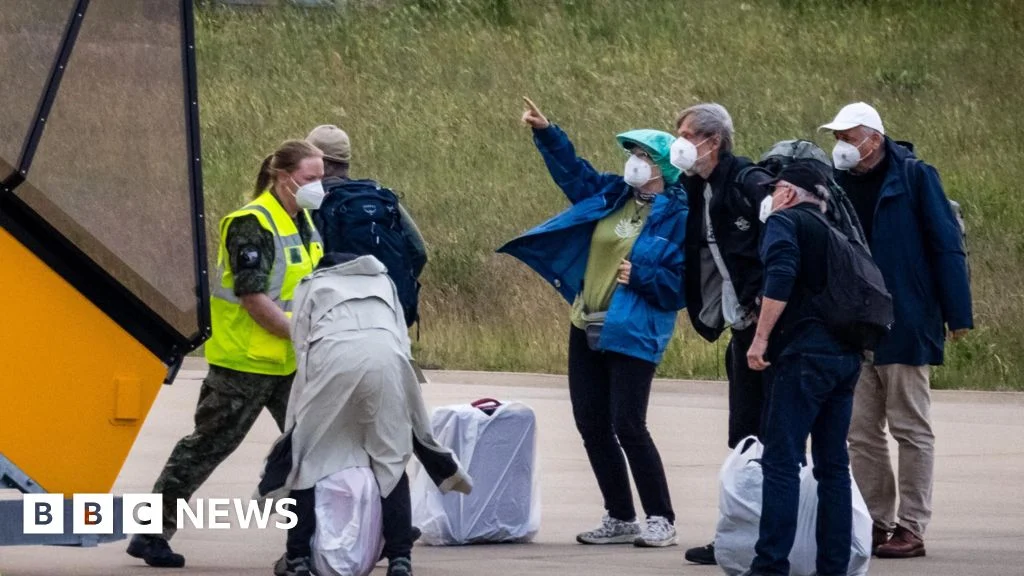
"A swift and coordinated global health response is underway following a hantavirus outbreak linked to the MV Hondius cruise ship, underscoring the complexities of managing infectious diseases across international borders with stringent containment measures."
The MV Hondius, a Dutch expedition cruise ship, has become the focal point of an international health alert after a hantavirus outbreak was confirmed among its passengers and crew. Anchored off Granadilla port in south-east Tenerife, Spain, the vessel facilitated the repatriation of dozens of individuals from various nations, initiating a complex, globally coordinated effort to contain the spread of the potentially deadly virus. This incident highlights the critical need for rapid international collaboration and robust public health protocols in managing emerging infectious disease threats, particularly in the context of global travel.
The MV Hondius commenced its voyage from Argentina on April 1st with 175 passengers and crew members aboard, operated by Oceanwide Expeditions. A segment of the passengers, numbering 32, disembarked on the remote island of St Helena on April 24th. The gravity of the situation became apparent when the World Health Organization (WHO) officially confirmed the first case of hantavirus on May 4th. Tragically, three passengers – a Dutch couple and a German woman – have died after travelling on the ship, with two of these deaths definitively linked to the virus. The WHO has reported a total of nine cases, comprising seven confirmed and two suspected infections, prompting health authorities worldwide to activate comprehensive monitoring and isolation protocols for all individuals connected to the vessel.
Hantavirus is a family of viruses carried by rodents that can cause severe, sometimes fatal, respiratory and renal diseases in humans. Transmission typically occurs when individuals inhale aerosolized particles from rodent urine, droppings, or saliva. Unlike many other viruses, human-to-human transmission is rare for most hantavirus strains, but a notable exception is the Andes strain, predominantly found in South America, which can be transmitted between people through close contact. The incubation period for hantavirus can range from one to eight weeks, necessitating extended monitoring and isolation periods for exposed individuals to ensure early detection and prevent further spread. Symptoms often begin with fever, fatigue, muscle aches, and headaches, progressing to severe respiratory distress (Hantavirus Pulmonary Syndrome, HPS) or kidney failure (Hemorrhagic Fever with Renal Syndrome, HFRS) in advanced stages.
The global response to this outbreak has been characterized by meticulous planning and execution, reflecting lessons learned from previous health crises. Countries have implemented tailored but stringent measures, balancing the need for public safety with the logistical challenges of international repatriation.
United Kingdom
Twenty British nationals, along with one German national residing in the UK and one Japanese passenger, arrived in Merseyside, north-west England, on Sunday evening. They were transported via a chartered flight to Manchester Airport, where strict infection control measures were in place, before being moved to Arrowe Park Hospital. Here, they will undergo a mandatory 72-hour period of intensive medical checks and regular testing. Following this initial hospital observation, they will be permitted to return home but must adhere to a further 42-day self-isolation period. Public Health Minister Sharon Hodgson confirmed that none of the repatriated passengers were symptomatic upon arrival, but emphasized that continuous monitoring and the precautionary isolation period were crucial. She reassured the public that "with no cases or symptoms among them and our stringent monitoring and isolation measures, the risk to the public remains extremely low." A total of 31 British nationals, comprising both passengers and crew, were initially on the cruise, with some disembarking before the first hantavirus case was confirmed. The UK Health Security Agency (UKHSA) has been instrumental in orchestrating these efforts, highlighting the nation’s robust public health infrastructure.
United States
Eighteen American passengers from the MV Hondius have successfully returned to the United States. Sixteen of these individuals are currently undergoing comprehensive screening at the University of Nebraska Medical Center in Omaha, a facility renowned for its infectious disease preparedness. The remaining two are being monitored in Atlanta. The United States Department of Health and Human Services (HHS) confirmed that one individual within this group has tested positive for hantavirus, and another is exhibiting symptoms. Despite these cases, HHS has advised the general public that the overall risk remains "very, very low." John Knox, an official from HHS, stated that the returning Americans would undergo various health assessments over several days, leading to individualized care plans. These plans would dictate whether individuals should isolate at home or if their condition and living situation necessitate continued stay at a medical facility, demonstrating a nuanced approach to patient management.
Canada
Canadian authorities confirmed that six of its citizens were aboard the MV Hondius. Four of these individuals returned to British Columbia on Sunday via a chartered flight from Tenerife. While none have exhibited symptoms, they are now observing a precautionary self-isolation period of at least 21 days, which the Public Health Agency of Canada indicated could be extended to 42 days, aligning with the extended incubation period of hantavirus. The remaining two Canadians, a couple, are self-isolating at their residence in Ontario. Health Minister Sylvia Jones confirmed on Monday that neither has developed symptoms, underscoring the importance of early isolation even in asymptomatic cases.
Netherlands
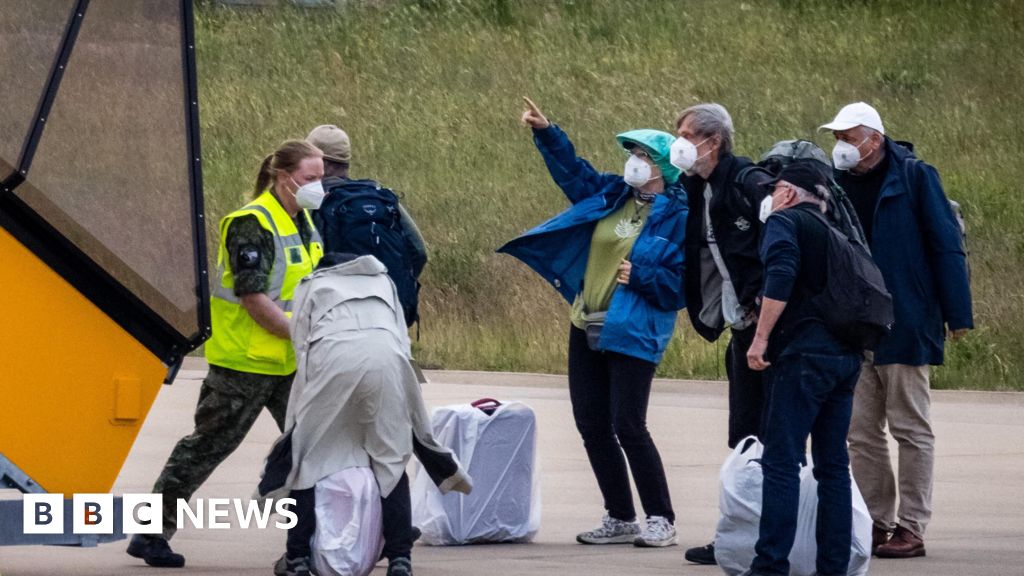
Adhering to the European Union’s guidance, which recommends medical triage by trained healthcare professionals for returning citizens, Dutch nationals repatriated from the MV Hondius on Sunday were flown to Eindhoven. From there, they were transported directly to their home addresses in specialized vans to begin their quarantine period. The Dutch government stated that health officials would contact those in isolation daily, ensuring that "any symptoms are identified and appropriate care can be provided promptly." Thirteen Dutch nationals, comprising eight passengers and five crew members, were on board the ship when it docked in Tenerife, necessitating these comprehensive follow-up measures.
Spain
Fourteen Spanish nationals who were flown from Tenerife to Madrid are currently undergoing mandatory quarantine at a military hospital in the capital. The presence of the cruise ship off Tenerife had initially caused concern among residents of the Canary Islands. However, WHO officials moved to allay fears, emphasizing that the risk of wider contagion was low "because of how the virus works." Crucially, the MV Hondius did not dock directly in Tenerife’s main port. Instead, it anchored at sea, with passengers ferried to Granadilla port, a location well removed from residential areas, minimizing potential contact with the local population.
France
France has reported its first confirmed case of hantavirus linked to the outbreak. A French national developed symptoms while on a chartered flight from Tenerife to Paris. French Health Minister Stéphanie Rist confirmed that the woman is isolating in Paris, and her health is unfortunately deteriorating. Authorities have initiated extensive contact tracing, identifying 22 individuals who had close contact with the patient. French Prime Minister Sébastien Lecornu had previously stated that all five French citizens returning from Spain would be "immediately placed in strict isolation until further notice," highlighting the proactive stance taken by French health authorities.
Germany
German health authorities announced on Monday that four individuals had arrived in the country overnight. They were initially monitored in an isolation unit at Frankfurt University Hospital. While none were showing symptoms, all four were subsequently transferred to their respective homes in Berlin, Baden-Württemberg, Bavaria, and Schleswig-Holstein. Germany’s federal health ministry confirmed that these individuals would be "continuously and closely monitored for symptoms," with local health authorities responsible for determining specific ongoing measures, demonstrating a decentralized yet coordinated approach.
Switzerland
A Swiss national who disembarked from the MV Hondius in Saint Helena tested positive for hantavirus after returning home. He is currently receiving medical care. His wife, who traveled with him, has not shown any symptoms but is self-isolating as a precautionary measure. The Federal Office of Public Health in Switzerland has reiterated that the risk to the general public in the country remains low, underscoring that the isolated nature of the outbreak and prompt action are key to limiting wider exposure.
Argentina
Investigations are actively ongoing to determine the origin of the hantavirus outbreak, with particular focus on Argentina, where the MV Hondius began its journey. The WHO had previously noted that the first two confirmed cases had "travelled through Argentina, Chile and Uruguay on a bird-watching trip which included visits to sites where the species of rat known to carry the virus was present." This detail is critical, as the Andes strain of hantavirus, implicated in this outbreak, is predominantly found in Argentina and Chile, pointing towards a potential South American origin for the infection before the cruise began.
Philippines
Among the crew members of the MV Hondius, 38 individuals are from the Philippines. Filipino officials have confirmed that there are currently no recorded cases of hantavirus in the country, and the risk to the local population remains "extremely low." This highlights the success of international protocols in preventing the spread of the virus to crew members’ home countries despite their prolonged exposure on the vessel.
The MV Hondius hantavirus outbreak serves as a stark reminder of the interconnectedness of global health and the constant vigilance required to mitigate the risks posed by infectious diseases. The rapid and comprehensive response from multiple nations, guided by international health organizations, has been crucial in containing what could have become a far more widespread public health crisis. The ongoing monitoring and isolation protocols, coupled with scientific investigations into the outbreak’s origin, are vital steps towards ensuring global health security and refining strategies for future challenges.
